

10 Best Nurse Call System Suppliers and Care Operations Monitoring Platforms for Hospitals and Care Facilities
In this article
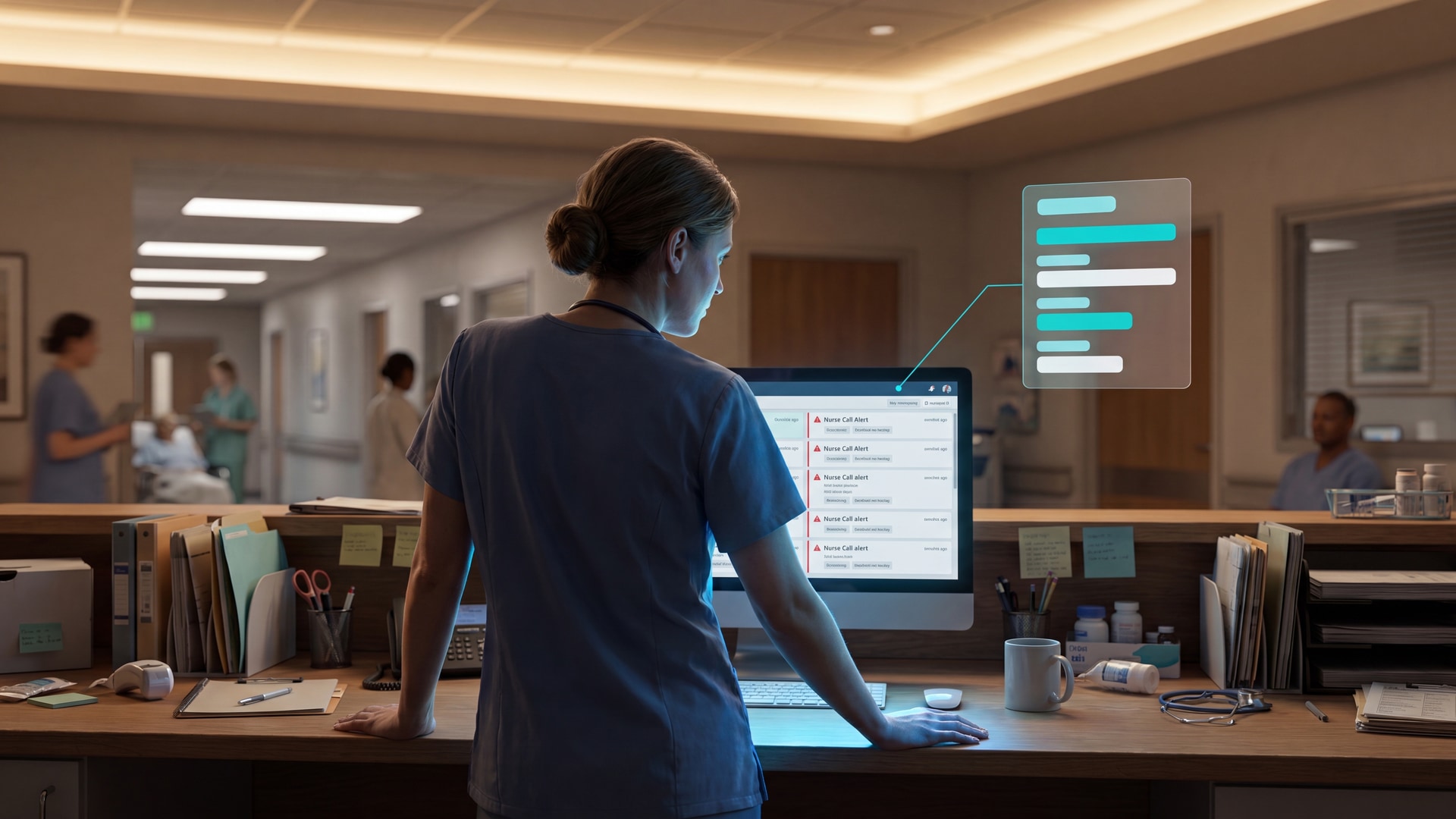
A call button tells staff that someone needs help.
The supplier choice decides whether staff also see the location and response history.
Use the tables below to separate standard nurse call suppliers from care operations monitoring platforms such as Guardian.
Quick picks by facility need
Each supplier in this list targets a different facility type, budget tier, or procurement model. Use the table below to find your closest match, then jump to that supplier's full review.
Facility need | Best supplier(s) | Why | Watch-out |
Camera-free care operations | Guardian | Live view plus records | Confirm pilot scope |
Visit verification | Guardian | Logs visits and response times | Pricing set after pilot |
UL-listed nurse call | Intercall; Wireless Nurse Call | Listed certification options | Confirm required standard |
Legacy wired replacement | BEC Integrated | Wired and wireless options | Check part availability |
New construction | BEC Integrated; installer-led suppliers | Design and deployment support | Confirm compliance owner |
Direct hardware sourcing | Aidbell; Meeyi | Manufacturer quote model | Support may be remote |
UK procurement | Frequency Precision | UK manufacturer, GBP pricing | Confirm local installation |
US-market shortlist | National Call Systems; Nursing Home Aids; Val-U-Care | US-focused supplier options | Verify fit in review |
Manufacturer, distributor, or installer: which type do you need?
Start with accountability, not catalogue size. Manufacturers supply hardware, distributors bundle brands, installers own deployment, and operations platforms add visibility around staff response.
Supplier type | What they do | Best fit | Watch-out |
Manufacturer | Designs and certifies hardware | Large projects, in-house teams | Less cross-brand flexibility |
Distributor | Stocks and bundles brands | Phased upgrades, replacement parts | Installation accountability may vary |
Installer or integrator | Surveys, deploys, tests, trains | Compliance-led projects | Confirm brand authorization |
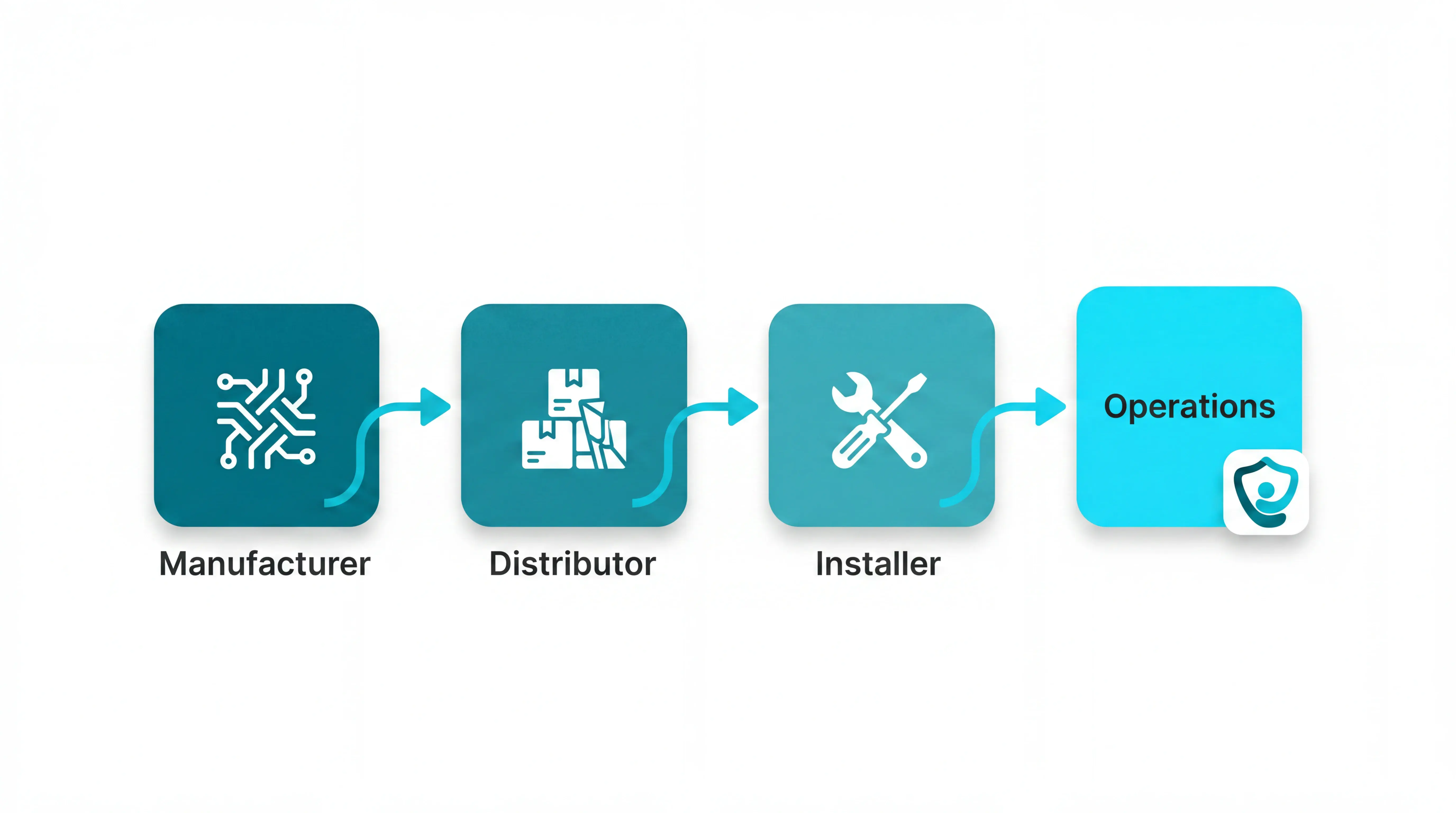
Ask who signs off installation against the relevant standard, such as UL 1069 or DIN VDE 0834. Product certification alone does not prove deployment quality.
If insurance, regulator, or board approval matters, get the compliance chain in writing: manufacturer documents, certified installation, testing record, and staff handoff.
For legacy upgrades, choose a distributor or integrator that can source parts and phase work without forcing a full replacement.
If your team lacks biomedical engineering, IT, or maintenance capacity, use an installer-led model rather than making staff own troubleshooting.
Nurse call system suppliers compared
Use this table to shortlist suppliers before the full reviews.
Supplier | Supplier type | Best fit | Software/reporting | Compliance note | Installation model |
Guardian | Operations monitoring platform | Care homes needing live visibility | Guardian Insight dashboard | Verify nurse call requirements | Wireless pilot, no cabling |
Intercall Systems | Supplier review below | Detailed review below | Detailed review below | Verify before quote | Detailed review below |
BEC Integrated | Supplier review below | Detailed review below | Detailed review below | Verify before quote | Detailed review below |
Aidbell | Supplier review below | Detailed review below | Detailed review below | Verify before quote | Detailed review below |
Meeyi | Supplier review below | Detailed review below | Detailed review below | Verify before quote | Detailed review below |
Wireless Nurse Call | Supplier review below | Detailed review below | Detailed review below | Verify before quote | Detailed review below |
National Call Systems | Supplier review below | Detailed review below | Detailed review below | Verify before quote | Detailed review below |
Nursing Home Aids | Supplier review below | Detailed review below | Detailed review below | Verify before quote | Detailed review below |
Frequency Precision | Supplier review below | Detailed review below | Detailed review below | Verify before quote | Detailed review below |
Val-U-Care | Supplier review below | Detailed review below | Detailed review below | Verify before quote | Detailed review below |
The 10 best nurse call systems suppliers
Use these reviews as procurement notes, not vendor brochures. Each entry covers fit, offer, facility match, installation route, and quote risks in the format that suits that supplier.
1. Guardian
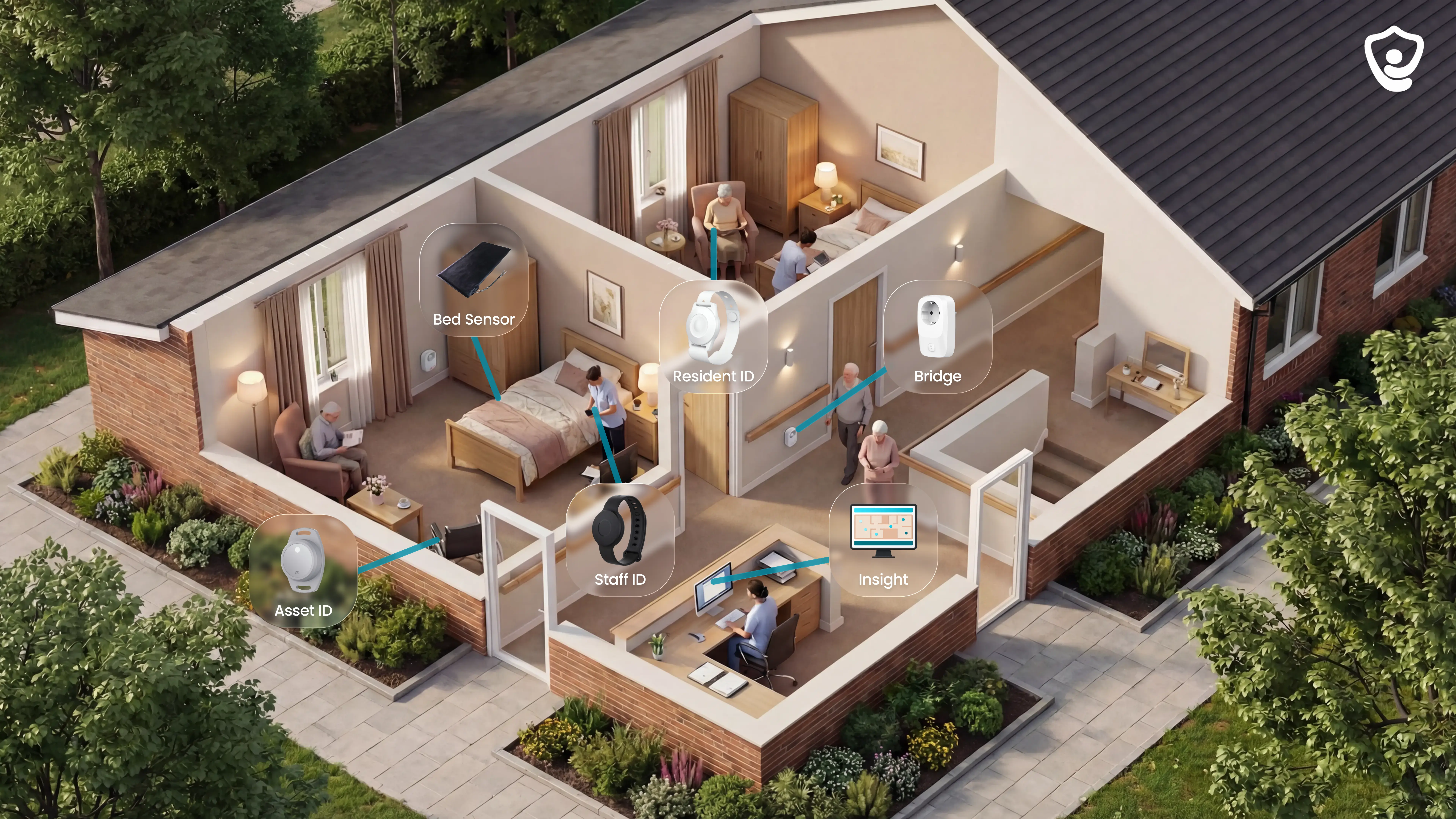
Guardian is the closest fit for care homes and home care providers that need SOS alerts, passive monitoring, and usable records in one camera-free system.
The platform turns resident activity and staff response into data that managers can review during handover and audits.
See the alert: resident name, event type, and room-level location.
See the operation: staff, residents, vehicles, and assets in Guardian Insight.
See the record: visits, shift timing, incidents, and response times written automatically.
Pilot benchmarks to use in evaluation
30 fall-risk situations attended in one Estonia ward pilot.
Around €1,000/month of caregiver capacity identified in the pilot impact report.
Average staff arrival within 5 minutes as a practical benchmark for high-risk residents.
31% lower hospital costs and 49% fewer ambulance calls in npj Digital Medicine research on early intervention monitoring.
Best fit: care teams that need evidence
Use Guardian when the gap is traceability: who responded, where the alert happened, and what record was created.
The best fit is a manager who needs response data ready for families, funders, or inspectors.
Guardian fits teams dealing with:
High fall-risk residents: bed exit sensors, fall detection, and room-level alerts help staff reach the right room faster.
Night monitoring gaps: bed, motion, door, fridge, and stove sensors show routine changes without cameras.
Home care visit disputes: automatic visit records replace manual timesheets, spreadsheets, and after-the-fact reconstruction.
Moving fleets: vehicle and asset tracking sit in the same dashboard as staff, residents, and alerts.
Alert fatigue: configurable rules help filter normal activity from events that need action.
Market position: operations monitoring with SOS alerts
Guardian is a care operations monitoring platform with nurse call-style SOS alerts as one capability.
Several suppliers in this list focus on one layer, such as wired call panels, pendant alarms, wall buttons, or installation services.
Guardian covers the operational layer around the alert:
Nurse call: residents and staff can trigger SOS alerts from wearables.
Passive monitoring: in-room sensors detect activity patterns without video or microphones.
Live visibility: Guardian Insight shows people, rooms, vehicles, and assets in one view.
Verified records: visits, response times, incidents, and shift data are captured in the background.
For wired hospital nurse call replacement with strict US code requirements, confirm certification before comparing Guardian against UL 1069 systems.
For care homes and home care providers, the useful question is whether Guardian can turn day-to-day activity into measurable response and incident data.
Offer: wireless devices plus Guardian Insight
Guardian combines wireless devices with Guardian Insight so the same system handles alerting, monitoring, and records.
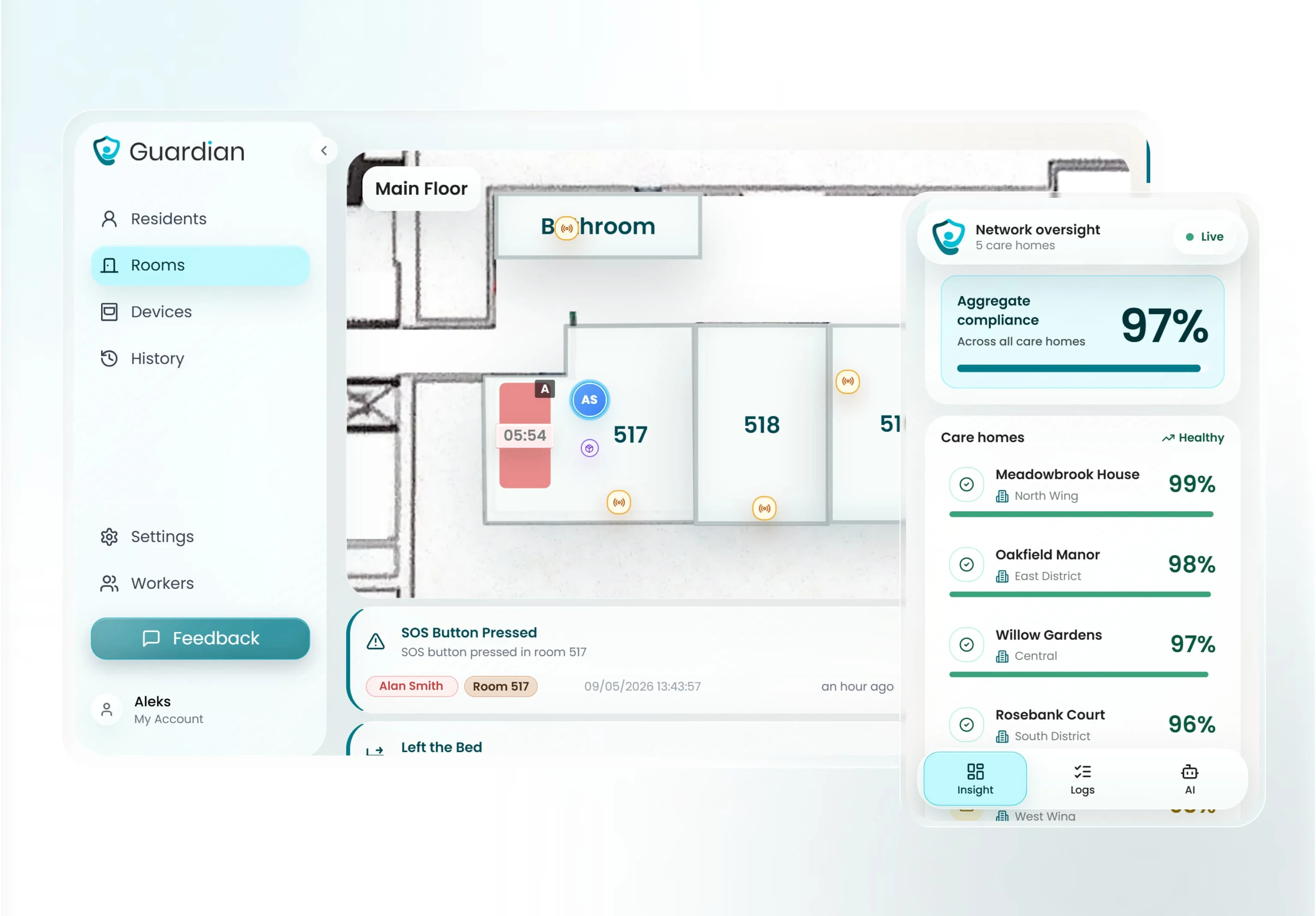
The platform is 100% wireless and arrives pre-configured, so a ward can go live in about a week without a cabling or EMR project.
Layer | What it includes | Why it matters |
SOS alerting | Resident wristbands, caregiver SOS bands, and GPS safety watches | Staff can see who needs help and where to respond. |
Passive room monitoring | Bed, motion, door, fridge, and stove sensors | Care teams can detect routine changes without cameras. |
Operations dashboard | Guardian Insight for alerts, residents, staff, rooms, vehicles, and assets | Managers get one live view instead of separate logs. |
Evidence capture | Visit verification, shift timing, incidents, and response activity | Records are created in the background for handover and audit. |
Smart alert rules | Thresholds such as out of bed for a set time at night | Teams can tune alerts around the ward's actual routines. |
Wearables are optional because passive sensors can carry much of the monitoring workload.
For residents who remove wristbands, passive room sensors can still flag changes in movement and night routines.
Facility fit: where Guardian is worth testing
Guardian is strongest where care teams need location-aware alerts and automatic records.
Consider Guardian for:
Care homes: wards that need wireless nurse call, passive monitoring, fall risk alerts, and response-time evidence.
Dementia or higher-risk areas: teams that need exit alerts, restricted-area awareness, and room-level location without cameras.
Home care agencies: operators that need verified visits, route visibility, and cleaner proof of service.
Multi-site providers: managers who need comparable response, visit, and incident data across homes or teams.
Inspection-ready upgrades: homes that need faster deployment than a wired infrastructure project allows.
For US acute-care tenders, check the required nurse call standard before comparing vendors.
Pilot and support model
Guardian starts with a scoped 6 to 8 week pilot in one ward, team, or route.
The setup is designed to be light on the site team. Guardian maps the workflow, pre-configures the devices, and helps staff receive alerts on their existing screens.
A typical pilot covers:
Scope: one ward, priority beds, one home, or one home care route.
Setup: wireless devices, floor plan mapping, alert rules, and staff access.
Training: caregivers and managers learn which alerts matter and where to respond.
Measurement: baseline response times, attended fall-risk situations, alert volume, visit verification, staff feedback, and ROI.
Rollout plan: management receives an impact report showing response times, prevented escalations, capacity released, and next-step recommendations.
The commercial entry point is the pilot.
Guardian does not publish B2B pricing, and rollout terms are set after scope, results, and ROI are clear.
Quote checks: red flags to test early
Use the quote call to test whether the pilot can produce a defensible before-and-after report.
Failure mode | Ask to see | Red-flag answer |
Scope creep | Which ward, route, beds, or risk group will be measured first? | The answer stays at "the whole home" and no review date is named. |
Certification mismatch | Does procurement require UL 1069 or another hospital nurse call standard? | The supplier treats operational monitoring as a code-compliant hospital call replacement. |
Vague alert routing | Where will alerts appear for each shift? | Staff devices, nurse station screens, and escalation paths are left for after purchase. |
Weak location data | Can the demo show room-level alerts on your floor plan? | The supplier can show alerts, but cannot map events to rooms, beds, or exits. |
No baseline | Which numbers will be compared before and after the pilot? | Success is described as "better visibility" with no response-time, incident, or alert-volume baseline. |
Wearable-only risk | What happens when a resident removes or refuses a wristband? | There is no passive bed, motion, door, or routine-sensor backup. |
Tell us where you want to test Guardian. We'll reply with scope and next steps.
2. Intercall Systems
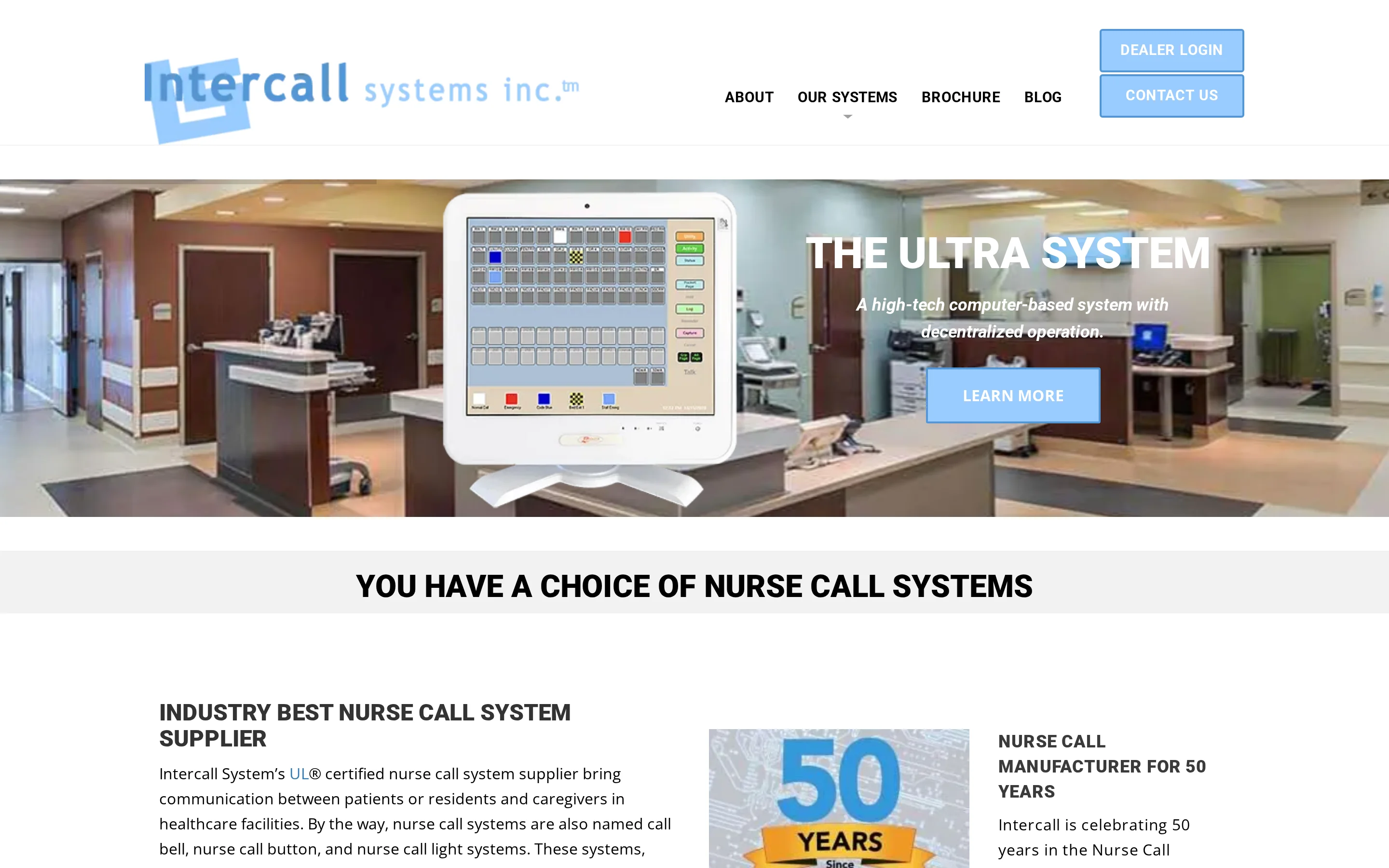
Intercall Systems is a US-based nurse call hardware manufacturer with a long production history in wired audio-visual call infrastructure.
Its clearest role is a renovation, replacement, or compliance-led project where nurse call is treated as building infrastructure.
Best fit for Intercall
Intercall fits facilities buying nurse call as clinical infrastructure, with wiring, documentation, and contractor coordination planned from the start.
The practical scenario is a hospital, skilled nursing facility, or long-term care site replacing installed nurse call hardware during a build, renovation, or compliance-driven upgrade.
How Intercall sits in the market
Intercall is a domestic manufacturer, which matters when procurement asks for traceable hardware and manufacturer documentation.
Intercall sits on the wired infrastructure side of the market. Its Ultra Series adds computer-based call data and statistical reporting.
Wired hardware and reporting
Intercall's product range centers on wired audio-visual nurse call equipment and the Ultra Series platform.
The Ultra Series is the main software element to note. It is described as a decentralized, computer-based system for managing call data and producing statistical reports across a facility.
That reporting layer is useful when managers need records for:
Staffing discussions: Reviewing where call volume clusters.
Internal audits: Showing call activity over time.
Response-time reviews: Checking whether escalation routines match the ward.
Where Intercall makes sense
Consider Intercall when nurse call is part of a building-level clinical wiring plan:
Hospitals and inpatient units: Wired call infrastructure needs formal documentation.
Skilled nursing sites: Durable room hardware and contractor support matter.
Compliance-led refurbishments: Procurement needs traceable manufacturer paperwork.
A small residential care home looking for a quick wireless overlay should keep Intercall out of the first shortlist.
If the goal is passive monitoring or live floor-plan alerts, scope that as a separate operational system before the nurse call quote.
Installation path
Expect a dealer, integrator, or qualified low-voltage contractor to handle on-site work. Intercall supplies the hardware and product documentation.
For Ultra Series reporting, pin down the technical scope before installation:
Workstations: Who supplies and maintains them.
Cabling: Whether new low-voltage work is included.
Testing: Who signs off call logging and reports.
Quote checks for a wired Intercall project
Treat an Intercall quote like a small construction package. Thin scope language usually turns into change orders later.
UL proof by SKU: Ask for the UL listing number for each proposed product, not only a brand-level compliance statement.
Wired pathway and workstation scope: Confirm cabling, head-end, workstation, and low-voltage responsibilities before approving the quote.
Installer competence: Ask who will install and test the system. A general electrical contractor with no nurse call experience is a red flag.
Separated project costs: Split equipment, installation labor, cabling, programming, testing, and training so omissions are visible.
Service owner: Confirm whether Intercall, the dealer, or a contractor handles warranty calls, including written response times.
3. BEC Integrated
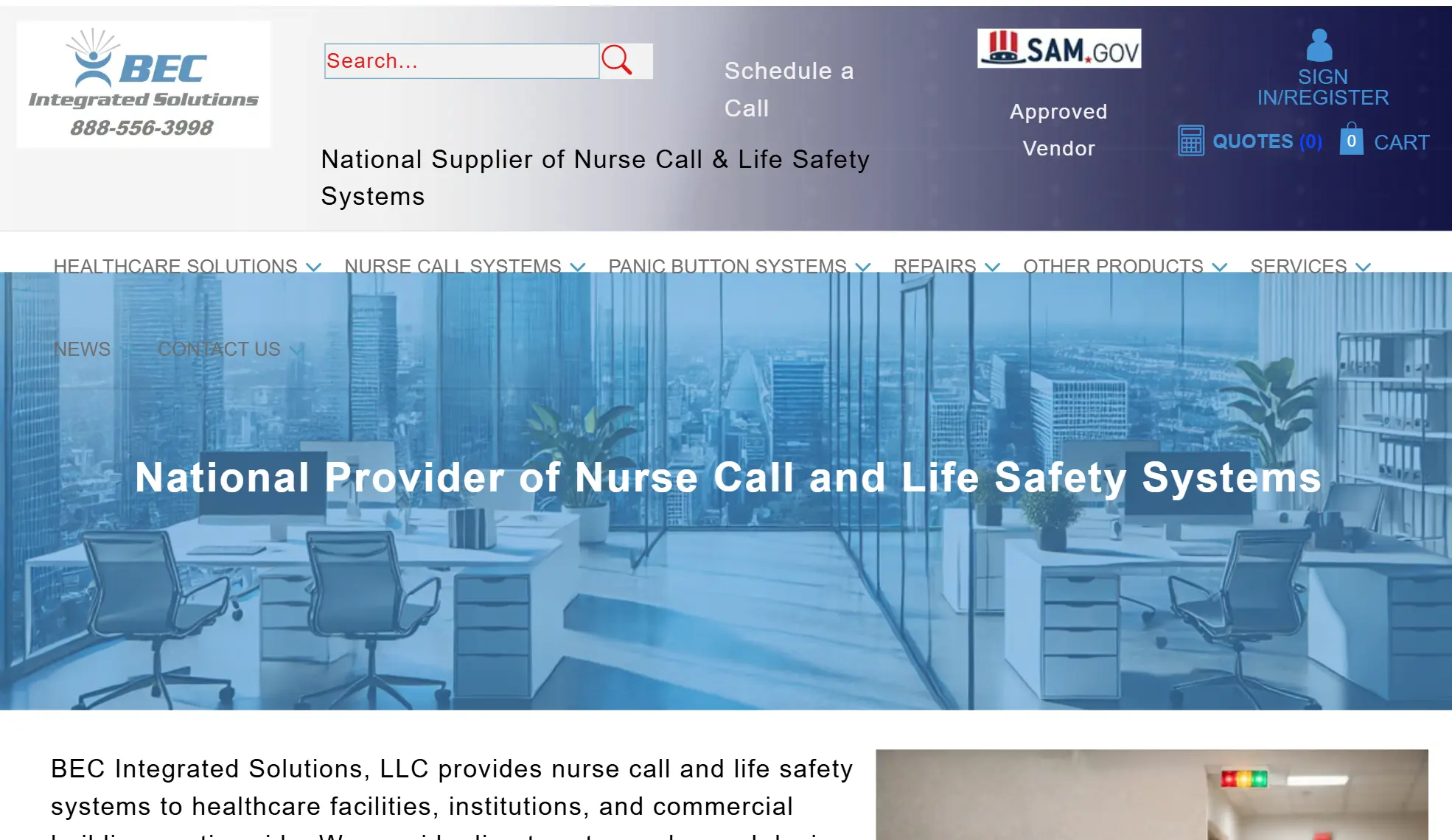
BEC Integrated is a US-based nurse call supplier that sits between two decisions: TekTone wired replacements and UL 1069-listed wireless additions.
Its clearest scenario is a VA or public-sector facility that needs domestic sourcing, SAM.gov documentation, and wireless hardware with healthcare certification.
Best fit for BEC
BEC is relevant when the team is still comparing wired, wireless, and hybrid nurse call options under one supplier relationship.
The practical scenario usually has one of three triggers:
VA or public funding: Supplier registration matters before demos.
Existing TekTone rooms: Compatibility needs model-level checking.
Hard-to-cable additions: Wireless call points may avoid opening walls.
Supplier role
BEC Integrated operates as both an authorized TekTone distributor and a manufacturer of its own US-made wireless nurse call line.
That mix matters when a facility wants TekTone continuity but also needs to price wireless call points, corridor displays, or monitoring software.
Offer in practice
BEC's offer splits into three practical workstreams.
Workstream | What to check |
Wired TekTone | Useful when existing infrastructure is staying. Confirm exact head-end model and wiring condition. |
BEC wireless hardware | Relevant for additions or retrofits where new cabling is difficult. Confirm UL 1069 coverage by SKU. |
PC monitoring | Adds central call visibility and reporting. Confirm workstation, network, and Windows requirements. |
Where BEC makes sense
BEC is relevant for skilled nursing facilities, assisted living communities, hospitals, VA facilities, and state-run care settings that need domestic UL-listed hardware.
The cleanest fit is a public-sector skilled nursing or VA project where procurement documentation matters as much as device selection.
Installation ownership
Treat BEC as equipment supply plus technical support, unless the quote names a local installation partner.
The installation risk sits locally. Confirm whether an in-house biomedical team, maintenance team, or low-voltage integrator will install, test, and maintain the system.
Quote checks that decide the deployment
For BEC, the quote should answer one question first: who owns the deployment once the boxes arrive?
Deployment route: State whether the job is wired TekTone replacement, wireless addition, or hybrid deployment.
Existing TekTone condition: Confirm head-end model, wiring condition, and product generation before retrofit pricing is trusted.
Public-sector paperwork: For VA, federal, or state-funded work, ask for SAM.gov documentation before demos.
Monitoring setup: Get workstation, LAN, Windows, and support responsibilities in writing.
Local installer: Name the installer and testing plan. A supplier-only quote with no commissioning owner is a red flag.
4. Aidbell
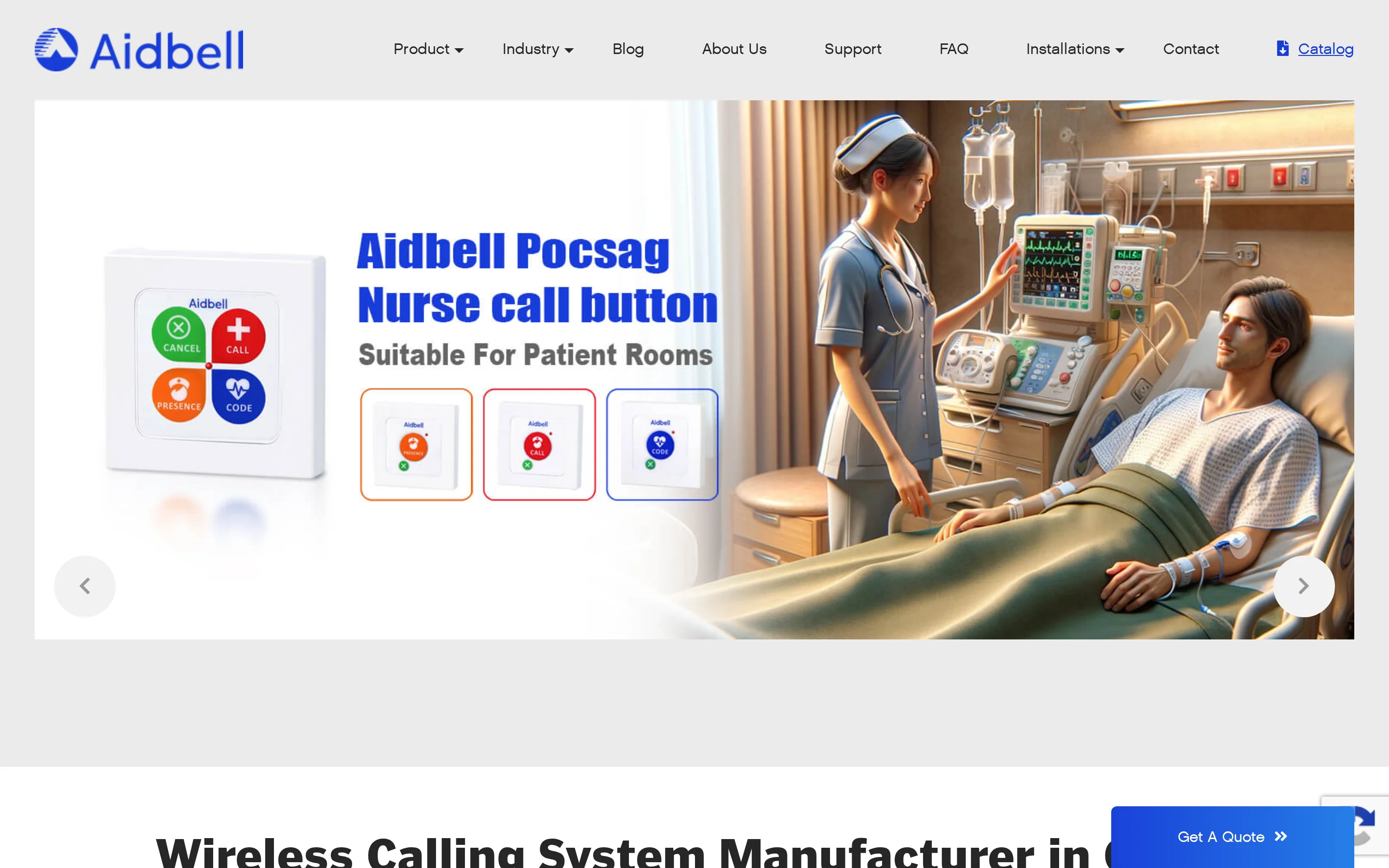
Aidbell is a China-based manufacturer of wireless nurse call systems for international hospitals, clinics, and nursing homes.
Aidbell's useful scenario is a non-US facility that needs quote-based wireless hardware and longer-range radio coverage, with PC software used for call records and maps.
Best fit and range scenario
Aidbell fits international facilities that need wireless nurse call coverage without using facility Wi-Fi.
Aidbell's radio choices matter before pricing:
433 MHz: Direct sensor-to-monitor communication for standard facility layouts.
LoRa: Longer-range wireless coverage for larger or multi-floor sites.
PC software: Call records and floor maps depend on the workstation setup.
Language support is practical when day and night staff do not all work in the same first language.
Supplier and compliance lens
Aidbell sells as a direct B2B manufacturer, so the sales conversation carries more weight than a retail checkout page.
Public information points to quote-based pricing, with distributor coverage, support terms, and service commitments settled during the sales process.
For US regulated healthcare, certification is the first gate. Ask Aidbell for written UL 1069 evidence by model, then have the authority having jurisdiction review the system.
What Aidbell actually covers
Aidbell offers wireless nurse call hardware using 433 MHz and LoRa technologies, paired with PC management software.
The software layer is where Aidbell becomes more than a button-and-display system. Confirm who configures the floor maps and backs up call history.
Coverage planning should use the actual building, not brochure range:
Floors and walls: Confirm signal reach across resident areas.
Lifts and stairwells: Check dead zones before rollout.
Nurse stations: Confirm alerts display where staff work.
Facility fit
Aidbell names hospitals, clinics, and nursing homes as target facility types.
A cleaner fit is an international nursing home or clinic with a local distributor, multilingual users, and radio coverage needs.
In US acute care, skilled nursing, or other regulated settings, confirm certification, AHJ requirements, and accreditation expectations before treating Aidbell as compliant.
Installation and support risk
Aidbell's wireless design can reduce facility network integration because 433 MHz and LoRa devices communicate outside Wi-Fi.
Write the support path into the quote:
Coverage testing: Who validates 433 MHz or LoRa signal strength on each floor.
Software setup: Who builds floor maps and trains staff.
Service ownership: Who replaces failed devices and how fast.
Checks before treating Aidbell as compliant
Aidbell needs a more cautious quote review than domestic UL-listed suppliers. The main quote risk is acceptance and support after purchase.
Check | Good answer | Red flag |
Regulatory acceptance | The supplier names the exact certification and the facility confirms AHJ acceptance. | The answer relies on general medical-use language with no jurisdiction-specific proof. |
Local support | An authorized distributor or integrator is named in the quote. | Warranty support depends on overseas shipping with no response-time commitment. |
Language setup | The active interface languages and update policy are written into the proposal. | Language support is mentioned in sales material but not in the configured quote. |
PC software | Workstation, operating system, backups, floor maps, and reporting ownership are assigned. | The quote says software is included but does not name who maintains logs. |
5. Meeyi
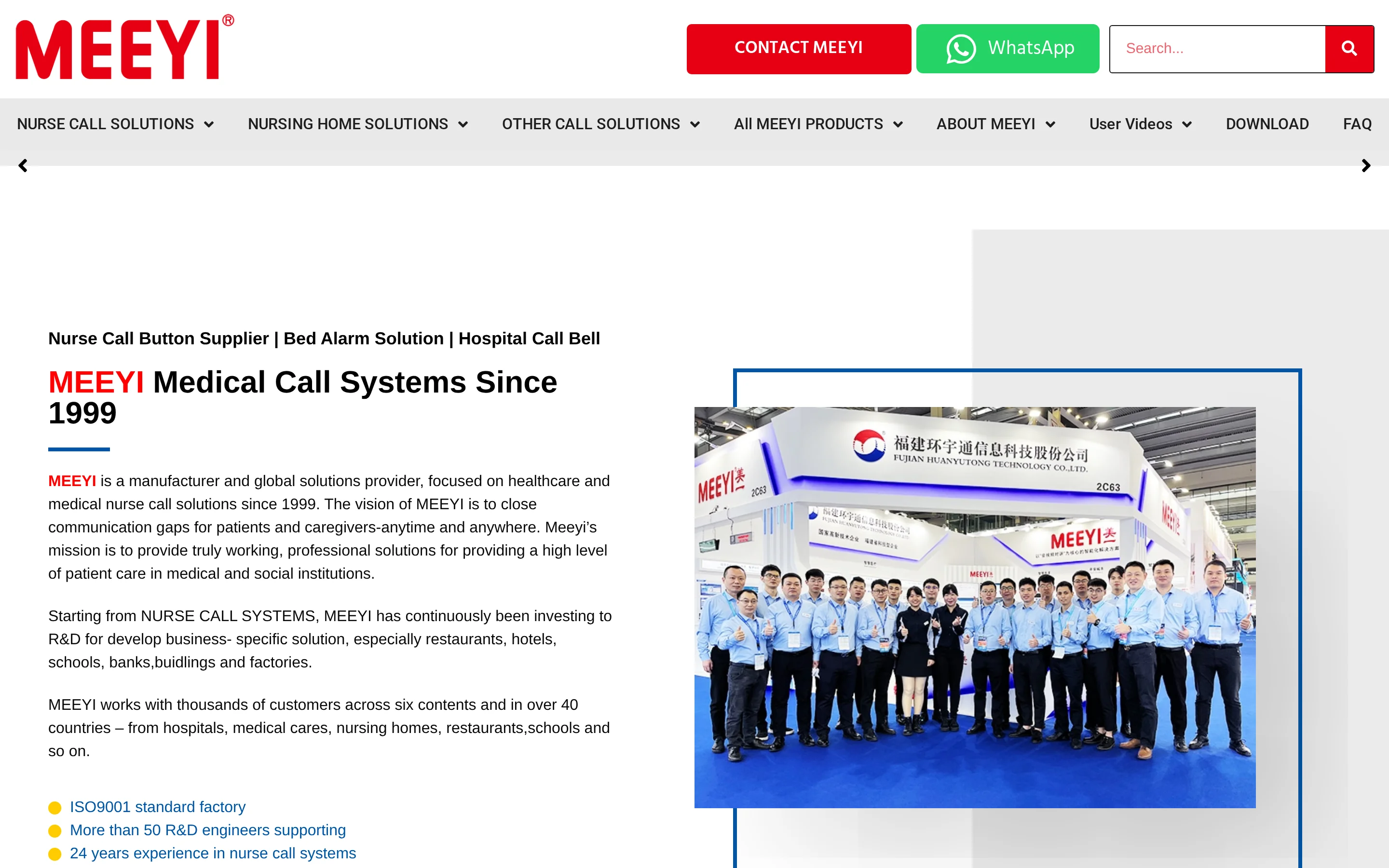
Meeyi is a Chinese ODM/OEM hardware manufacturer producing wired and wireless nurse call systems for global healthcare and care-facility buyers.
Best fit
Meeyi is mainly relevant for volume buyers sourcing customizable nurse call hardware for new builds, refurbishments, or multi-site rollouts.
Its cost profile comes from direct manufacturing, quote-based projects, and ODM/OEM customization rather than fixed retail packages.
Volume sourcing: Hardware is manufactured in an ISO 9001-certified factory with semi-automated production lines.
Project quotes: Pricing varies by order size, configuration, and customization scope.
Customization: Buyers can specify hardware form factors, branding, and wireless options through ODM/OEM arrangements.
Supplier type and market position
Meeyi is a vertically integrated Chinese manufacturer, not a regional installer or software-first nurse call vendor.
It produces hardware directly for international buyers through ODM and OEM arrangements, which makes it more relevant to procurement teams that can manage local installation.
Public materials emphasize manufacturing controls rather than hospital electrical listing.
Factory standard: ISO 9001 certification and semi-automated production lines.
Warranty: A stated 3-year hardware warranty on manufactured products.
Certification check: If UL 1069 is required, request written evidence by SKU before assuming fit.
What they offer
Meeyi manufactures wired and wireless nurse call hardware, with LoRa and standard RF communication options for facilities that do not want alert traffic dependent on Wi-Fi.
The hardware range is supported by PC management software for call-event monitoring, response-time review, and basic data analysis.
That software layer should be viewed as a management add-on, not a live operations dashboard with floor-plan mapping and resident-level context.
Facility types to consider them for
Meeyi is most relevant to international new-build projects, large care facility rollouts, and buyers sourcing nurse call hardware in volume through direct manufacturer channels.
It is less straightforward for regulated U.S. hospital or skilled nursing environments where UL 1069 listing is a procurement requirement.
Facilities that need integrated analytics, third-party software connections, or real-time floor-plan alerting should confirm whether Meeyi's PC software covers those workflows.
Installation and support model
Meeyi ships hardware direct to international buyers, with installation usually handled by the buyer's local contractor, distributor, or systems integrator.
Post-sale support sits at manufacturer level through direct communication channels, backed by the stated 3-year hardware warranty.
Before ordering, confirm who owns:
Site design: Device counts, repeater placement, and wireless coverage planning.
Local installation: Mounting, testing, commissioning, and handover.
Software setup: PC management configuration, user permissions, and reporting setup.
Ongoing support: Replacement parts, firmware guidance, and escalation route.
What to verify before requesting a quote
Use the quote stage to confirm compliance, customization, and integration details before treating Meeyi as a project-ready supplier.
UL status: Request written documentation if your jurisdiction requires UL 1069 or another nurse call electrical listing.
Wireless design: Confirm whether LoRa or standard RF is recommended for your floor plan, wall materials, and building count.
Customization scope: Ask which buttons, displays, branding, firmware settings, and language options can be changed.
Software fit: Verify whether the PC management software exports data or connects to your care, staffing, or reporting systems.
Local delivery: Confirm installer availability, commissioning responsibility, warranty process, and spare-parts lead times.
6. Wireless Nurse Call
Wireless Nurse Call is a U.S. manufacturer of nurse call systems built around a proprietary 900 MHz spread-spectrum mesh network.
The system operates independently of facility Wi-Fi, which makes it relevant where nurse call coverage cannot depend on existing IT infrastructure.
Best fit
Wireless Nurse Call is mainly relevant for skilled nursing facilities, CCRCs, assisted living communities, and multi-building campuses needing a dedicated wireless nurse call network.
The 900 MHz mesh matters because each node can relay signals through the network, extending coverage beyond a single central access point.
Wi-Fi independence: Call traffic does not rely on the facility's wireless network.
Campus coverage: Mesh design supports planning across multiple buildings and wings.
IT separation: Facilities can keep nurse call infrastructure separate from resident, guest, or administrative Wi-Fi.
Supplier type and market position
Wireless Nurse Call designs and sells its own proprietary nurse call hardware and software, both direct and through authorized dealers.
Its listed devices meet ETL requirements for UL 1069 Edition 7 or UL 2560, depending on the product and regulatory pathway.
That places it with suppliers where compliance documentation is part of the procurement conversation, not an item left to infer from general product claims.
What they offer
Wireless Nurse Call offers ETL-listed call stations, a 900 MHz spread-spectrum mesh network, and the Vision Link software platform.
Vision Link adds reporting and remote access on top of the hardware alerting layer.
Call reporting: Statistical call-analysis reports can show call frequency, response times, and workload patterns.
Remote access: Administrators or support teams can review system status and reports without being on site.
Compliance pathways: Hardware may be listed to UL 1069 Edition 7 for traditional nurse call or UL 2560 for wireless nurse call systems.
Facility types to consider them for
Wireless Nurse Call suits facilities where buildings are spread out, Wi-Fi coverage is uneven, or IT involvement needs to stay limited.
It is especially relevant for campuses that still need formal nurse call compliance documentation and reporting, not only simple pendant-to-pager alerts.
Coverage planning still matters. Building materials, distance between nodes, and device density will affect the final system design.
Installation and support model
Wireless Nurse Call sells hardware as a purchase model, with no annual software contracts stated in the supplied research.
Confirm in the quote whether technical support, remote access, and software use are included with the hardware purchase or billed separately.
Physical installation is typically handled through authorized dealers or local certified technicians rather than a factory crew installing every site directly.
What to verify before requesting a quote
Use the quote process to get a mesh design, ETL listing matrix, Vision Link reporting scope, and dealer commissioning plan before purchase.
Campus layout: Provide floor plans, building count, inter-building distances, and construction materials for mesh planning.
UL requirement: Confirm whether your state, surveyor, or accreditation body requires UL 1069, UL 2560, or both.
Software workflow: Check whether Vision Link reports, exports, and remote access meet your management reporting needs.
Integration limits: Verify Vision Link II exports, integrations, and third-party software connections against your care platform.
Dealer role: Confirm who designs, installs, tests, documents, and supports the system after commissioning.
7. National Call Systems
National Call Systems is a U.S. hardware supplier for basic 433 MHz wireless nurse call kits.
It fits very small care settings that need a call button to trigger a standalone monitor without Wi-Fi, software, or an installation project.
Where National Call Systems fits
Small residential care homes: basic resident-to-staff alerting where a full installed platform would be too much.
Private-pay settings: simple call buttons, sensors, and monitors for limited room counts.
Temporary or narrow coverage: quick hardware overlay for a specific wing, room group, or resident risk area.
Limits to confirm
National Call Systems is hardware-first. Treat reporting and certification as quote-stage checks, including call logs, response-time records, floor-plan displays, and UL 1069 documentation tied to specific components.
Before requesting a quote, check:
Certification: ask whether the proposed SKUs carry UL 1069 or ETL listing.
Coverage: test 433 MHz range across walls, doors, corridors, and floors.
Reporting: decide how staff will record calls, response times, and incidents without software analytics.
Growth path: ask what happens when the facility adds rooms, buildings, or formal audit requirements.
8. Nursing Home Aids
Nursing Home Aids is an online retailer and distributor for fall-prevention hardware, including Smart Caregiver Corporation products. Product pages use SKU prefixes such as VKR, but those prefixes do not show ownership by VKR Enterprises.
Its role in this list is component supply, not a full nurse call platform.
Where Nursing Home Aids fits
Nursing Home Aids fits care homes that need standalone bed and chair exit alarms without replacing existing nurse call infrastructure.
The practical use case is targeted fall-prevention coverage for specific residents, beds, or chairs. Current product pricing should be checked at purchase, especially if buyers are adding hardware one item at a time.
Typical products include:
Bed exit alarms: alert staff when pressure is removed from a bed pad.
Chair exit alarms: monitor high-risk seated residents who may stand without assistance.
Wireless monitors and pagers: reduce cords between pads, monitors, and staff devices.
Pressure pads and accessories: match alarm hardware to resident risk.
Limits to confirm
Nursing Home Aids does not provide a central nurse call dashboard, response-time analytics, or facility-wide software reporting by itself.
Standalone alarms solve one layer; the bed-and-chair room monitor roundup compares broader sensor and pager options.
Before buying, check:
CMS interpretation: confirm how your state surveyor views bed and chair alarms as non-restraint fall-prevention tools.
UL 1069 need: check whether your facility type requires listed nurse call equipment.
Alarm workflow: confirm who receives each alert, how escalation works, and how false alarms are recorded.
Unit count: calculate pads, monitors, pagers, and replacement accessories by bed, chair, or resident location.
9. Frequency Precision
Frequency Precision is a UK manufacturer of wireless telecare sensors and nurse call accessories that extend existing nurse call infrastructure.
Frequency Precision is the only UK supplier in this list. Its pricing is in GBP, and its documentation sits in the CE and UK market rather than US UL 1069 procurement standards.
Best fit
Frequency Precision fits facilities that already have a wired nurse call system and want to add wireless sensors, call points, or audit logging.
The main gap it fills is extension rather than replacement. Relay modules connect wireless devices into more than 10 nurse call brands, including Tunstall and C-TEC.
Alert Tracker adds a logging layer over Wi-Fi or Ethernet, so facilities can record alerts for audit trails and workload review.
Supplier type and market position
Frequency Precision is a UK-based component manufacturer for telecare and nurse call environments.
Its market position is different from US hospital-grade nurse call suppliers. Buyers evaluating it for US facilities should not assume UL 1069 coverage from CE or UK documentation.
For UK care homes, sheltered housing schemes, and nursing facilities, the more relevant questions are compatibility, CE documentation, and whether logging output meets local inspection needs.
What they offer
Frequency Precision produces wireless nurse call points, text pagers, relay interface modules, and Alert Tracker logging software.
Key details to check in a quote include:
Wireless nurse call points: request current unit pricing in the quote.
Text pagers: request current unit pricing in the quote.
Wireless range: Listed at 200m for battery-powered call points.
Relay compatibility: More than 10 nurse call brands, including Tunstall and C-TEC.
Alert Tracker: Logs alerts over Wi-Fi or Ethernet for audit and workload data.
The relay approach is useful where the core wired system remains in place, but the facility needs wireless endpoints or better alert records.
Facility types to consider them for
Frequency Precision is practical for UK care homes, sheltered housing schemes, and nursing facilities with compatible wired nurse call infrastructure.
The 200m wireless range may cover many building footprints, but multi-floor or multi-wing sites should test coverage before rollout.
Facilities outside the UK should treat compliance as a separate procurement question. CE-marked telecare hardware is not the same as UL 1069-listed nurse call equipment.
Installation and support model
Frequency Precision supplies hardware components that connect to existing systems.
Installation is typically handled by a local nurse call engineer, the facility's existing contractor, or an internal maintenance team with the right system knowledge.
Because relay modules depend on the installed nurse call brand and model, compatibility checks matter before purchase. Alert Tracker also needs network planning if it will log alerts over Wi-Fi or Ethernet.
What to verify before requesting a quote
Confirm the installed environment before asking for final pricing.
System brand and model: Request the full relay compatibility list and match it to your installed nurse call generation.
Coverage: Test whether the 200m wireless range works across floors, wings, and plant-room obstructions.
Compliance route: Confirm whether CE and UK documentation satisfies your regulator or procurement team.
Alert Tracker fit: Check whether Wi-Fi or Ethernet logging matches your audit trail and reporting requirements.
Installer responsibility: Clarify who installs, tests, warrants, and supports the connected system after commissioning.
10. Val-U-Care
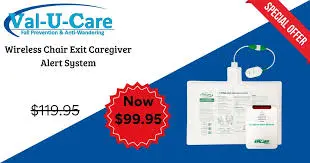
Val-U-Care is a direct-to-consumer hardware vendor for small care homes and home caregivers that need pre-programmed wireless alerting.
The system is built around simple hardware setup, not software installation, central analytics, or hospital-grade nurse call procurement.
Where Val-U-Care fits
Val-U-Care fits small care homes, group homes, assisted living settings, and home caregivers that need basic wireless call coverage.
The central monitoring unit supports up to 40 residents, with no cords or software installation required. A facility close to 40 residents should verify expansion options before buying.
Core characteristics include:
Pre-programmed hardware: devices arrive configured for plug-in setup.
Cord-free alerting: wireless components reduce the need for room cabling.
Small-setting capacity: the published capacity cap suits homes below 40 residents.
Hardware-only operation: public product information does not show central analytics or software reporting.
Limits to confirm
Val-U-Care is closer to self-install alert hardware than to an installed nurse call platform with response analytics and facility reporting.
Before requesting a quote, check:
Resident capacity: confirm the 40-resident cap and what happens if the facility grows.
UL 1069 status: verify whether your facility type requires listed nurse call equipment.
Reporting duties: decide how staff will record calls, response times, and incidents without software logs.
Support: confirm warranty length, response times, replacement parts, and operating-hours coverage.
How to choose a nurse call system supplier
Use these five checks to narrow the shortlist.
Ask which standard the system is listed under and match it to your setting. US hospitals usually need UL 1069 or an ETL equivalent, while UK and EU buyers should ask for relevant safety documentation.
Check whether alerts run on facility Wi-Fi, dedicated radio frequency, mesh, or long-range wireless. Network architecture decides the coverage test and who must support the system.
Decide whether you need alerts only, or a record of every call, acknowledgement, and response time. Inspection-heavy settings usually need automatic logs.
Confirm who surveys the site, installs the devices, trains staff, and supports the system after go-live. A fast wireless pilot still needs clear ownership.
Compare the full commercial model, not only the hardware line item. One-time purchase, subscription, and modular expansion move software, maintenance, and support costs into different places.
Questions to ask before you request a quote
Use the quote call to test cost, compliance, support, and rollout risk before procurement.
Question | Why it matters | What a good answer looks like |
Is installation labor included? | Hardware price rarely covers the full site work. | Survey, cabling or repeaters, commissioning, training, and sign-off are listed as separate line items. |
What is the 3-year total cost? | Software, support, replacements, and expansion can outweigh the initial device price. | One view covering hardware, software, cloud fees, maintenance, support contracts, replacement parts, and expansion. |
Is the system UL 1069 listed? | Clinical and licensed-care projects often need active listing evidence. | A current certificate with model numbers, facility types, and the relevant UL or ETL pathway. |
Which UK or local regulations does the equipment support? | In England, CQC Regulation 12 expects safe equipment and risk management. | The supplier explains equipment safety, risk controls, inspection records, and the care setting covered. |
Does alerting depend on Wi-Fi or the internal network? | Downtime, dead zones, firmware updates, and interference affect response. | A written failure plan covering network outages, coverage testing, updates, repeaters, and escalation. |
What happens at 2 a.m. on a Sunday? | Support gaps surface during low-staff shifts. | Written support hours, escalation route, remote access policy, and response commitment. |
Can we pilot one ward before rollout? | A pilot avoids whole-site commitment before staff have response data. | A named zone, success metrics, staff training plan, response-time measures, and a report before scaling. |
When nurse call alone isn't enough: how Guardian covers the gaps
Nurse call is useful, but it is still reactive. Someone must use a nurse call button, hear the alarm, acknowledge it, and reach the right room quickly.
The gaps appear when that chain breaks.
A fall is not acknowledged fast enough, an alert keeps sounding unanswered, or a missed workflow stays invisible until an incident, inspector finding, family complaint, or disputed visit exposes the gap.
NHS England's community falls response guidance includes care homes in falls-response planning, which is why response workflow and records matter after an alarm fires.
When falls dominate the risk review, the response-workflow fall detection roundup compares wearable and passive approaches.
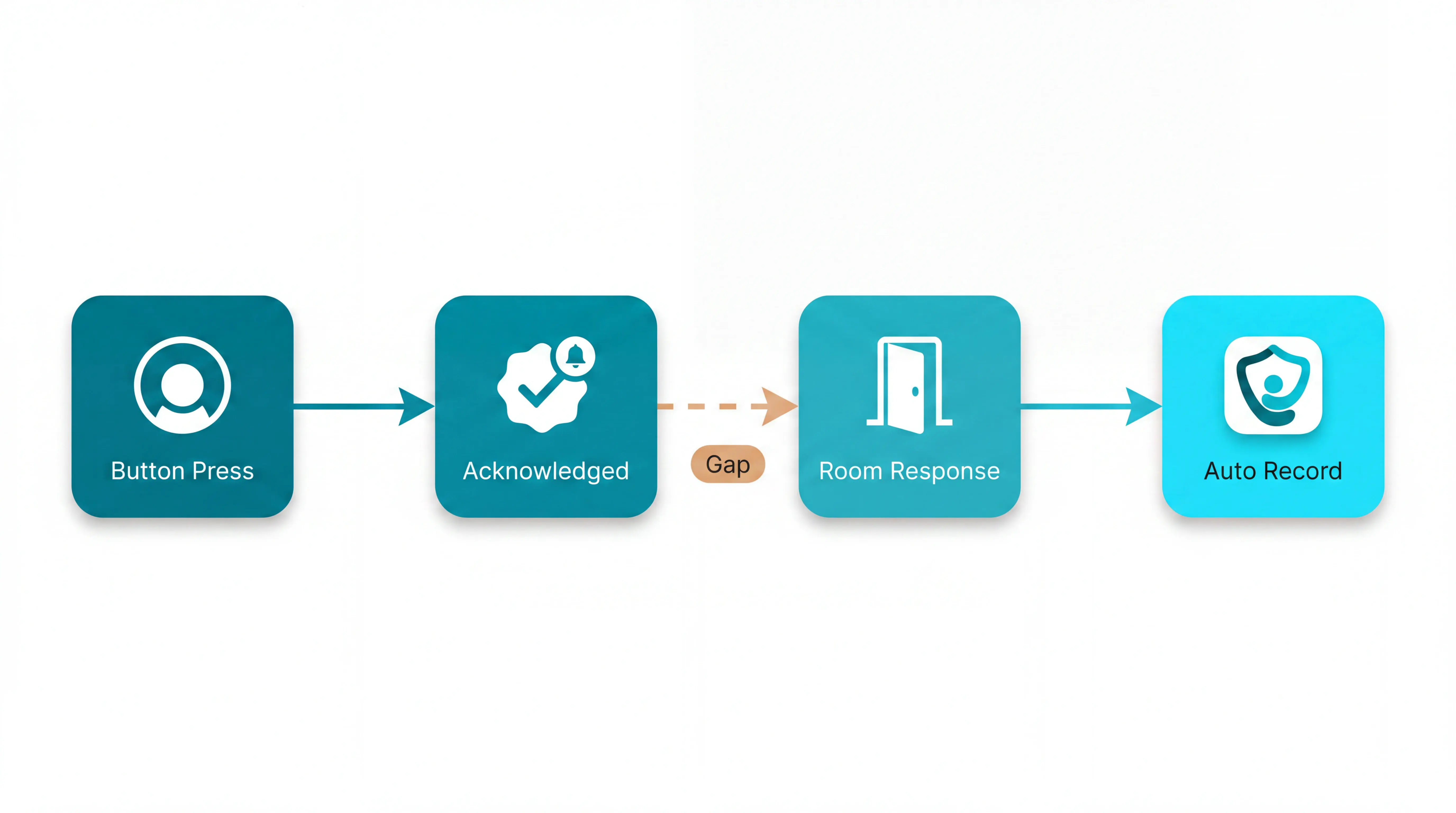
Guardian adds a sensor and records layer around nurse call:
Motion, bed exit, and SOS alerts help staff see risk earlier, not only after a resident calls.
Camera-free monitoring protects privacy while still showing what needs attention.
Alerts to existing devices give staff the resident, room, and event without adding another pager.
Clean automatic records show visits, alerts, response times, and patterns after the shift.
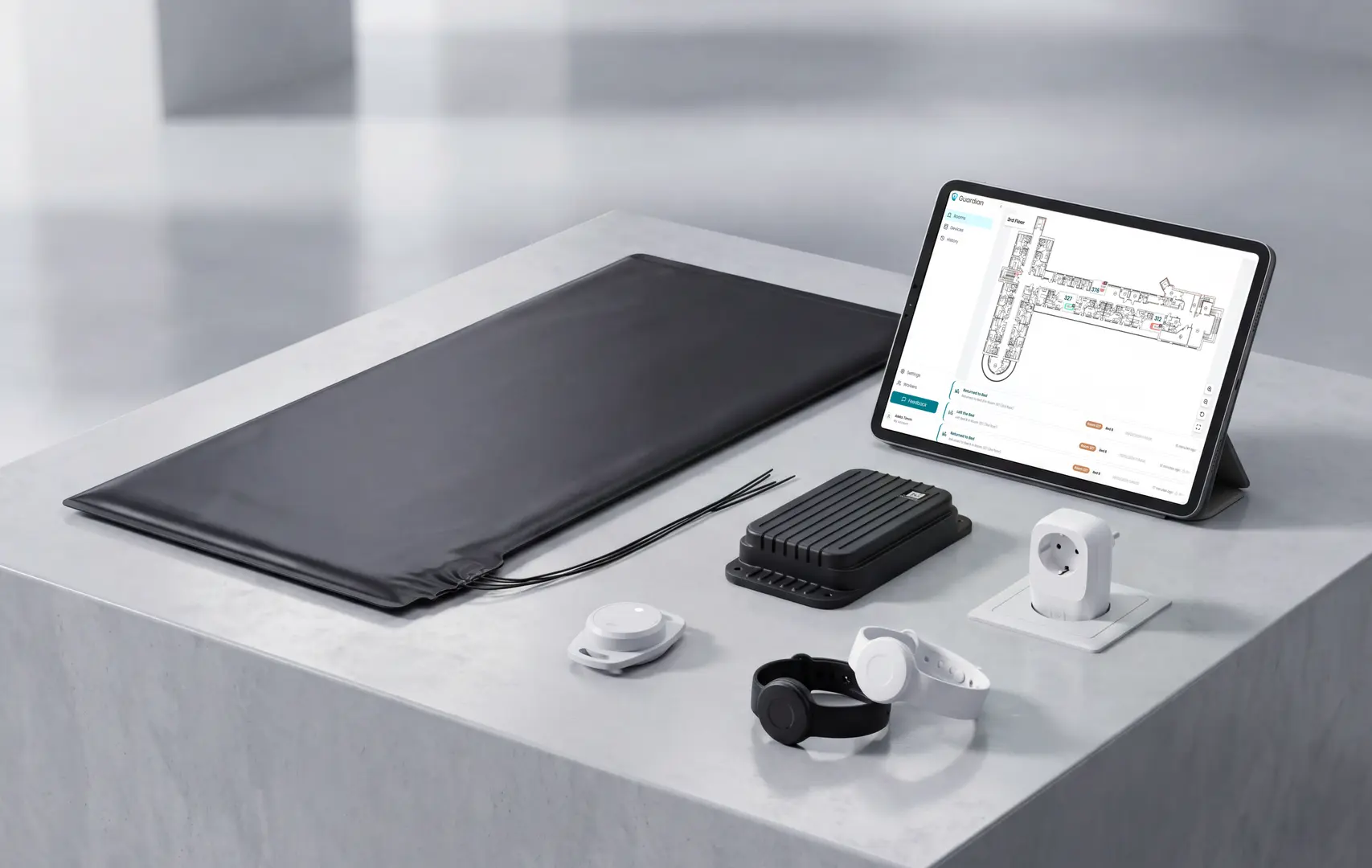
Pilot Guardian in one ward or team for 6–8 weeks. You get an impact report with response times, visit verification, and ROI before deciding what to roll out next.
Neither is universally better. Wired suits new-build hospitals with planned conduit, while wireless nurse call options suit occupied care homes, retrofits, and campus sites where cable runs would disrupt care.
Use the building, not the brochure, to choose the architecture:
Option | Best fit | Watch-outs |
Wired | New builds | Conduit, contractors, lead time |
433 MHz wireless | Small retrofits | Range, RF interference |
900 MHz mesh | Larger occupied sites | Battery maintenance |
LoRa wireless | Multi-building campuses | Supplier support, coverage testing |
Wireless has the clearest advantage when you need speed, low disruption, or coverage across separate buildings. It avoids wall-cutting, conduit runs, and long installation windows.
Wired has the clearest advantage when the building is stable and cabling is already planned. It removes battery upkeep at call points and avoids radio-frequency signal risk.
Care-home selection adds staffing and pilot questions beyond wiring; the occupied-care nurse call guide covers those checks.
Before choosing, ask suppliers to prove:
Coverage: Will every room, corridor, garden, and outbuilding be tested?
Battery process: Who checks, replaces, and records device batteries?
RF risk: How will metal, concrete, lifts, and other wireless devices be handled?
Expansion path: Can the system grow across wings, floors, or buildings?
Often, yes. UL 1069 is the U.S. safety standard for hospital signaling and nurse call equipment, and many healthcare projects require it before approval.
Standard | Covers | Where it matters |
UL 1069 | Nurse call signaling | Hospitals, SNFs, specifications |
UL 2560 | Wireless emergency call | Wireless resident-call systems |
CE/UK documents | UK/EU compliance | Non-U.S. procurement |
UL 1069 looks at electrical safety, visible and audible signaling, call initiation, reset behavior, and reliable system operation. UL 2560 is the related standard buyers often check for wireless emergency call equipment.
UK NHS facilities should also check HTM 08-03, the Health Technical Memorandum covering bedhead services and nurse call in hospital settings.
Requirements usually come from state codes, healthcare construction specifications, CMS-related survey expectations, VA or federal procurement rules, or the facility's own consultant.
In this article, the suppliers that explicitly carry UL or ETL equivalents are:
Intercall Systems: UL-listed nurse call positioning.
BEC Integrated: UL/ETL equivalent documentation.
Wireless Nurse Call: UL 1069 or UL 2560 positioning.
Frequency Precision: CE and UK documentation, not UL 1069.
If a supplier does not publish a listing, do not assume the system is unsafe. Ask for the current certificate, model numbers, and which facility types the listing covers.
Standards only narrow eligibility; the compliance-aware nurse call comparison ranks systems by care setting, reporting, and deployment fit.
Nurse call systems can cost under $100 for a basic single-room wireless kit, or hundreds of thousands for installed hospital-grade infrastructure.
Published cost examples give the clearest benchmark:
Cost item | Typical range | Notes |
Single-room kit | Under $100 | Basic wireless setup |
Modular components | Around $90+ each | Buttons, pagers, sensors |
Complete room kit | Low thousands | Supplier and scope dependent |
Wired per-room estimate | $2,500-$4,250 | Hardware plus base software |
Installed facility bid | $300,535-$355,145 | Plus about $9,000 yearly |
400-bed hospital lifetime | $500,000-$2,000,000 | Hardware, software, support |
Annual maintenance | 8%-18% | Often tied to system cost |
Cost notes:
The $2,500-$4,250 per-room estimate and 15%-18% software maintenance range are reported by Fortune Business Insights, citing MDBuyline.
The installed facility bid range comes from Cape May County's public rebid tabulation for Crest Haven Nursing and Rehabilitation Center.
Treat these as planning benchmarks. Get supplier quotes for your facility type, build, and scope.
The total price usually combines:
Hardware: call stations, pull cords, lights, pagers, handsets, hubs, or controllers.
Installation: cabling, conduit, room works, commissioning, and contractor time.
Software: monitoring dashboards, reporting, licensing, and user access.
Operations: batteries, support, staff training, and future expansion.
Upfront hardware is not always the biggest cost. A low purchase price can become expensive if batteries, support, reporting, and software fees are not planned.
Initial setup and ongoing licensing are common barriers in care technology. The CQC report cites 73% for setup costs and 70% for licensing fees.
Guardian does not publish B2B pricing. It starts with a scoped 6-8 week pilot, then sets rollout terms after the ROI report and rollout plan.
Yes. Nurse call systems can connect with EMR/EHR platforms, RTLS, mobile alerting, wireless phones and pagers, fall protection, wander prevention, and reporting software.
The important question is how the connection works:
Method | What it means | Check before buying |
Native integration | Built-in vendor link | Named supported systems |
API | Data shared programmatically | Documentation and limits |
Middleware | Connector between platforms | Owner and support model |
Export/reporting | Files or dashboards | Format, frequency, fields |
Interoperability is still a real procurement risk. The 2025 Argentum Technology Report found that 77% of senior living executives rank interoperability as a top-three technology barrier.
Test the exact connection your team will use during procurement:
US care platforms: PointClickCare and Netsmart.
UK care platforms: Person Centred Software.
Adjacent systems: RTLS, mobile alerting, wireless phones, pagers, and reporting exports.
Proof: a live demo of the connection, not a compatibility list.
Care data also contains narrative notes, exceptions, and handover context, not only neat structured fields. That can make EMR, EHR, and reporting connections harder than a sales sheet suggests.
Ask each supplier for proof, not just compatibility language:
Validated systems: Which EMR, EHR, RTLS, and paging tools are live today?
Event detail: Does the alert include resident, room, device, time, and status?
Workflow fit: Who receives alerts, closes them, and reviews reports?
Failure handling: What happens if Wi-Fi, middleware, or exports fail?
Data ownership: Can you export logs for audits, families, or regulators?

Author
Aleks Timm
Aleks Timm leads Guardian and builds privacy-first operations technology for care homes and home care providers. Teams get location-aware alerts they can act on, clearer situational awareness, and measured insight into how care work actually runs.
Read MoreRecommended reads
Keep reading
8 Best Nurse Call Systems for Hospitals & Care Facilities
Discover the 8 best nurse call systems for hospitals and care facilities—compare features, reduce alert fatigue, and find the right...
Read more
Smart Nurse Call Systems for Care Homes and Home Care Providers
Smart nurse call systems for care homes and home care providers: compare features, improve response times, and choose the right...
Read more
7 Best Care Home Audit Tools for Care Homes (Compared)
7 best care home audit tools compared: find CQC-ready options, pricing, and action tracking to streamline audits and improve...
Read more