WiFi is the right fit when...
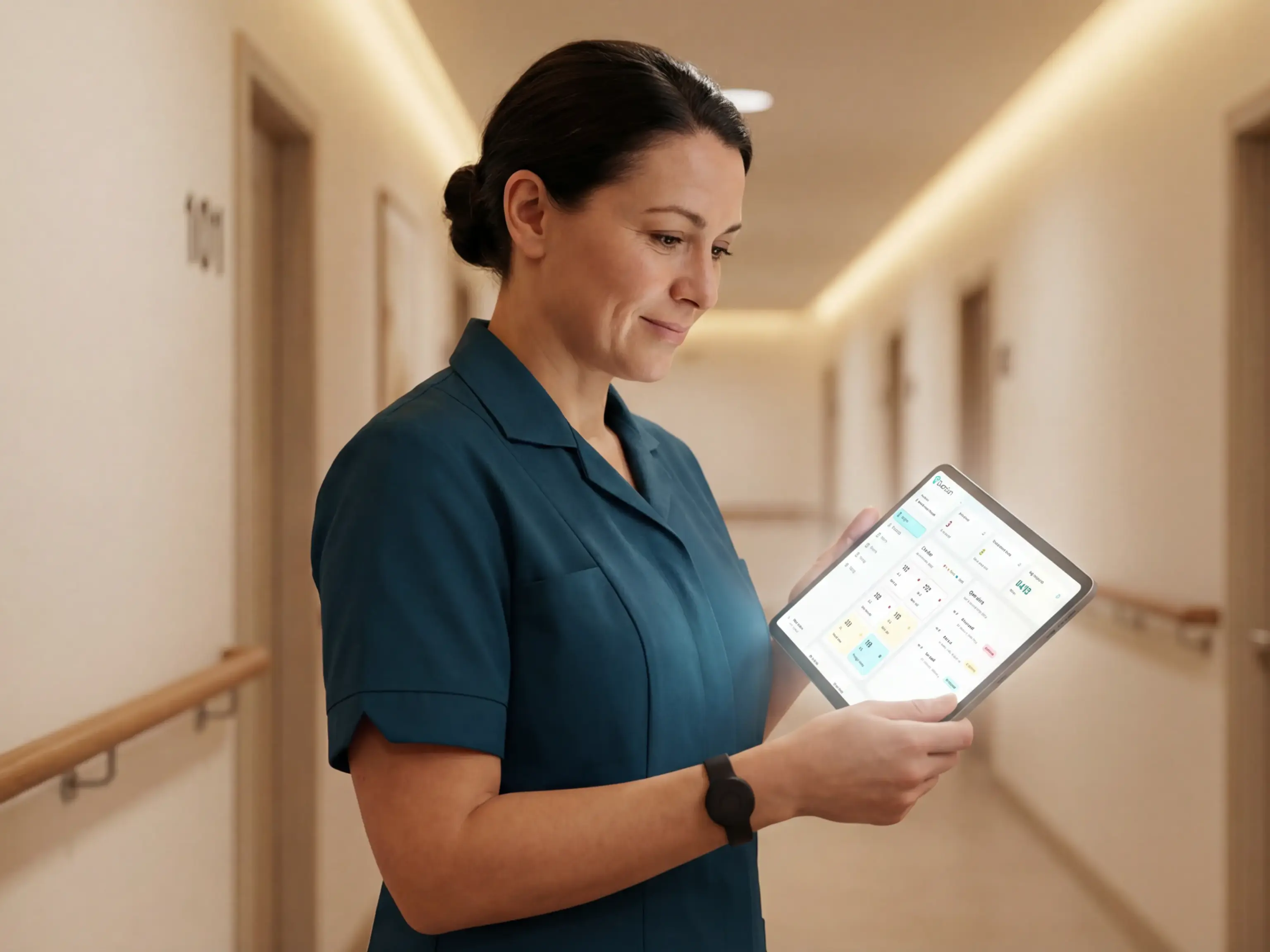
Staff need mobile app-based alerts on smartphones they already carry.
The facility has a reliable existing WiFi network.
Quick deployment on existing infrastructure is needed, with setup running about a week per ward.
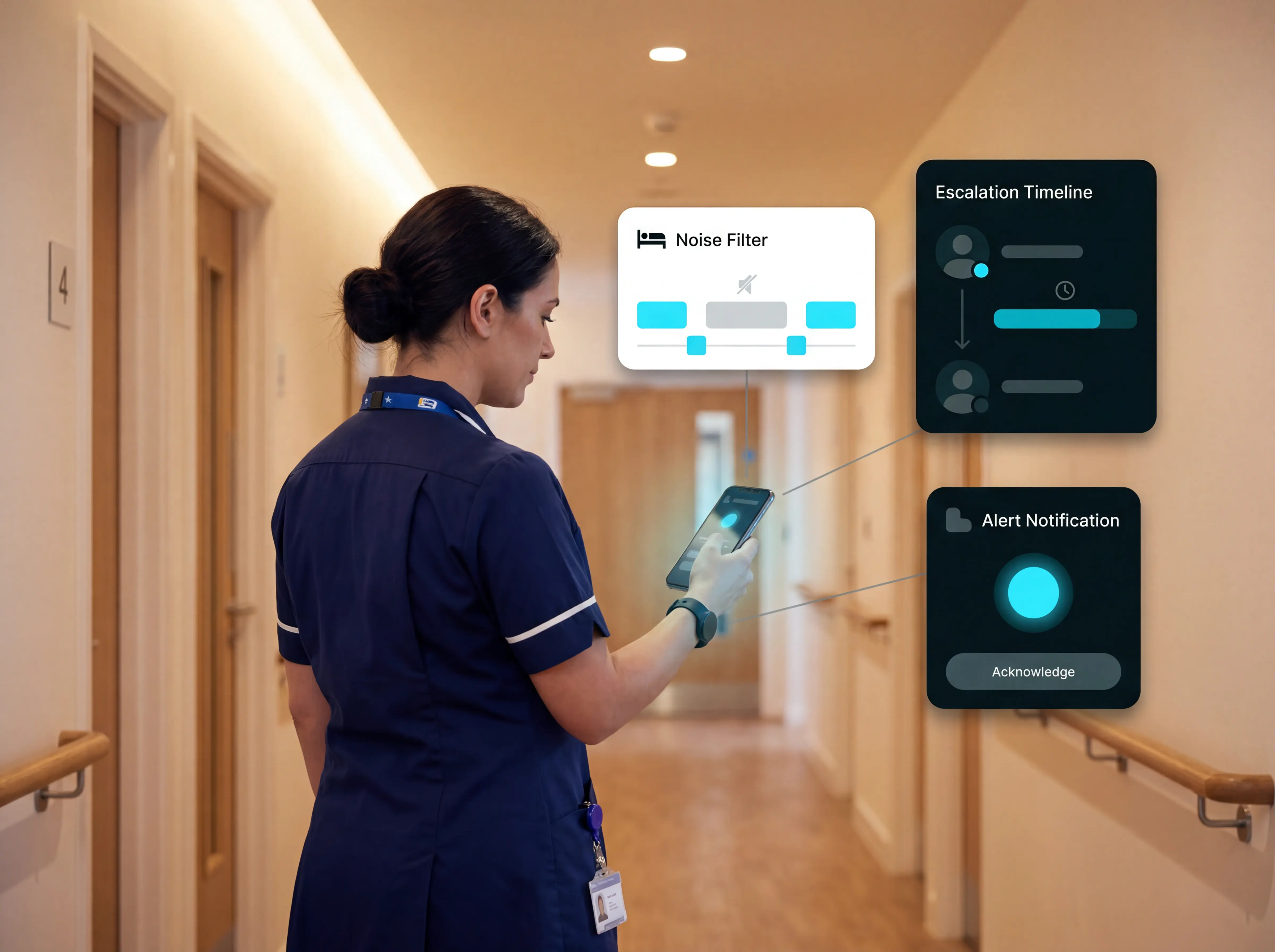
WiFi Nurse Call Systems
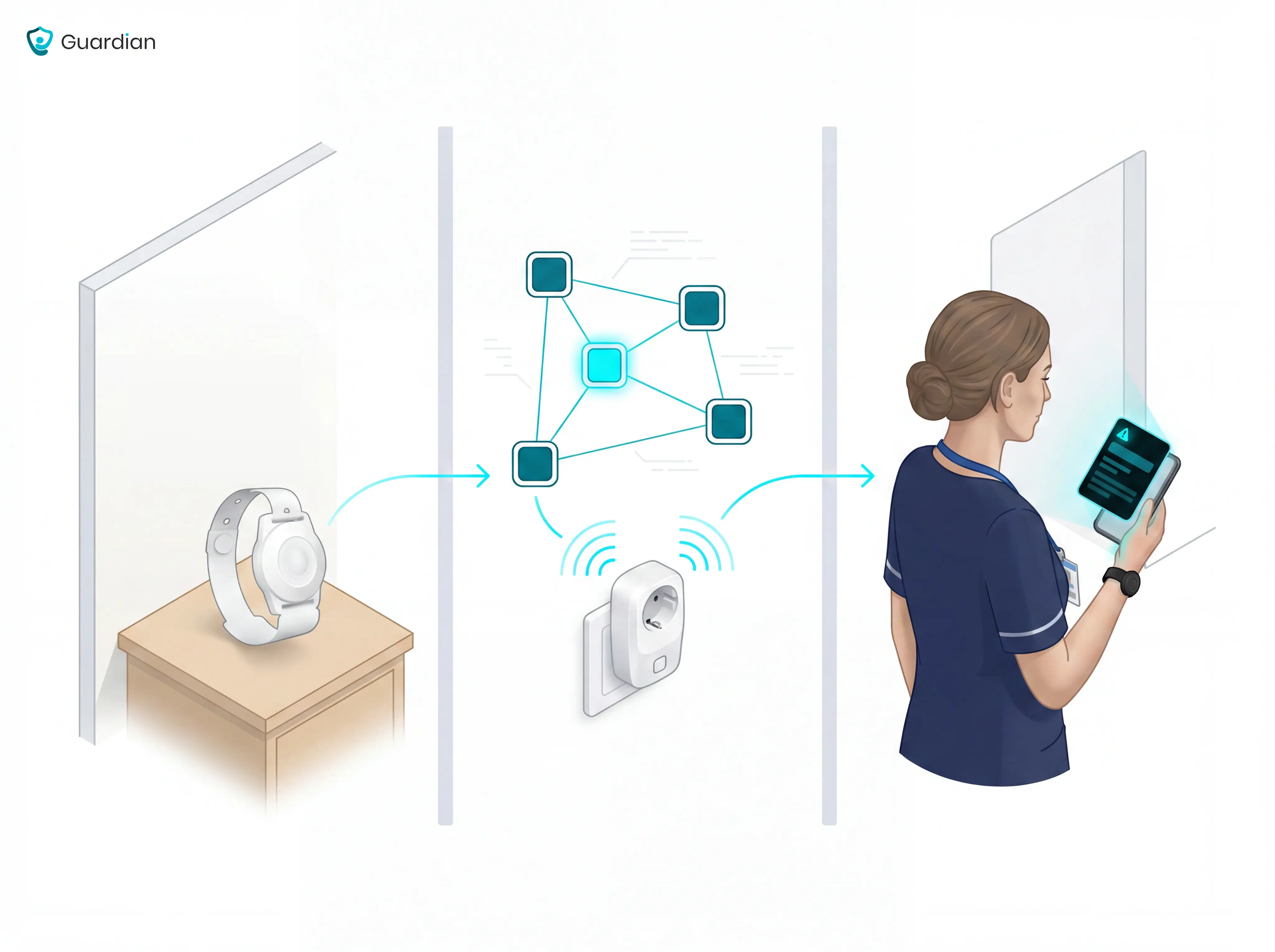
How it works
System types
| Column 1 | Wired | Wireless (RF) | WiFi |
|---|---|---|---|
| Installation | Cabling through walls, floors, and ceilings. Disruptive in operational facilities. | Buttons mount where needed. No major construction. | Routes over existing IP network. No separate cabling or RF hardware. |
| Coverage | Fixed to designated call points where cabling was installed. | Extends throughout facility. 900MHz mesh options penetrate walls consistently. | Facility-wide via existing network. Check for dead spots in older buildings. |
| Network dependency | Standalone. No network required. | Operates on dedicated RF frequency. No WiFi dependency. | Shares facility network. Encrypted communications. Interference managed through channel planning. |
Choosing your infrastructure
Features that matter
Facility types
Facility types
Guardian in action
Buyer's guide
Ward pilot
Common questions
Author
Aleks Timm leads Guardian and builds privacy-first operations technology for care homes and home care providers. Teams get location-aware alerts they can act on, clearer situational awareness, and measured insight into how care work actually runs.
Read MoreRecommended reads

10 Best Room Monitors for Elderly Home Care: compare top options for safety, alerts, and peace of mind to find the right fit for...
Read more
Discover the 7 best medical alert systems with fall detection—compare top picks, features, and response times to find the right...
Read more
Emergency alert systems for care homes: discover what staff really need, avoid costly mistakes, and choose the right setup fast.
Read more