

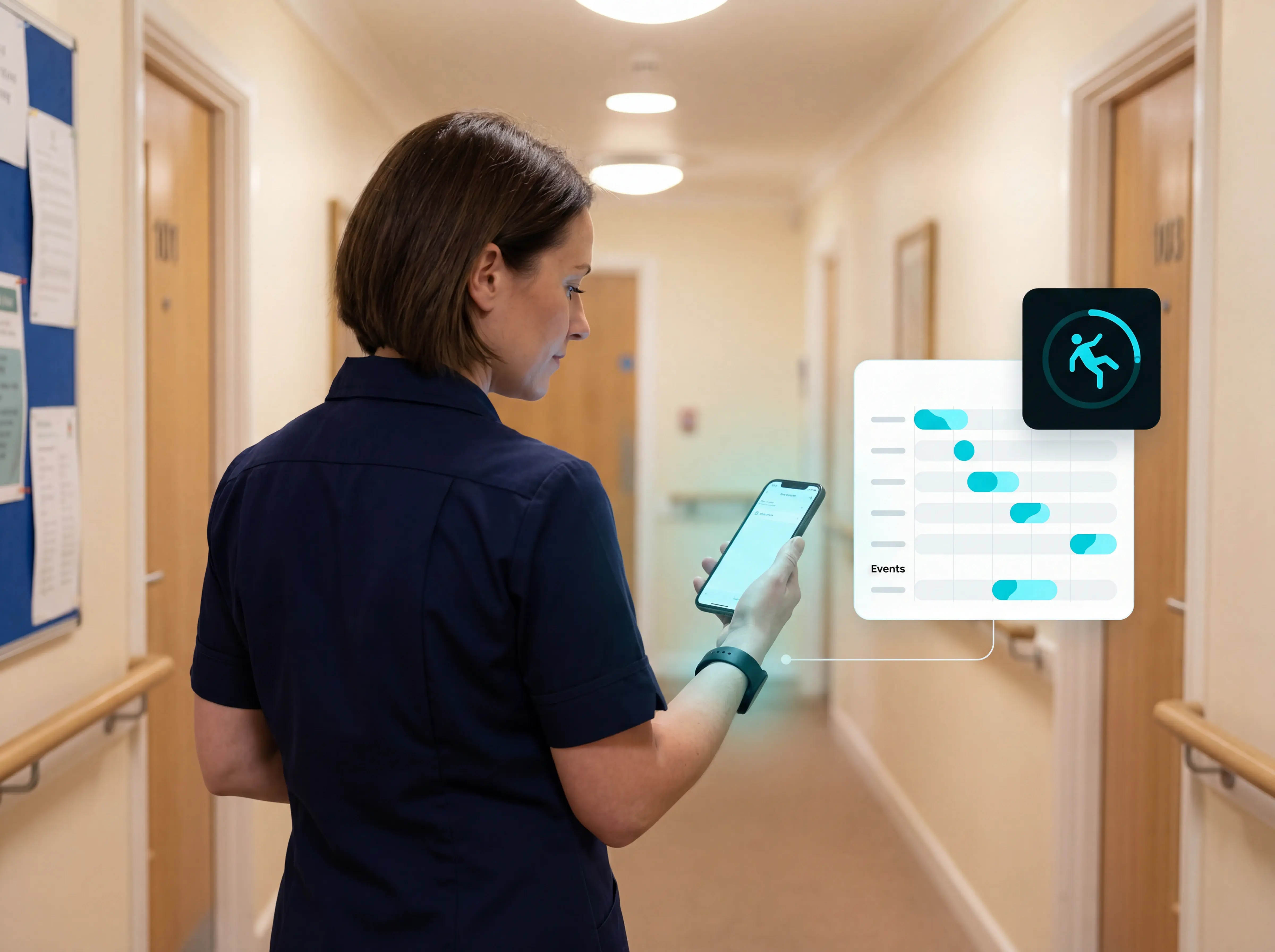
Smart Caregiver Alert Systems for Elderly Safety
In this article
Most care home alert systems generate more noise than signal. When every bed exit, slow rise, and door open triggers the same alarm tone, staff learn to hesitate — and real events get missed in the pause.
This guide helps ops managers evaluate systems that reduce noise and deliver full situational context. We cover sensor types, alert routing, and the right questions to ask before buying.
What are smart caregiver alert systems?
Smart caregiver alert systems are sensor-based devices that automatically notify caregivers when an elderly or at-risk person needs attention or attempts a potentially dangerous action.
Home care providers use them to monitor elderly clients who live alone or need overnight supervision. Care homes and nursing facilities rely on them for facility-wide visibility across every resident on a ward.
In home settings, alerts transmit wirelessly to a pager or phone, with cordless ranges up to 300 feet. Facility-grade systems route alerts through a floor-plan dashboard, so staff see the exact room before they move.
Core use cases include bed exits, door and facility exits, falls, and SOS calls from distressed or unresponsive residents.
Types of sensors used in caregiver alert systems
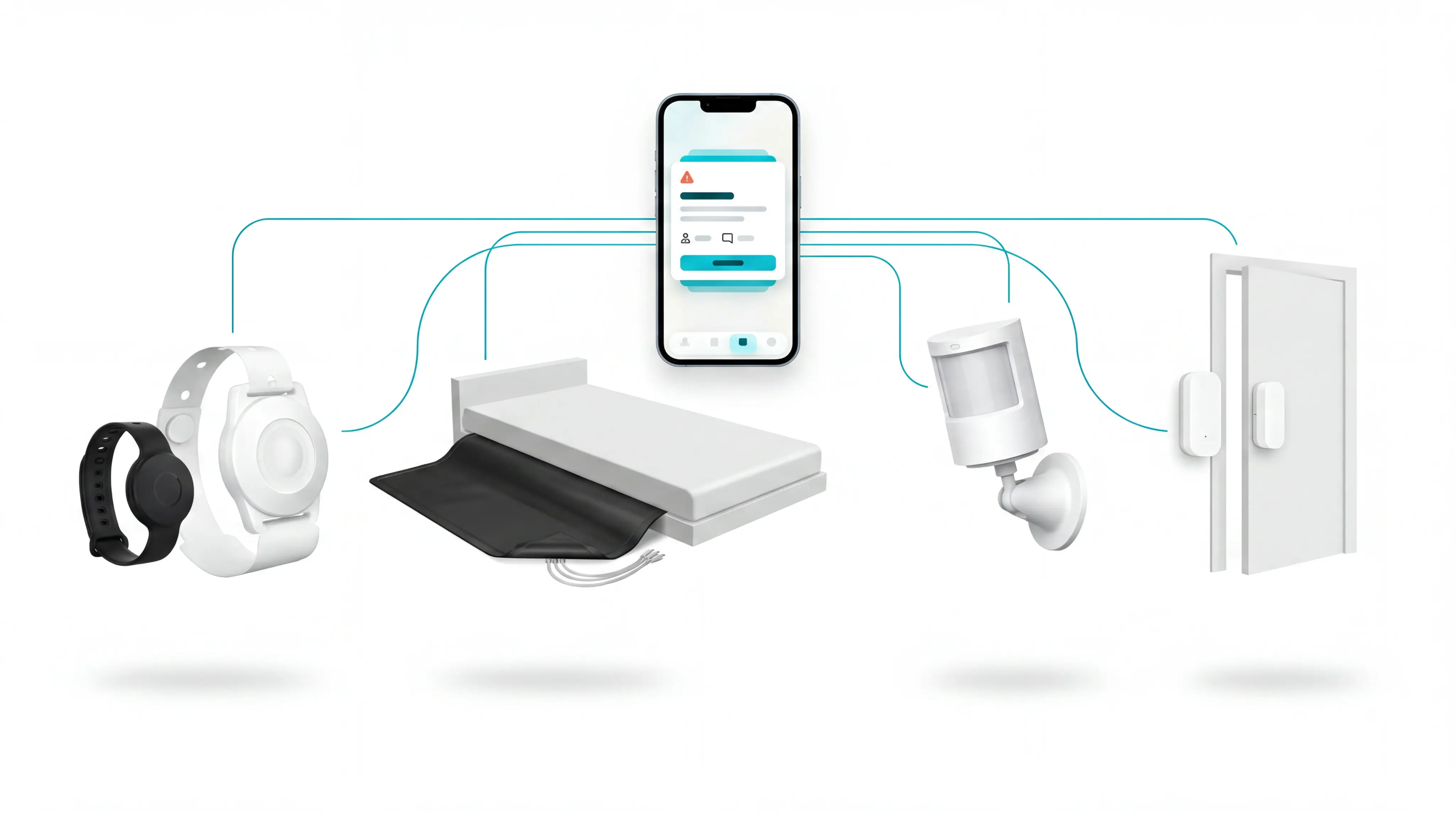
Caregiver alert systems usually combine a few monitoring inputs rather than relying on one device type. In practice, that often means bed coverage, wearable or SOS input, room activity sensing, and optional door or routine-change sensors where the care setting needs extra context.
Bed exit sensors
The most common fall-prevention sensor in residential care, a bed exit pad sits under the mattress or on a chair seat and sends a wireless alert the moment a resident's weight lifts off.
Most high-risk wards run one pad per resident, with a chair-seat variant for residents who spend daytime hours seated rather than in bed.
Pads should be wiped down with a damp cloth between residents. Most are not waterproof, so avoid soaking or steam cleaning.
Tip: Centre the pad under the resident's lower back and hips. Positioning it too close to the feet increases the chance of a missed exit.
When the resident's weight lifts off, the pad sends a wireless signal to a pager or monitor.
Room location data shows on the receiving device, so caregivers know which resident and which bed before they move.
Door and exit sensors
Door and exit sensors still matter in memory care and high-risk settings, but they work best as one layer inside a wider monitoring setup. A door event becomes useful when staff get the room or exit point immediately, not just a buzzer from somewhere on the ward.
Common mistake: Treating door contacts as the main safety layer. Use them for external exits, restricted areas, and specific high-risk rooms, then combine them with bed, wearable, and room-level activity data.
Motion sensors
Room activity sensors still have a role, especially for residents who cannot or will not wear a device. In most modern setups, they work alongside wearables, bed coverage, and alert rules rather than carrying the whole monitoring job alone.
Passive infrared detectors are still common for room-level activity. The stronger systems combine that signal with bed sensors, wearable inputs, and alert rules, so one movement event does not have to carry the whole monitoring job.
Wi-Fi enabled models push movement notifications directly to a smartphone or care dashboard.
Useful monitoring depends on filter logic and sensor mix, not just detection. Time-based suppression holds alerts during expected waking hours so a 6am bathroom trip does not page the night team.
Threshold rules require sustained activity or a meaningful deviation from routine before an alert escalates. Conditional filters tied to time, patterns, and resident profiles cut non-actionable alerts and keep staff focused on signals worth acting on.
Tip: Use room activity sensors to fill gaps, not to do every job. Bed sensors handle high-risk night exits more precisely, and wearables add a direct resident-linked input when the person can use one consistently.
Floor mat alarms
Floor mat alarms still exist, but they are less central in modern care-home setups than bed sensors and room-level alerts. They can work well at a bedside or chair, though they are usually a narrower tool than a system that combines passive sensing, room context, and smart alert rules.
Bed exit sensor | Floor mat alarm | |
|---|---|---|
Where it goes | Under the mattress or chair cushion | On the floor beside the bed or chair |
When it fires | When the resident's weight lifts off the surface | When the resident's foot makes first contact with the floor |
SOS call buttons
Residents who are conscious and able to act can summon help instantly with a wristband or wall-mounted button.
Passive sensors fire automatically based on detected movement.
SOS buttons require the resident to be conscious and able to act. Best suited for non-emergency requests like bathroom assistance.
Wristband or pendant for wearable use
Wall-mounted or bedside unit for fixed locations
Multi-sensor compatible, pairing with monitors that support up to six wireless components
Useful where no nurse call infrastructure exists, replacing fixed wiring with wireless coverage
Understanding what each sensor does is the groundwork. The harder question is what distinguishes a system worth buying.
What to look for in a caregiver alert system
Knowing which sensors a system uses matters. What matters more is whether the system combines wearable and passive inputs, routes clear room-level alerts to staff, and records what happened without flooding the ward with noise.
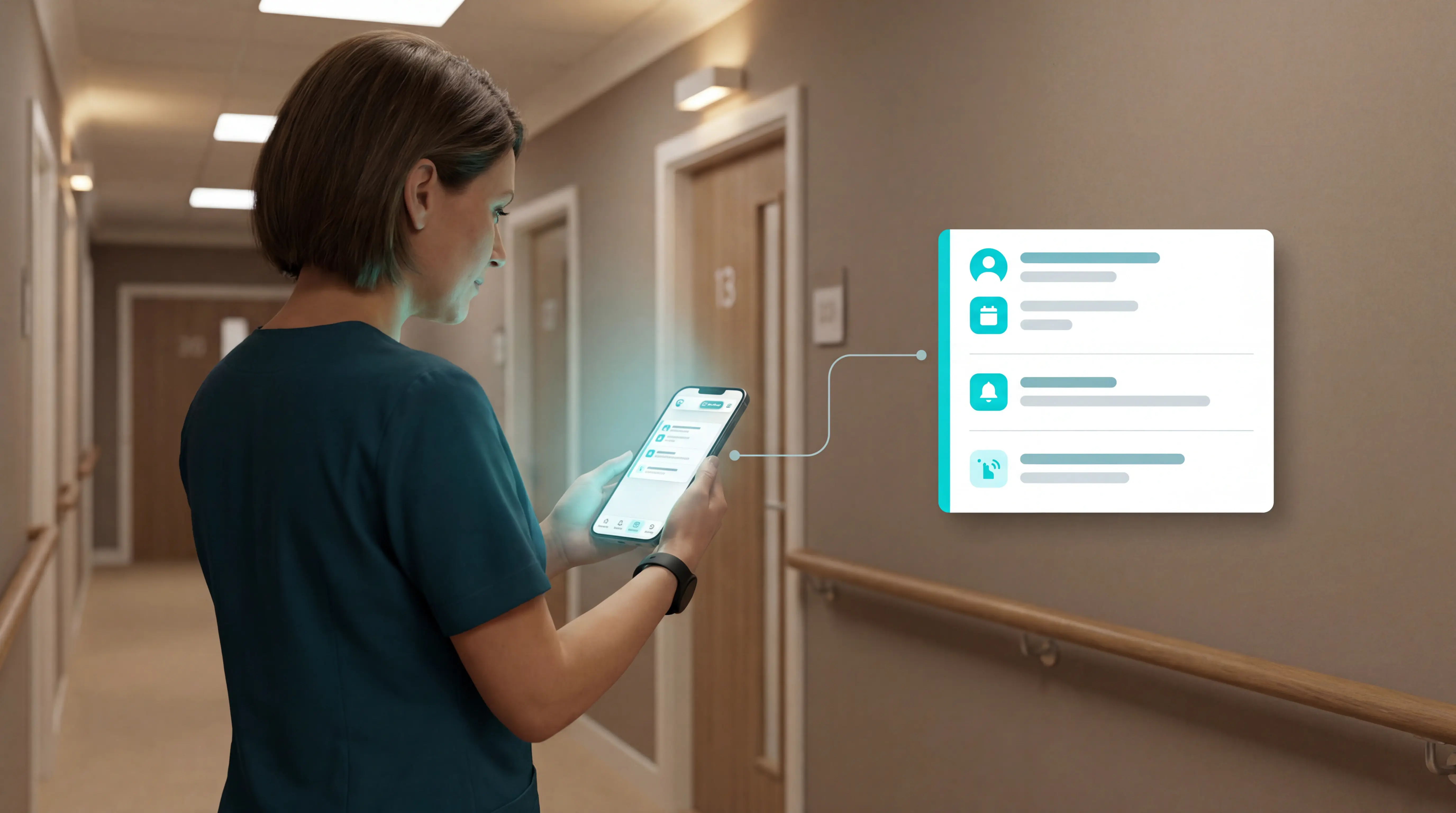
Alert quality
Alert fatigue is a documented safety risk in facility care. When caregivers receive too many alerts per shift, urgent events get lost in the noise.
Look for configurable smart rules that filter noise at the source. For example, an alert fires only when a resident is out of bed for more than 15 minutes at night, not on every movement.
Ask vendors for alarm frequency reports from live installations and compare total daily alert volumes.
Passive detection vs. button-press dependency
Around 80% of older adults who fall and have a call alarm do not activate it. The practical lesson is not to avoid wearables entirely. It is to avoid relying on a button press alone. Stronger systems combine wristbands or pendants with passive sensing such as bed coverage, door contacts, or room activity alerts.
Residents with dementia frequently remove or stop using wearables. A 2023 study found 46% of people with dementia were not wearing their social alarm during interview.
Wireless range and alert delivery
Setting | What you need |
|---|---|
Home / small facility | RF cordless, ~300 ft range, single-floor coverage |
Multi-wing facility | Enterprise mesh or Wi-Fi, multi-floor, location-aware routing to staff phones |
A wall-mounted buzzer that fired for 30 minutes without a response is not a smart nurse call system. Location-aware alerts routed directly to a caregiver's phone or tablet close that gap.
Ease of deployment and maintenance
Look for:
Pre-programmed devices that need no technical setup
Cordless design to remove cable trip hazards from resident areas
Battery or AC adapter flexibility where wall sockets near beds are limited
A documented battery replacement schedule that fits daily maintenance workflows
The most common deployment failure is treating battery replacement as an ad hoc task. Build it into a fixed weekly checklist, or sensor drop-off during a night shift becomes a gap in coverage rather than a visible alert.
Request a 24-month TCO breakdown that includes battery replacement cycles, support calls, and any per-alert fees.
Audit trail
A basic alarm tells you something happened.
An operational platform records when the alert fired, who acknowledged it, and how long the response took.
Families increasingly self-verify care quality when formal records are unavailable.
Operators who cannot produce clean incident records face serious regulatory exposure when inspectors arrive.
In EU-regulated care settings, incident response records are a standard inspection requirement under national care quality frameworks. If your care home already runs an EMR or eMAR system, check whether the alert platform logs independently. Guardian records to its own Portal without an EMR dependency.
Ask vendors for a documented multi-floor range test, not just spec sheet figures.
Every criterion above involves a tradeoff. The three that come up most often in buying decisions are covered next.
Common tradeoffs to consider
These three come up in almost every buying conversation.
Tradeoff | What it means in practice |
|---|---|
Sensitivity vs. false alarms | Higher sensitivity catches every exit but increases false alarms from normal repositioning. Lower sensitivity reduces noise but raises the risk of a missed exit. |
Wireless vs. wired maintenance | Cordless systems avoid cable hazards, but wireless pad transmitters typically need full replacement after about a year. Wired systems cost less to maintain but add installation complexity and trip hazards. |
Privacy-first vs. cameras | Camera-based monitoring is largely off the table for resident rooms. GDPR, dignity standards, and family expectations all push against it. |
Bed coverage, room activity sensing, door contacts, and wearable inputs can all support a privacy-first setup. The key is getting the resident, room, and event clearly, without needing cameras in resident spaces.
Tip: Start with higher sensitivity during the first week of any new system. Once you know how many normal repositioning events occur per night, dial the threshold to match your ward's actual pattern.
The system covered next is designed to sit on the privacy-first side of that line by default.
How Guardian works in a care home
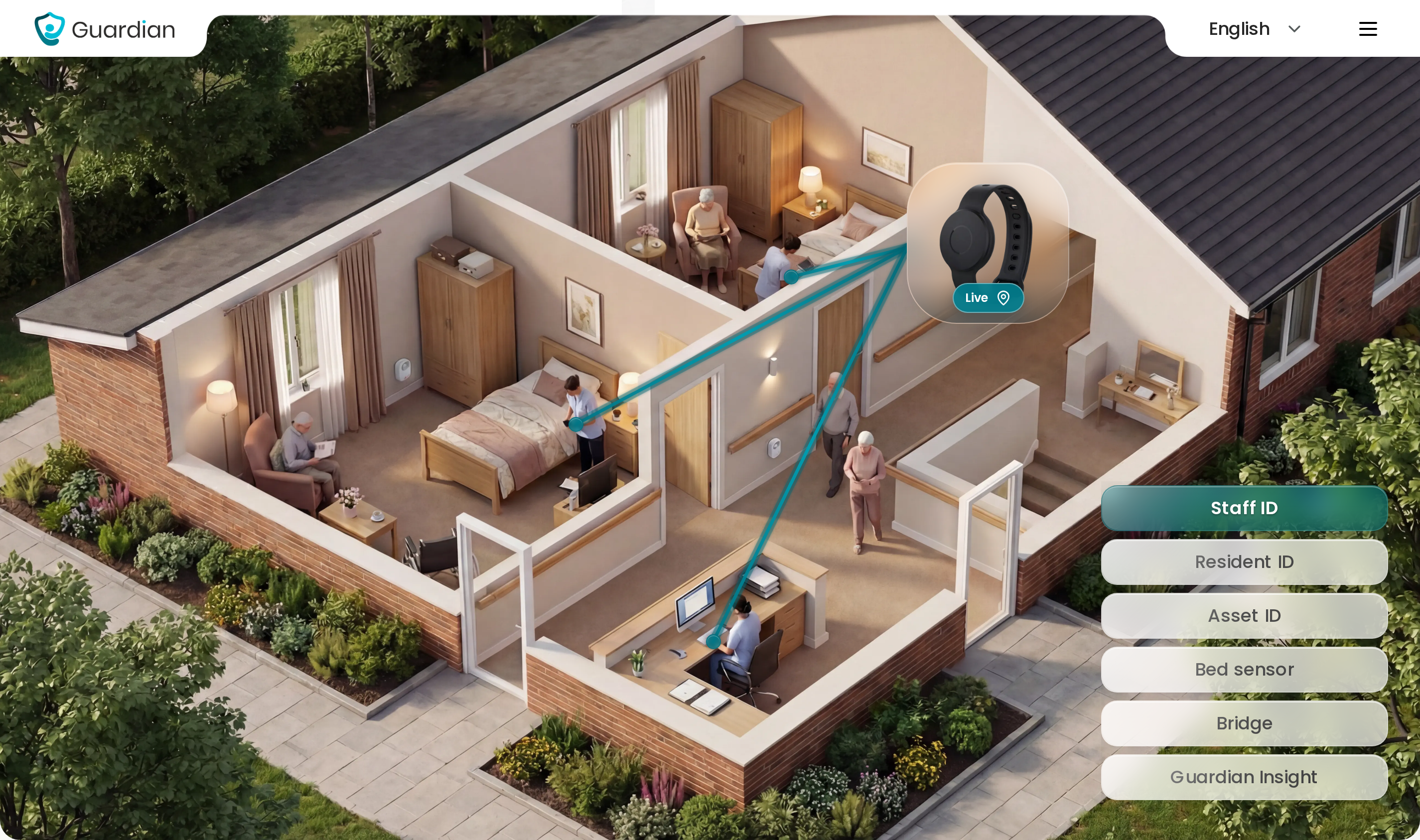
Guardian is a wireless, camera-free monitoring platform built for care homes and home care teams.
Guardian is one example of this newer setup: bed sensors, wristbands, room activity signals, and optional door, fridge, or stove sensors feed into a live floor plan. Location-aware alerts go to staff phones.
Visit and incident records generate automatically in the background.
How it works
Guardian starts with the monitoring inputs that matter most for the ward: bed exit coverage, room-level activity, SOS, and wearable support where it fits. Optional door, fridge, and stove sensors can be added when the care model depends on routine-change monitoring.
Workflow mapping session (1-2 hours with the ops lead).
Sensor placement mapped to facility floor plan.
Devices configured and tested (no drilling, no cabling).
Staff briefed on alert routing and Portal.
Go-live, typically within one week.
Sensor events feed into the Guardian Portal, overlaying live alerts onto a digitised floor plan. The same setup can also flag routine changes, such as missed kitchen activity or an unusual night pattern, when those signals are relevant to care planning.
Staff see the resident's name and exact room location on their phone or tablet. Not a generic zone number.
Smart rules cut notification noise. An alert only fires, for example, if a resident is out of bed for more than 15 minutes at night, suppressing routine movement that needs no response.
On alert quality: that is the configurable smart rules criterion from the buying guide in action.
Falls affect one in three adults over 65 each year. Passive sensor coverage, without any wearable, is what catches a bed exit before a fall becomes a floor incident.
When an alert fires
Alerts go to the devices staff already carry. No extra pagers or dedicated receivers needed.
Each alert includes the resident's name and room number, so the caregiver heads directly there without checking a board or calling the station.
Response time is automatically logged. This builds a timestamped audit trail with no manual entry required.
Bed sensors and room activity sensors detect events automatically. Wristbands add another resident-linked input where they suit the person, but the system does not rely on a button press alone.
On passive detection: that is the button-press dependency criterion settled.
Residents who cannot or won't wear a device
Bed sensors, room activity sensors, and optional door, fridge, or stove sensors cover residents without any wearable.
Passive monitoring is a primary capability, not a backup option for non-compliance.
Wristbands are one input, not the whole system.
Residents who can't or won't wear a device remain fully covered by the room-level sensor layer.
Fridge and stove sensors can be added to flag changes in daily routine. That matters more in home care and lower-acuity monitoring, where missed kitchen activity can signal declining independence or a break in normal routine.
That passive coverage also feeds directly into the automatic record, with no staff action needed at the point of the event.
Records and reporting
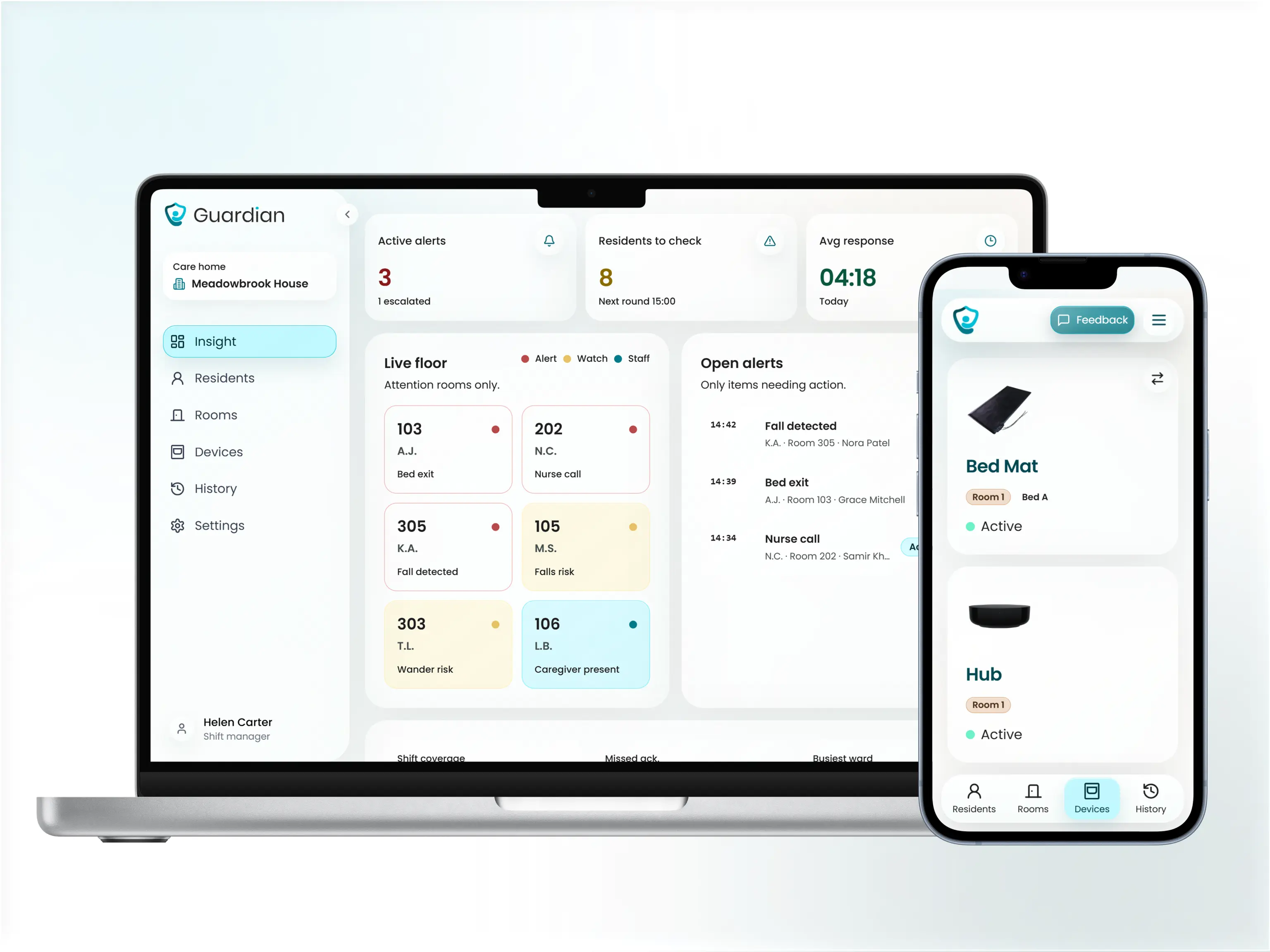
Visit logs, shift times, response times, and night summaries are recorded automatically. The Guardian Portal gives managers a live record of visits, incidents, alert volumes, and routine deviations without extra admin work at the end of the shift.
For compliance reviews, these automatic records are most valuable when they sit alongside audit tools with live evidence, so managers can connect visits, alerts, and incident patterns with follow-up actions.
Care managers typically spend 30-45 minutes per shift on manual visit logs and incident notes. Guardian eliminates that overhead.
If the care home already runs nursing home software such as an EMR or eMAR system, Guardian records to its own Portal independently. No integration required.
A 2023 study in npj Digital Medicine found passive monitoring systems reduced hospitalisation costs by 31% and ambulance calls by 49% in monitored cohorts. That is contextual evidence of the category's impact, not a Guardian-specific claim.
Guardian also produces per-resident night summaries and flags deviations from normal daily routines:
Unusual inactivity during expected activity windows
Changed sleep patterns flagged against the resident's baseline
Early signals of declining independence to support proactive care planning
After the 6-8 week pilot, Guardian delivers a written impact and ROI report. It shows the facility's own response times, alert volumes, and visit verification rate before and after.
Practical limits
Guardian covers care home wards and home care fleets. It is not a consumer product for families monitoring one person at home.
Entry is a structured 6-8 week pilot in one ward or team.
Operations leaders spend around an hour on the initial workflow mapping session, then Guardian runs in the background.
Wi-Fi is required. Guardian is fully wireless but depends on the facility's existing network.
The pilot ends with a written ROI report, not a contract renewal pressure.
Pricing
Scope and cost confirmed after the pilot.
The pilot ROI report puts Guardian's impact in the facility's own numbers, showing response times, visit verification rates, and admin hours saved.
Who should request a pilot
Guardian fits care homes and home care agencies that need verifiable visit records, faster incident response, and less alert fatigue. It works best where managers want one live view across residents, staff, alerts, and routine-change signals.
The end-of-pilot ROI report documents what actually changed in the ward: response times, alert volumes, and visits verified. The case for rollout is built on the facility's own data, not estimates.
See Guardian in action at your care home
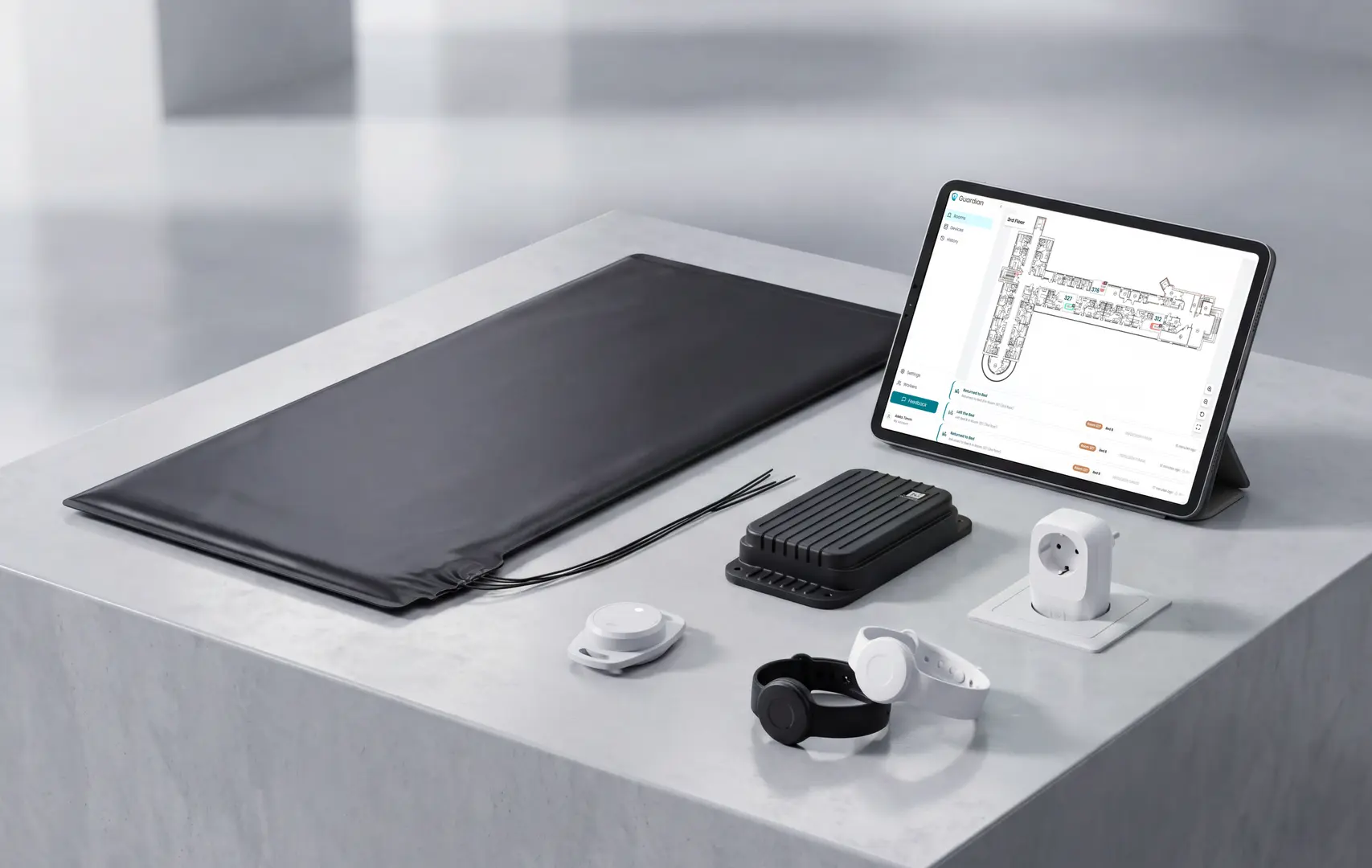
Alert fatigue is a documented safety risk. Guardian's configurable rules filter normal activity so alerts fire only when something needs attention, each one tied to a resident name, room, and position on your floor plan.
The pilot ends with a written ROI report built from your own data, not a sales pitch.
Guardian installs in one ward in about a week, without cabling or an IT project.
Run a 6–8 week pilot and receive a written impact report built from your own response times and alert volumes, including a clear ROI calculation. Try it now
Smart Caregiver Corporation is a legitimate hardware manufacturer with 30+ years in operation and an A+ BBB rating. For care home use: note that the hardware is older-generation and alarm noise in shared wards can be disruptive at scale.
Devices are FDA-registered and listed in GUDID with no recalls on record; rated 4.2/5 across 1,206 reviews on its own store
Free systems exist but eligibility is limited to low-income seniors, veterans, and Medicaid HCBS waiver enrollees. Standard Medicare does not cover personal emergency response devices.
Medicaid HCBS waiver — contact your state Medicaid office or local Area Agency on Aging, enroll in the waiver program, and receive a PERS device at no cost
Illinois EHRS — free for adults qualifying for the Community Care Program, including a 24/7 two-way pendant and optional fall detection; apply via the Illinois Department on Aging
Veterans pathway — a VA doctor must pre-enroll the veteran; the VA connects them with approved free PERS vendors such as Latitude Mobile Alert and MedEquip Alert. Learn more
PACE program — free PERS for participants 55+ in 33 states and DC; find a local program using Medicare's PACE finder tool. Find PACE near you
Medical Guardian is the highest rated medical alert system for seniors with a 9.9/10 score from NCOA testing.
NCOA's 2026 testing gave Medical Guardian a 9.9/10 based on a 29-second average response time, 1,400-foot range, and 5-day battery life.
For care home and home care operators, Guardian is a direct alternative to PERS devices like Medical Guardian. Where PERS covers one resident and depends on a button press (which most fallers never make), Guardian covers every resident on the ward with passive sensors. Alerts route with room-level location to the phones staff already carry, and visit records generate automatically. The starting point is a 6-8 week pilot with a written ROI report, not a subscription.
Smart caregiver alert systems detect wandering through sensors and alerts but do not physically prevent residents from leaving.
These sensors provide early alerts when movement is detected. Published accuracy varies by device, setting, and sensor type; cite performance only for a specific system you are evaluating. Actual prevention of elopement is mixed in the evidence, since outcomes depend on how quickly staff respond after the alarm fires.
A layered sensor approach covers three risk levels:
Door/exit contact sensors — catch residents at building exits before elopement occurs
Motion detectors — flag unusual corridor or room activity at an earlier stage
Wristband-triggered door alarms — alert staff when a resident approaches a monitored exit, enabling interception without physical restraint
A risk-stratified framework pairs policy with technology:
Low risk: monitoring only
Moderate risk: sensor alerts
High elopement risk: sensor alerts combined with a policy response
NICE dementia care guidelines support a layered sensor approach for residents at high elopement risk.

Author
Aleks Timm
Aleks Timm leads Guardian and builds privacy-first operations technology for care homes and home care providers. Teams get location-aware alerts they can act on, clearer situational awareness, and measured insight into how care work actually runs.
Read MoreRecommended reads
Keep reading
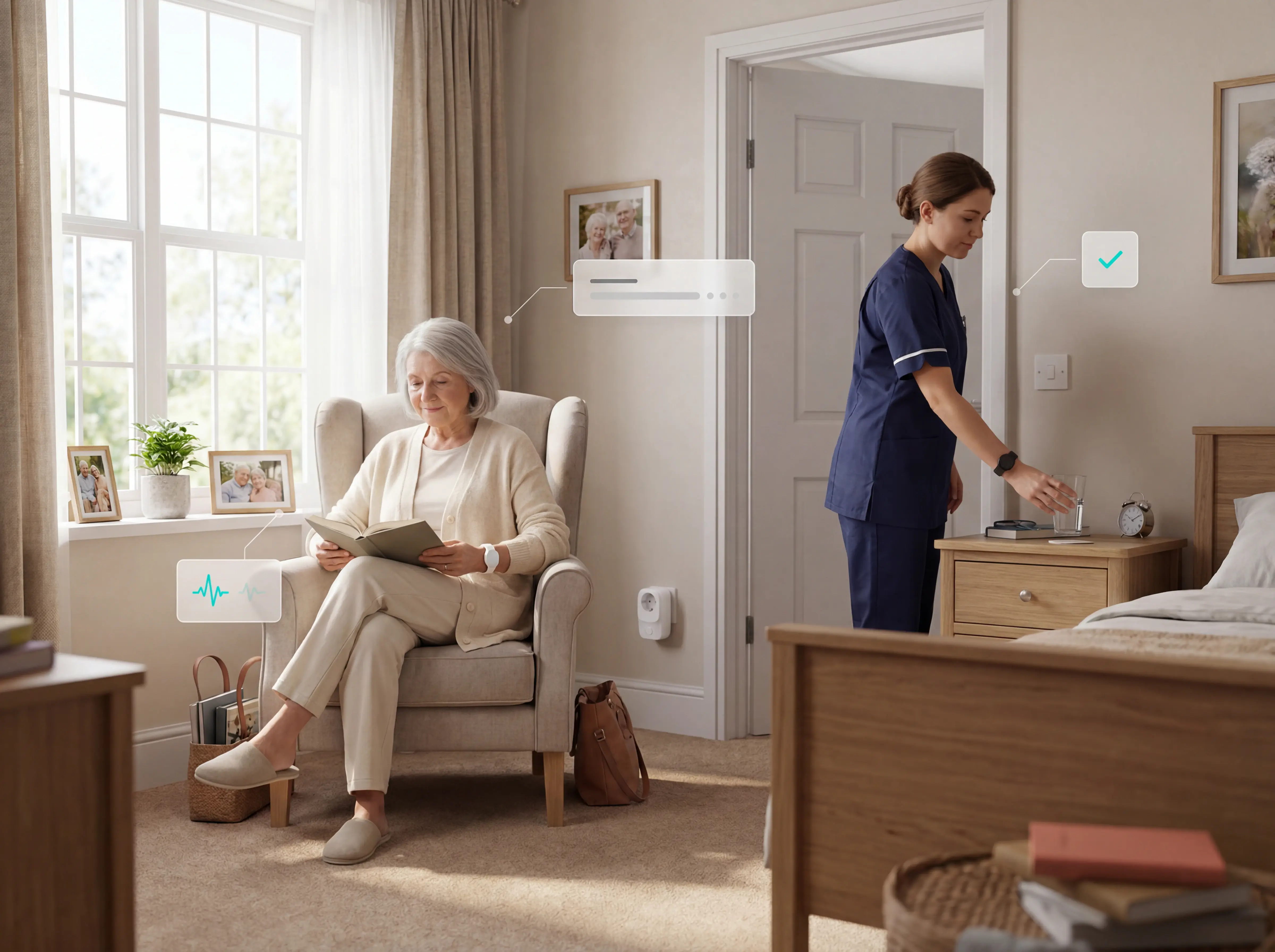
Remote patient monitoring: a complete guide
Remote patient monitoring: the complete guide to sensors, benefits, and buying tips for safer care homes and better resident...
Read more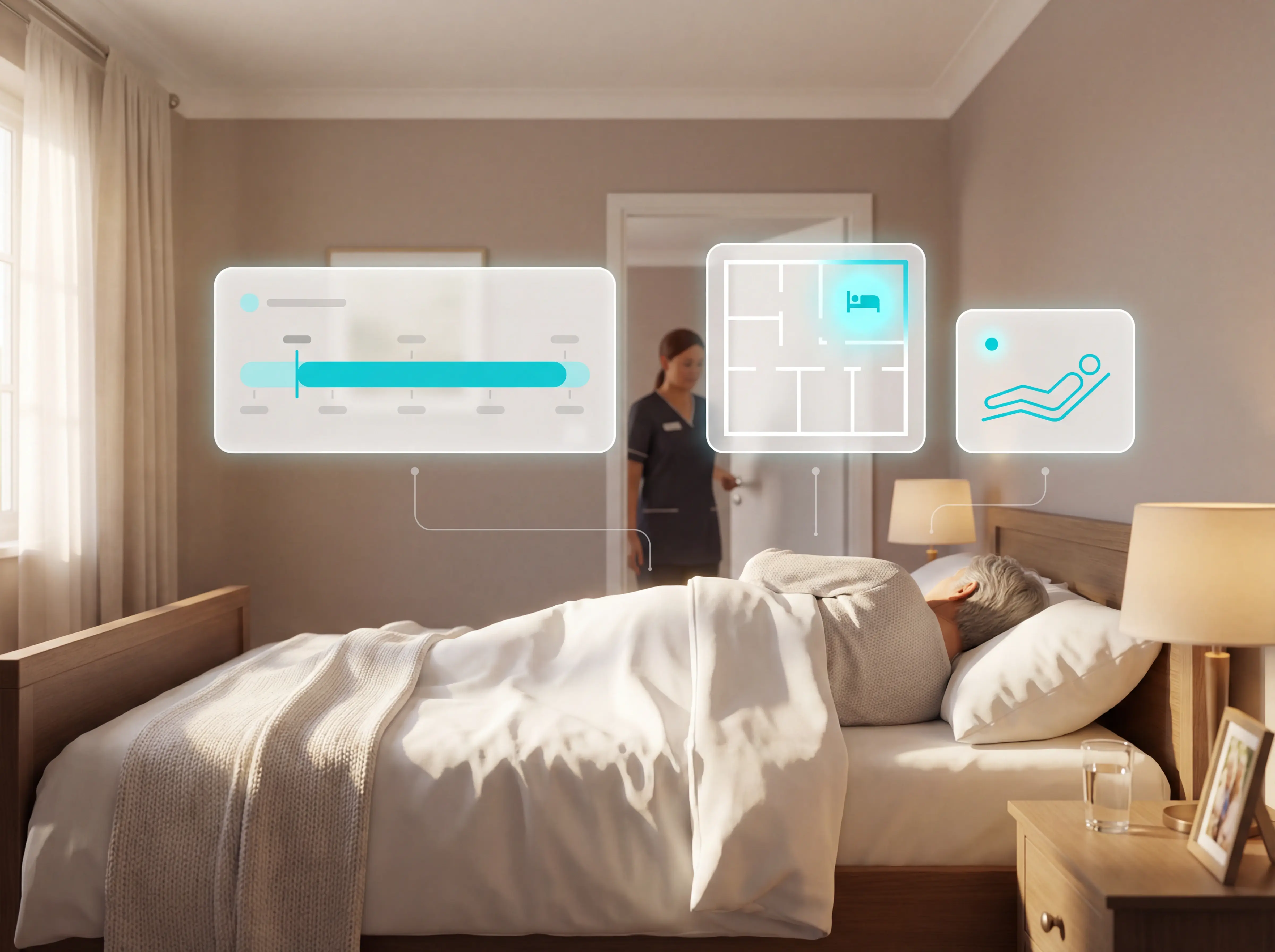
Patient bed alarms for elderly & hospital care
Patient bed alarms help prevent falls in elderly and hospital care. Compare alarm types, choose the right sensor, and protect...
Read more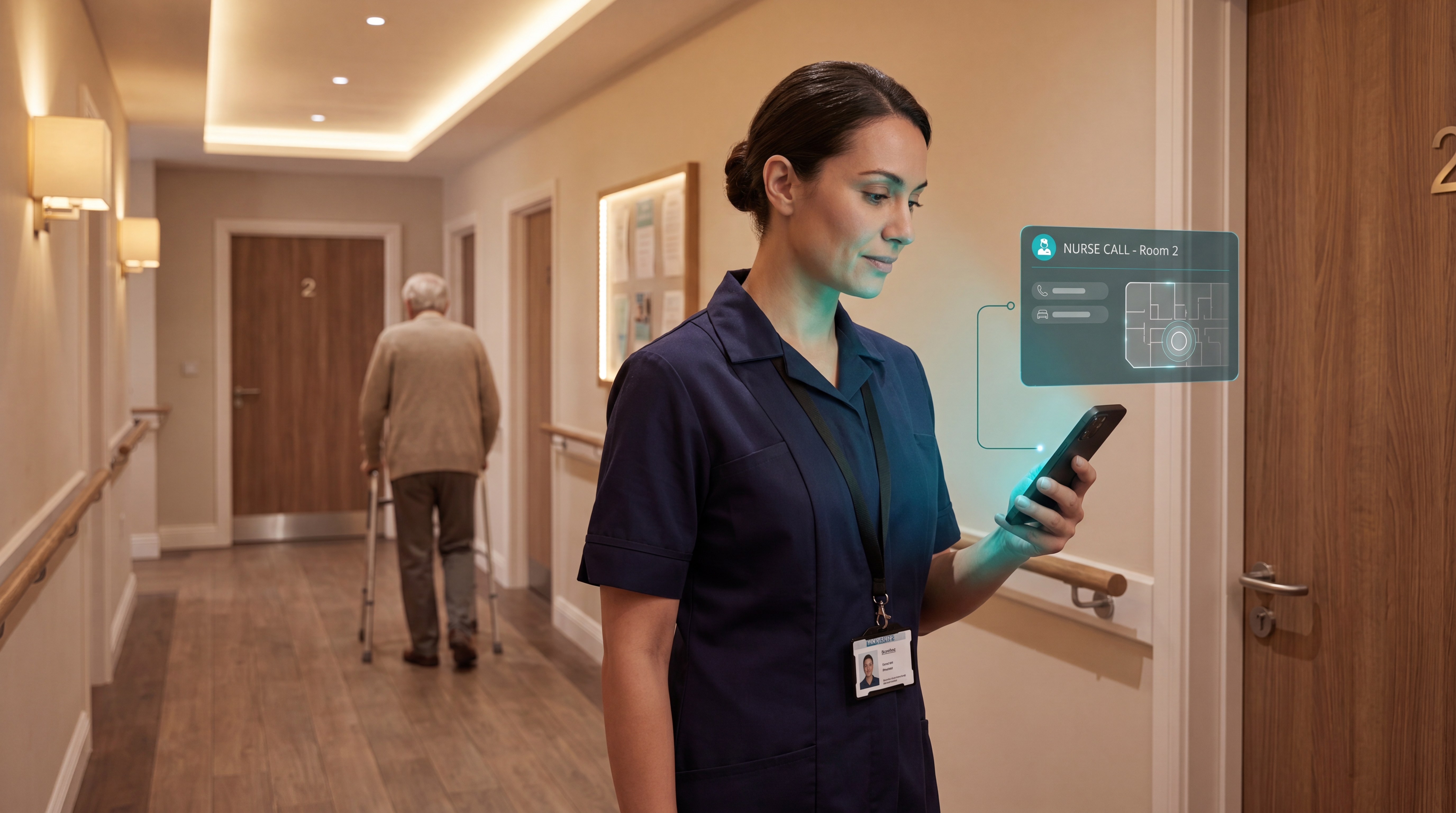
Smart Nurse Call Systems for Care Homes and Home Care Providers
Smart nurse call systems for care homes and home care providers: compare features, improve response times, and choose the right...
Read more