Guardian care intelligence
Bed exit alarm systems for fall prevention
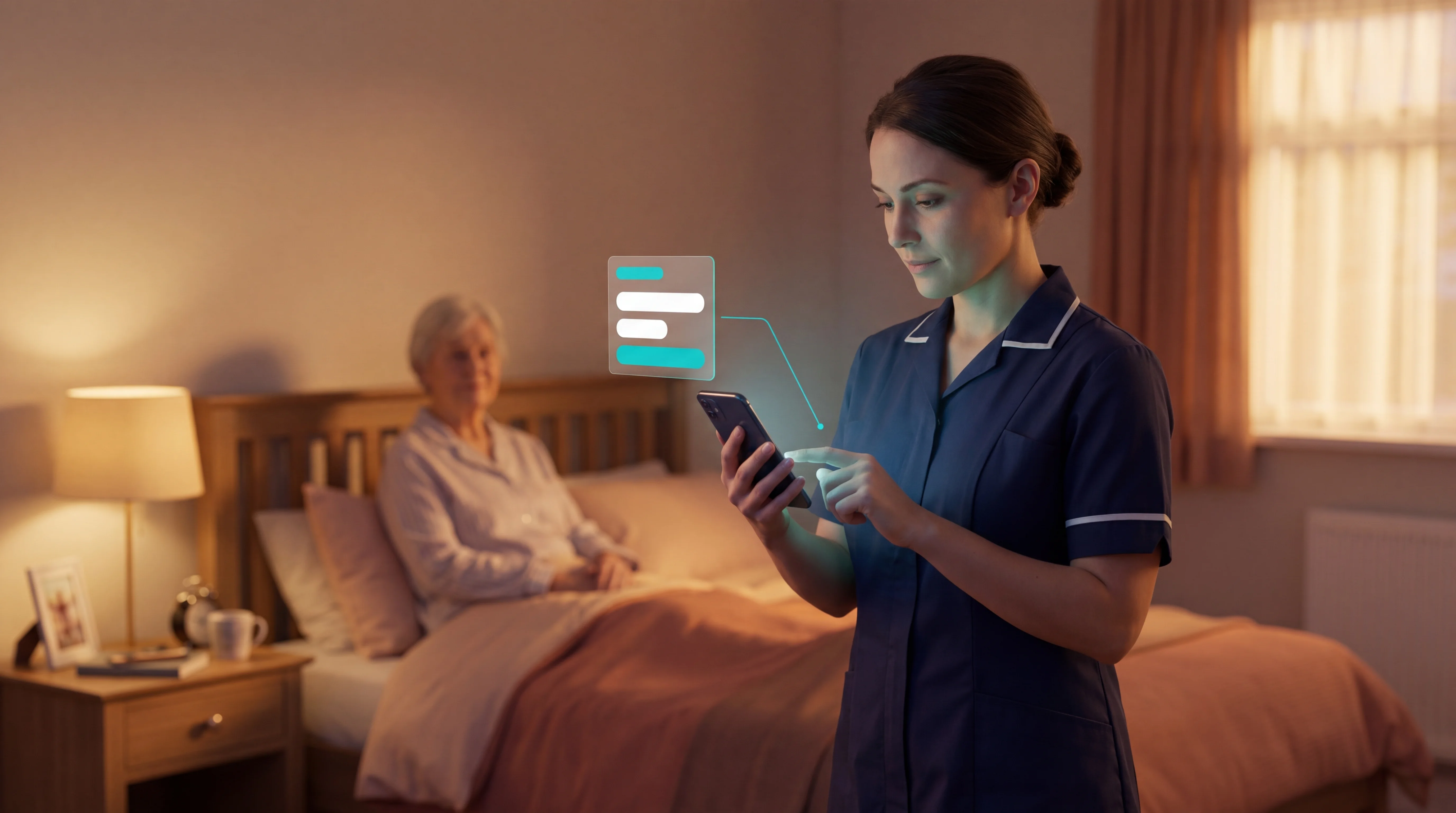
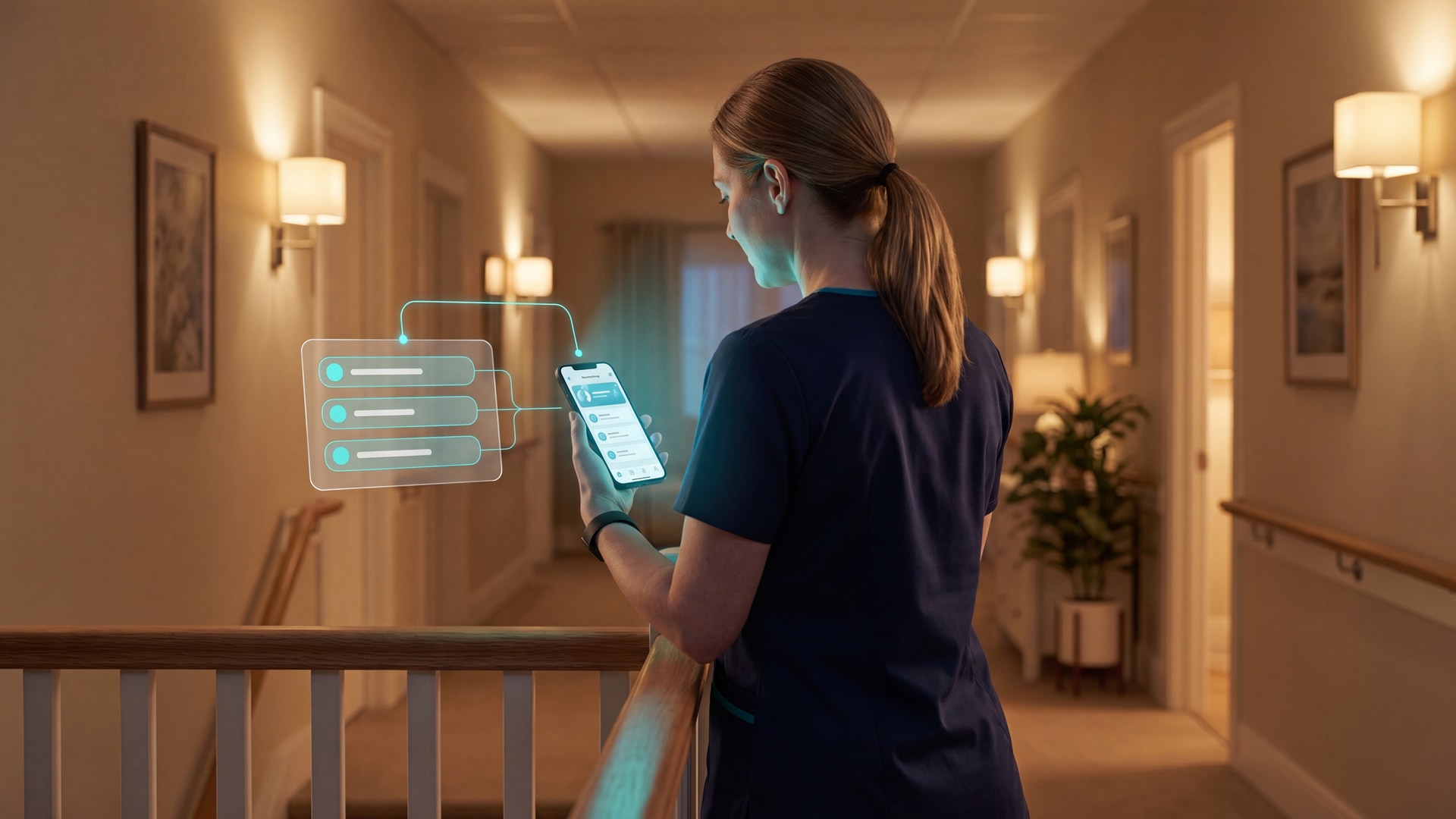
That is the gap a bed exit alarm system has to close. For EU care operators, detection is only useful if staff know who moved, where it happened, and what followed.
This guide covers how bed exit alarms work, the sensor types available, the drawbacks of standard systems, and the criteria to use before choosing one.
What is a bed exit alarm system?
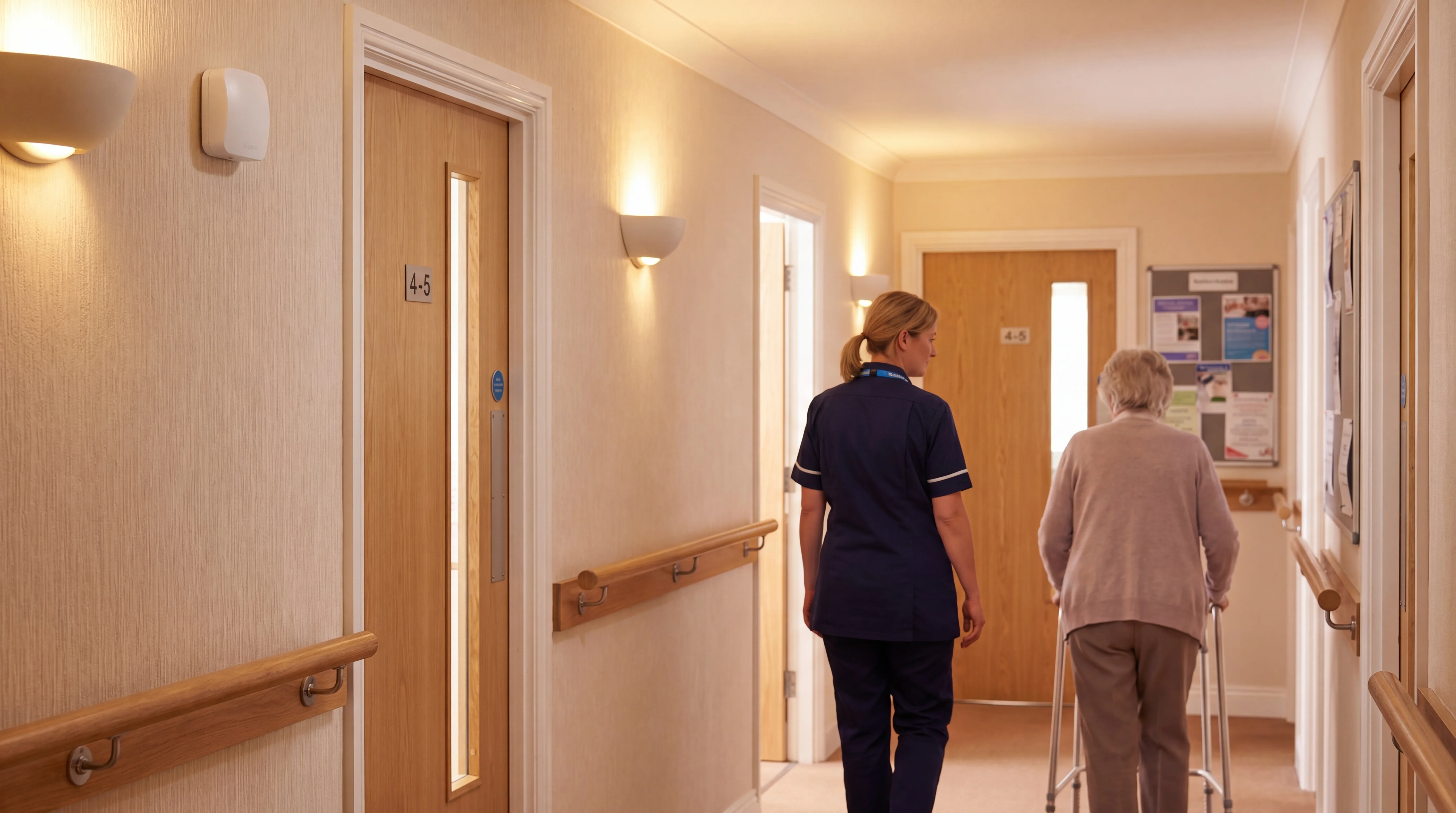
Care homes use bed exit alarms because leaving bed is a common fall-risk moment, especially overnight.
A large England care-home study reported a fall incidence rate of 1,249 per 1,000 residents per year across 1,700 care homes (study).
The value is operational visibility:
- Faster response: staff know when a resident may need help, instead of discovering the event on the next round.
- Cleaner records: managers can review alerts, response times, and patterns without relying only on memory or handover notes.
Night shifts make bed-exit visibility more important. In one 2025 CQC inspection of an inadequate dementia care home, incident reports showed three-quarters of falls happened during the night shift, but staffing levels had not been reviewed (CQC).
Types of bed exit alarm sensors
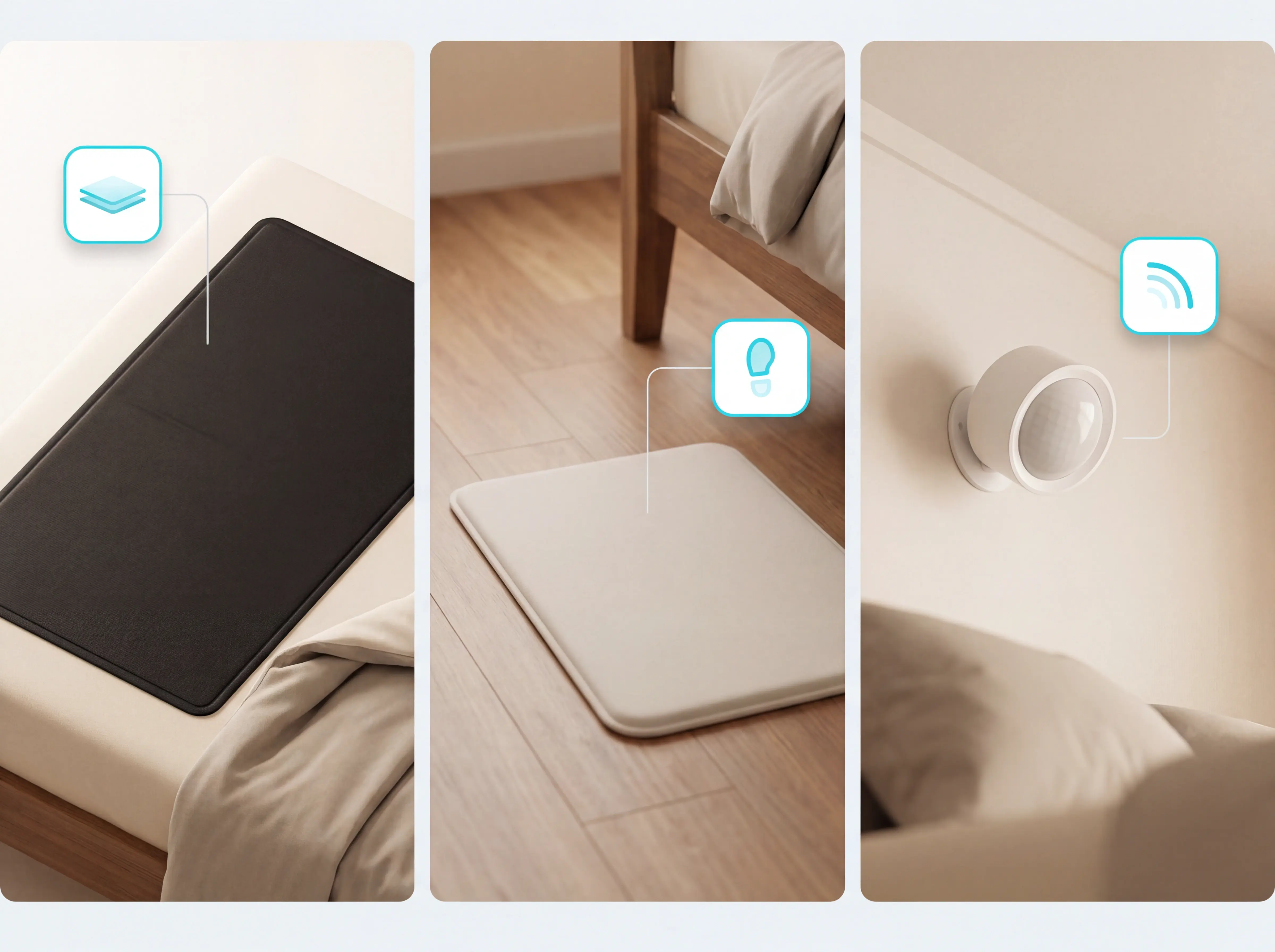
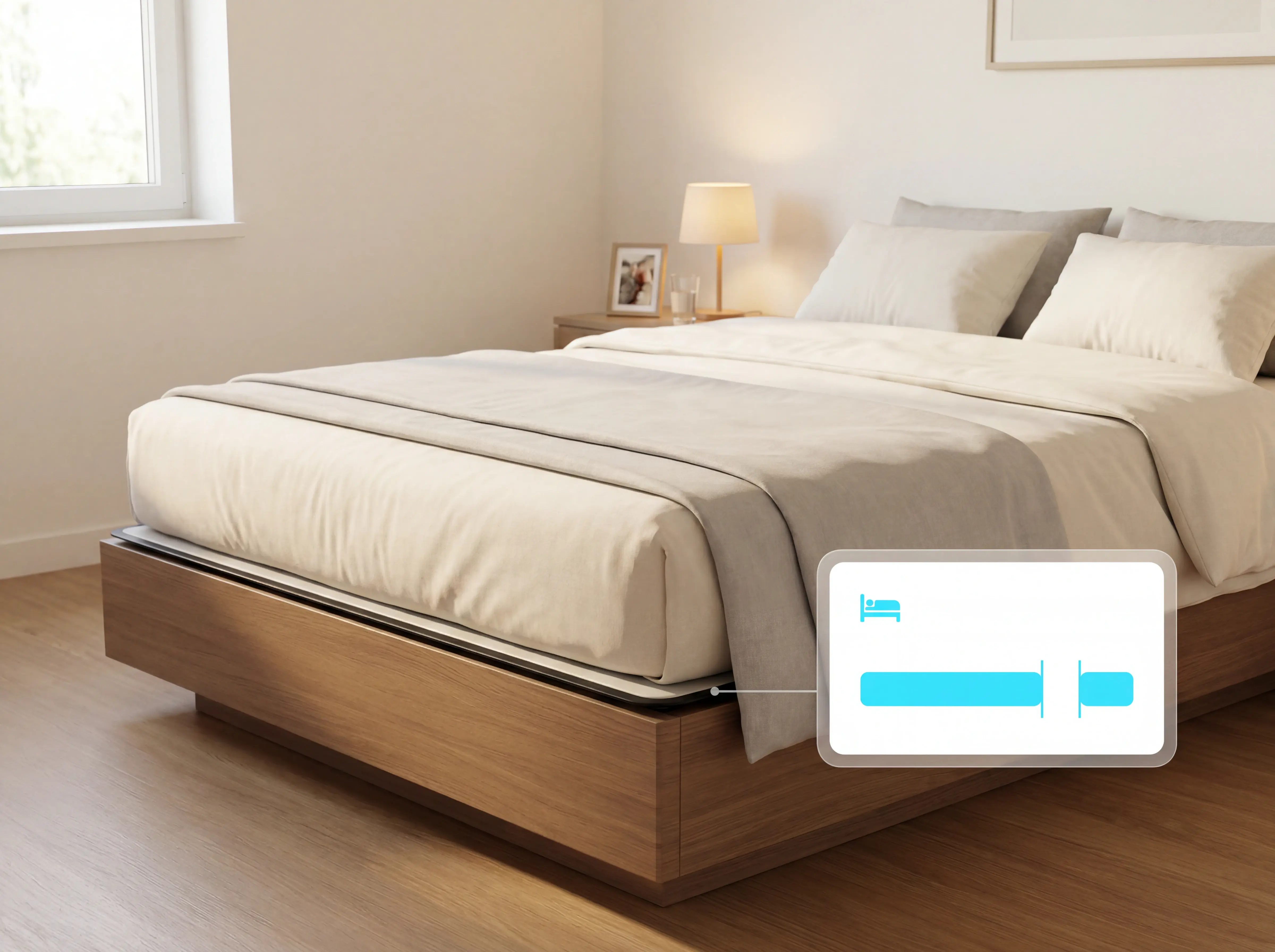
Pressure-sensing bed pads
They can give an early bed-exit warning. The trade-off is that routine repositioning can look urgent unless alerts are filtered and routed with context.
Many standard pads are sold as standalone pad-and-pager systems for individual rooms.
Earliest warning
False-alarm risk
Context gap
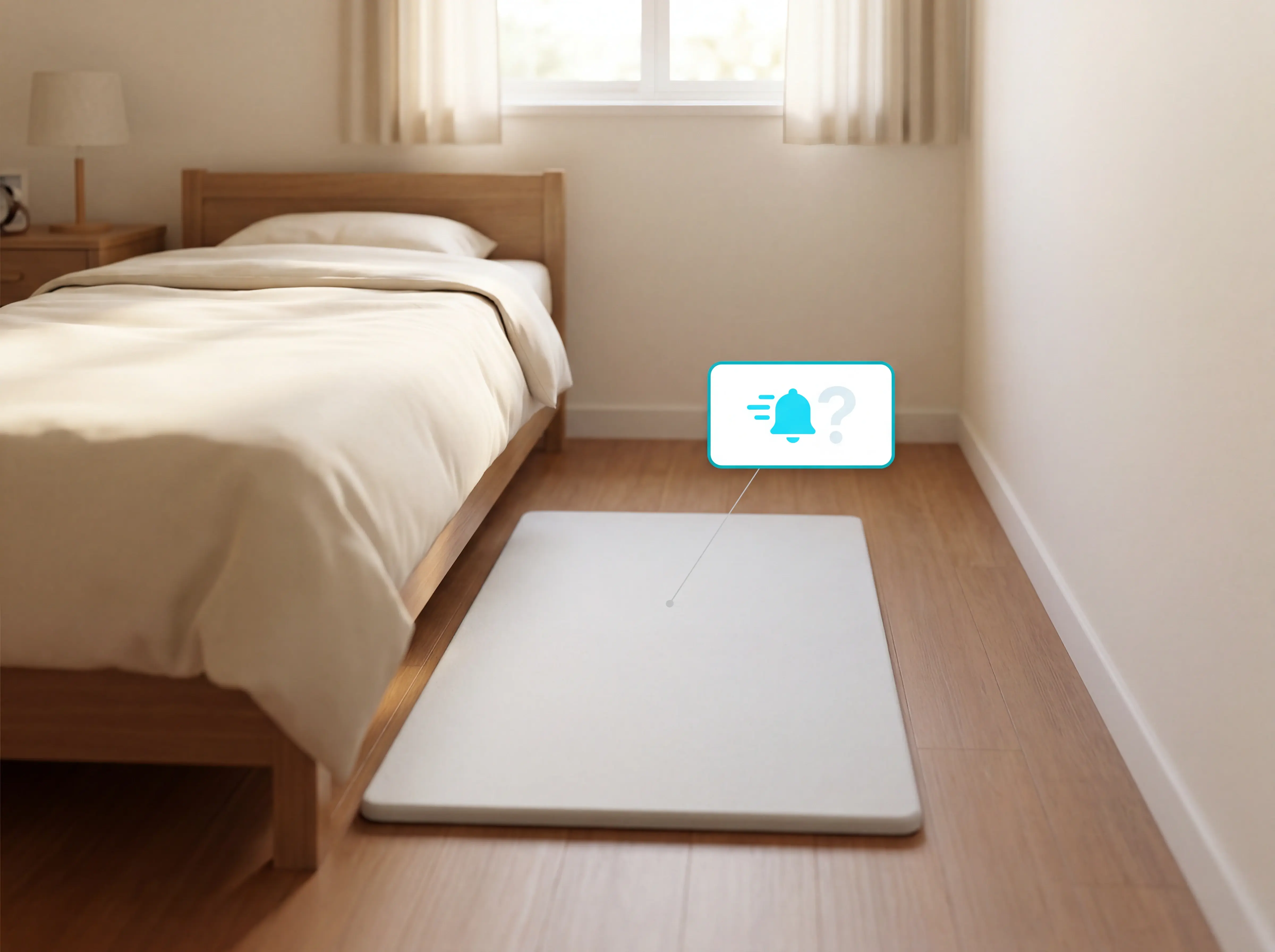
Floor mats
Placement is its own risk. A mat can be moved, avoided, or become a trip hazard if residents shuffle rather than step.
Basic mats also give no room or resident context, so staff still need to work out the situation on arrival.
Common mistake: placing a floor mat where the resident never exits catches nothing and can leave the mat sitting in the walkway.
During assessment, record which side of the bed each resident usually exits from.
Wireless motion sensors
They help staff monitor bed-exit risk without relying on a button press or visible floor mat.
Movement and stillness
Privacy by design
Smart alert rules
Flexible placement
The role of design in alert effectiveness
Disadvantages of standard bed alarms
No room or bed identifier
Audible disruption
What to look for in a bed exit alarm system
A better system addresses all three before it arrives on the ward.
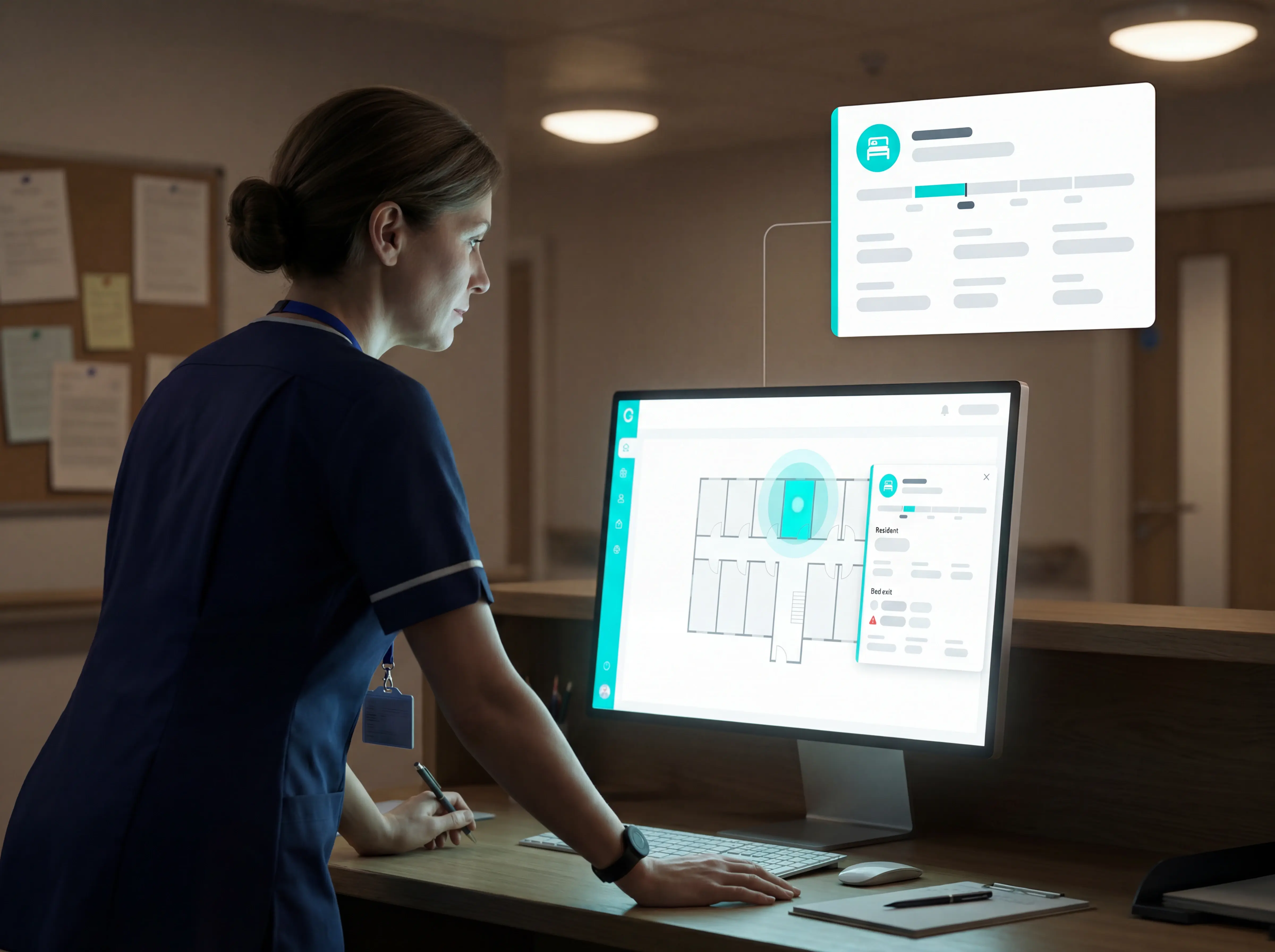
Location context in every alert
In a shared room, a generic 'bed exit' alert can send staff to the right room but the wrong bed.
The system should make response time visible, so managers can review whether high-risk residents get help quickly by resident, room, and shift.
A stronger system identifies the resident or exact bed, so the first response starts in the right place.
A useful bed exit alert should show:
Room
Resident or bed
Alert type
Timestamp
Smart rules that reduce false alarms
A useful bed exit system should let managers define when an alert matters. Start with these rule types:
Time-of-day rules
Duration rules
Sensitivity rules
Escalation rules
Behaviour profile rules
Staff need alerts assigned to the right person, not a general alarm everyone hears.
The operational lesson is simple: routing and rule design matter most when teams already carry a high alert load.
One rule is absolute: SOS alerts must never be suppressible by smart rules. Any system that allows this is a safety liability, not a feature.
Monitoring without cameras
Sensor-based systems collect no images or recordings. That makes data minimisation easier to evidence during privacy reviews.
| Signal type | What it records |
|---|---|
| Bed exit sensor | Resident leaves bed through pressure or wireless detection |
| Motion sensor | Room-level activity, no video |
| SOS button or band | Manual call from a resident or caregiver |
| Event log | Timestamp, room, alert status, no images or audio |
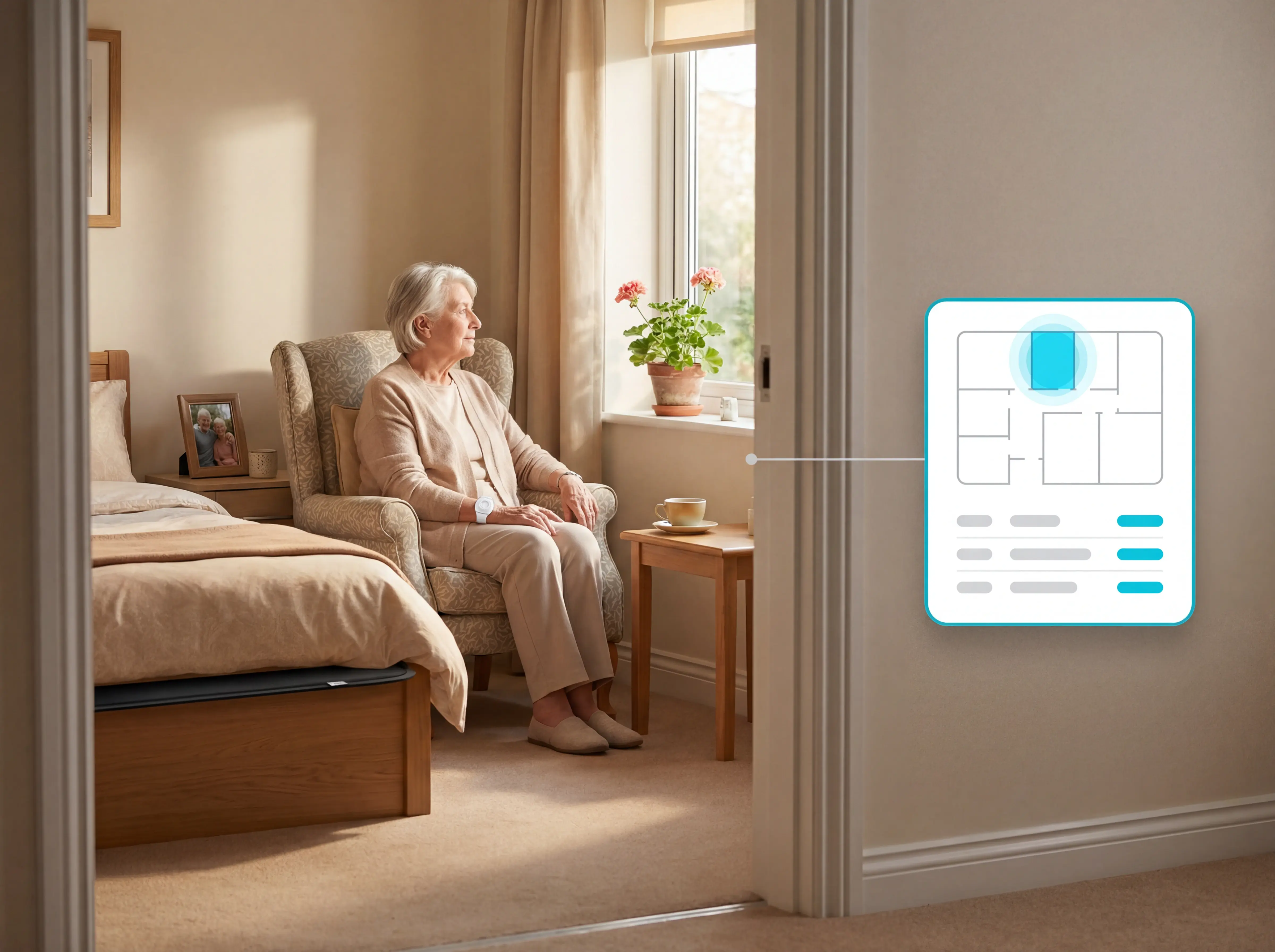
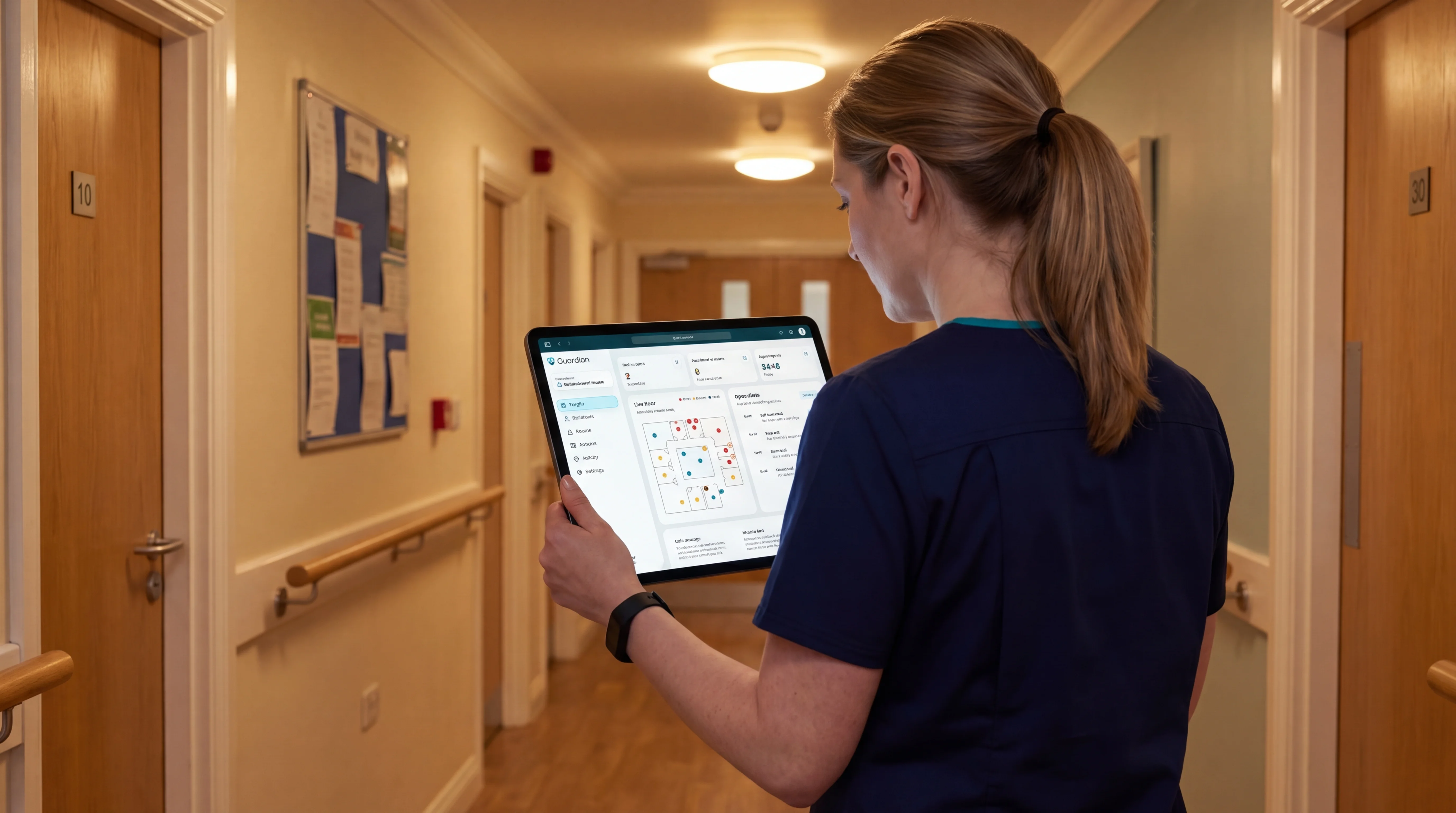
Guardian uses no cameras or microphones. Its passive sensors, SOS events, and floor-plan mapping create an audit trail of events, locations, and staff response times.
Simple setup and ongoing cost
| Model | Setup | Cost pattern | Best fit |
|---|---|---|---|
| Smart Caregiver pad and pager | Place pad, pair pager | $129.95 one-time hardware | Single resident |
| SensorsCall CareAlert | Plug-in sensors | $416 plus $19.99/month | Home monitoring |
| Integrated nurse call | Engineer installation | $2,500ā$4,250 per room | Large facilities |
| Quote-based platforms | Scoped deployment | Pilot, then rollout plan | Multi-ward operations |
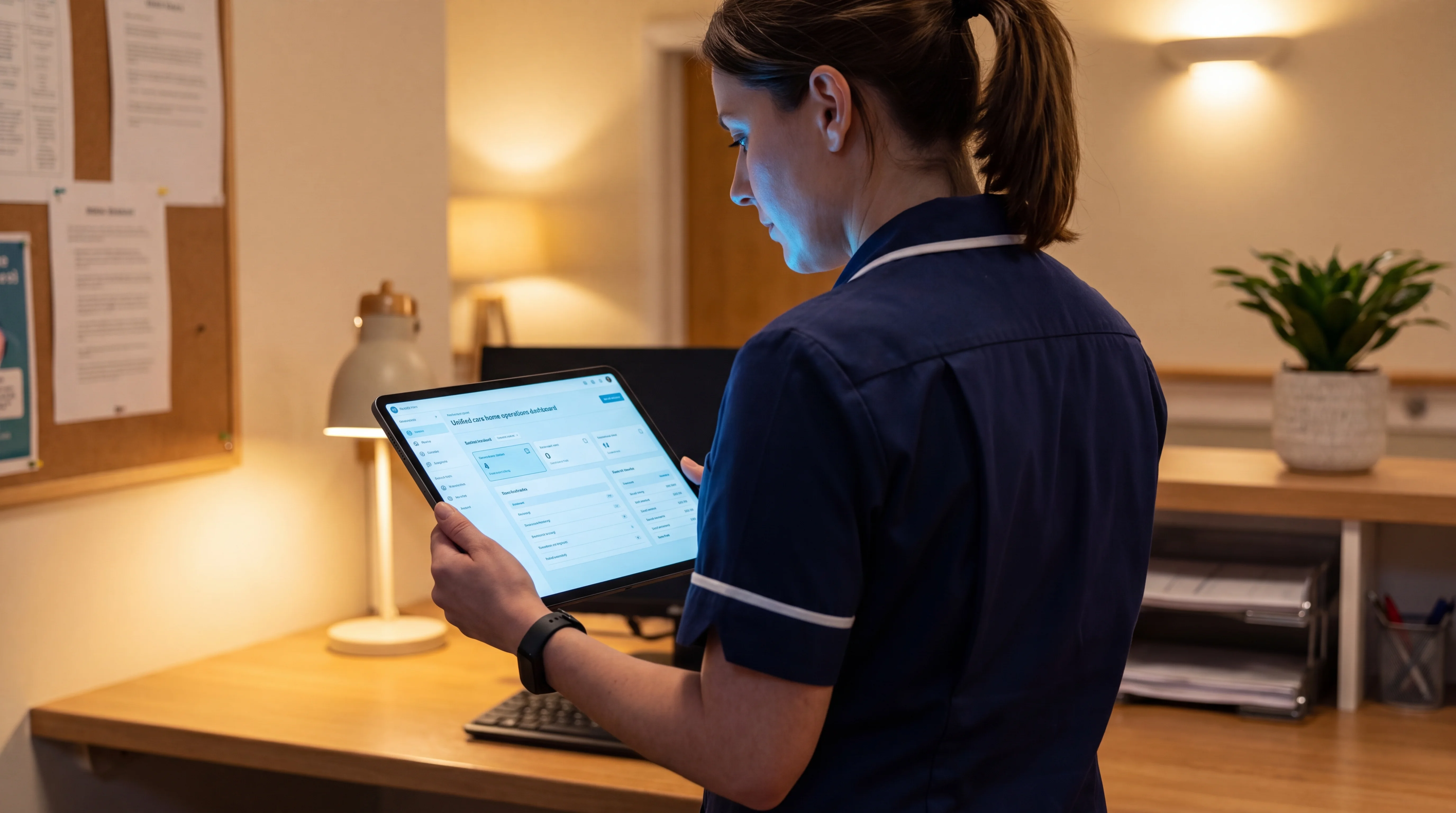
How Guardian works in a care home
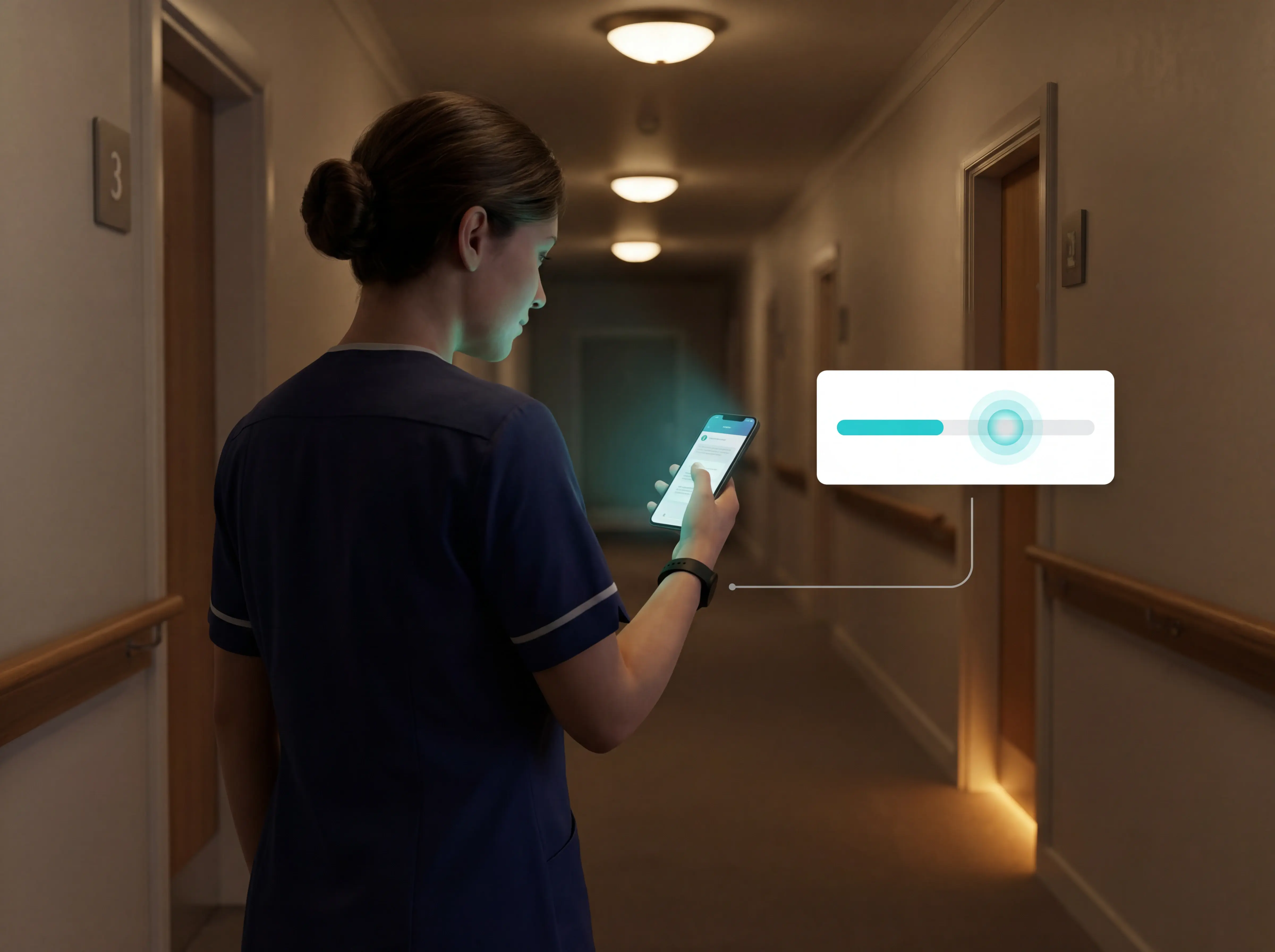
Guardian maps your floor plan, connects wireless sensors to each room and bed, then sends staff exactly where to go.
What Guardian adds to bed exit alerts
Exact-bed alerts
Smart rules
Always-on SOS
Private monitoring
Simple deployment
Existing screens
The Guardian pilot process
Map the workflow
Install the system
Monitor for 6ā8 weeks
Review the impact
Cut false alarms and respond faster with Guardian
A Guardian pilot runs 6ā8 weeks. You get response-time data, incident logs, and an ROI report at the end.
Common questions
Are bed alarms illegal? +
Local rules differ by regulator. Follow local guidance and record the reason in the resident's care plan rather than treating any alarm as automatically permitted.
Are bed exit alarms a restraint? +
Use the intent test. A safety use quietly tells staff that a high-risk resident is moving, so staff can respond quickly. A restrictive use is meant to frighten, shame, or discourage the resident from getting out of bed.
The alarm should be tied to an individual care plan, use the least restrictive setup available, and be reviewed regularly. In England, NICE guideline NG147 sets out the falls assessment framework care homes should follow.
What safeguards ensure lawful use? +
- Clear purpose: the alarm supports fall prevention or timely assistance, not behaviour control.
- Consent or capacity: the resident consents where possible, or staff record the capacity and best-interest basis for use.
- Individual care plan: the alarm is linked to a named risk, such as night-time falls or unsafe unassisted transfers.
- Least restrictive setup: the system uses the quietest, least intrusive alert that still gets staff to the resident quickly.
- Review and audit: managers check alerts, response times, false alarms, and whether the alarm should be changed or removed.
This is not legal advice. For inspections or safeguarding decisions, follow your local regulator's guidance and keep the decision in the resident's care plan.
Author
Aleks Timm
Aleks Timm leads Guardian and builds privacy-first operations technology for care homes and home care providers. Teams get location-aware alerts they can act on, clearer situational awareness, and measured insight into how care work actually runs.
Read MoreRecommended reads
Keep reading

Patient bed alarms for elderly & hospital care
Patient bed alarms help prevent falls in elderly and hospital care. Compare alarm types, choose the right sensor, and protect...
Read more
Nurse Call Systems for Care Homes
Nurse call systems for care homes: compare wired, wireless and hybrid options to boost resident safety, cut response times and...
Read more
Smart Caregiver Alert Systems for Elderly Safety
Smart caregiver alert systems help reduce false alarms and protect elderly residents with smarter sensors, faster alerts, and...
Read more