

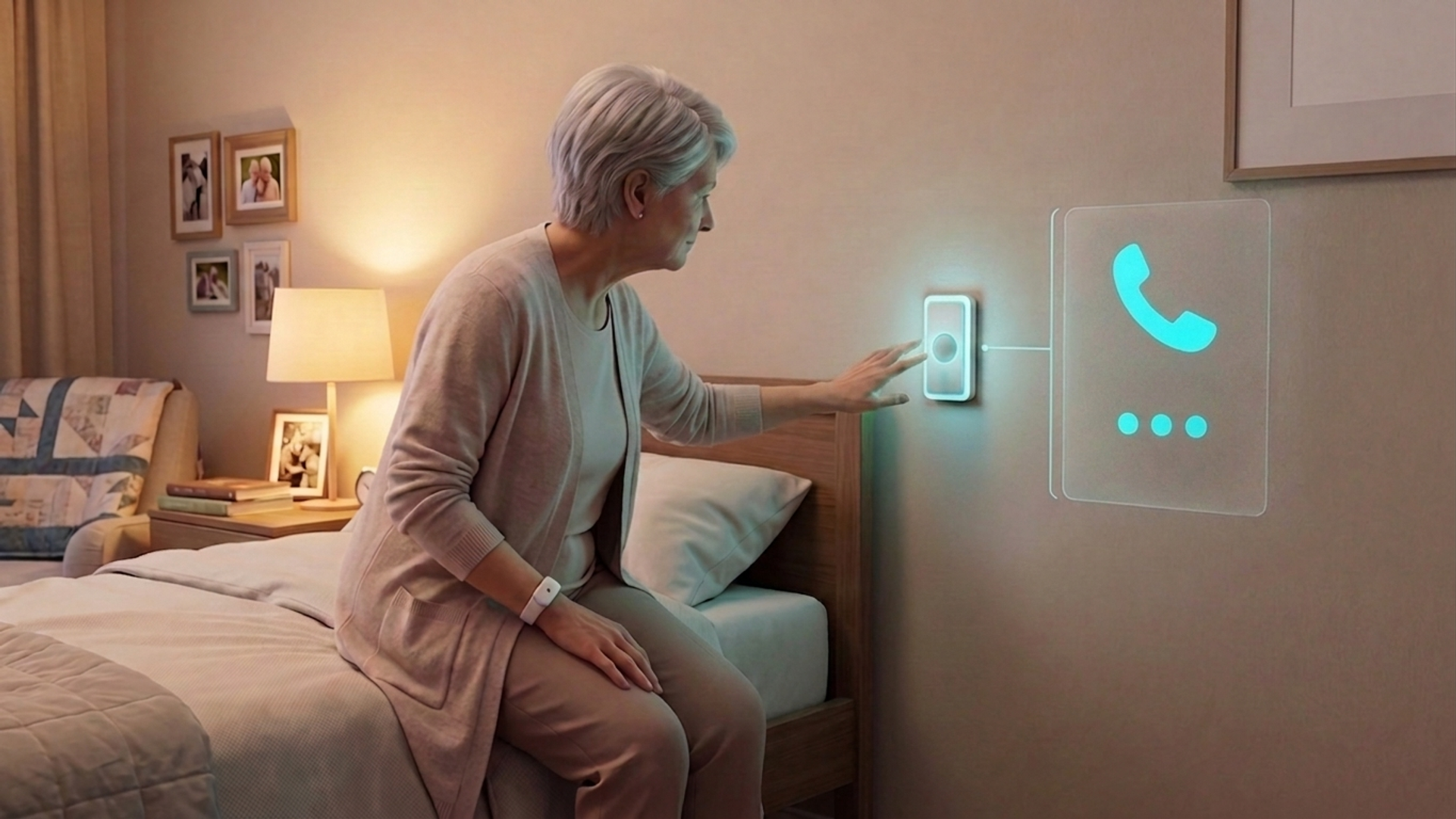
Nursing Home Call Light Regulations: Federal and State Rules
In this article
For Medicare- and Medicaid-certified nursing homes, 42 CFR §483.90(g) requires calls from each bedside and toilet and bathing facility to reach staff directly or through a centralized staff work area.
CMS sets the federal baseline for nursing home call light regulations. State licensing rules, adopted codes, facility policies, and resident care plans may add separate requirements or response expectations.
The federal equipment rule governs where calls begin and where they go. It does not set a universal numeric response deadline or require a particular call-log format.
What is a nursing home call light?
A nursing home call light is the resident-facing part of a broader resident call system. Residents use it to request routine assistance or report a change in condition.
A button or pull cord starts the call. The wider system relays it to a staff member or centralized staff work area.
For certified nursing homes, the federal requirement applies to the complete communication path, not only the bedside control.
The main difference is how the alert begins:
Basic call light: The resident presses a button or pulls a cord, and the system sends a general alert.
Sensor-supported monitoring: Bed-exit or motion sensors can trigger an alert when a resident cannot reach or activate the manual control.
Sensor-based monitoring can supplement resident-initiated calls when someone cannot use the manual control. It does not automatically satisfy the federal resident call-system requirement.
Who actually regulates call lights?
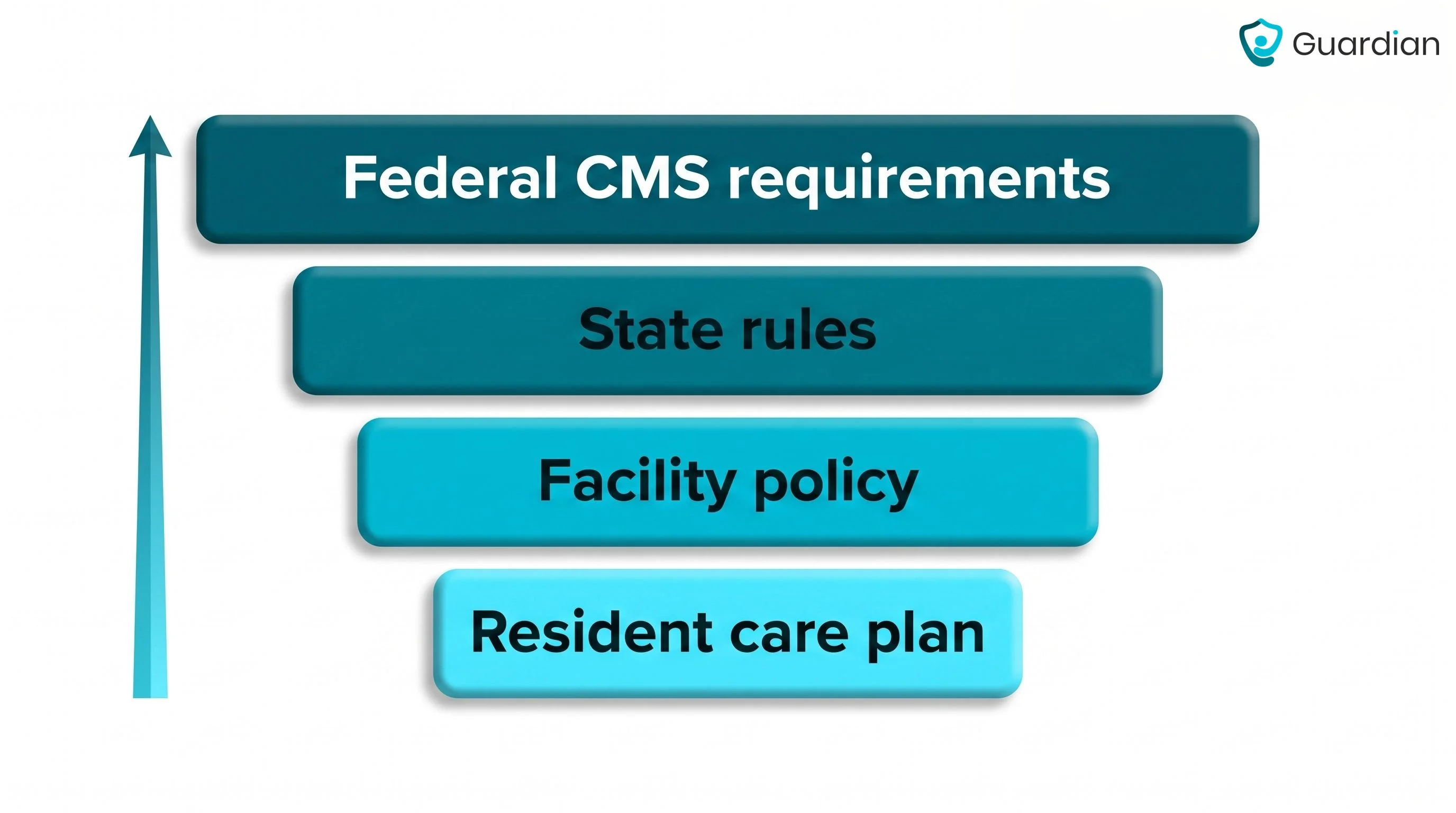
CMS sets federal participation requirements for Medicare- and Medicaid-certified nursing homes, while state health departments enforce state licensing rules that may add requirements.
Federal participation requirement: 42 CFR §483.90(g) sets the resident call-system requirement for Medicare- and Medicaid-certified nursing homes.
CMS interpretation and surveys: CMS guidance associated with F919 informs federal surveys, which state survey agencies often conduct for CMS.
State requirements: State licensing, building, and electrical rules can add installation or operating duties. State licensing enforcement remains separate from a federal survey.
Facility and resident requirements: Facility policy can set response targets, while assessments and care plans can define resident-specific assistance and monitoring.
What the rules require from a call light system
Under 42 CFR §483.90(g), a certified nursing home must provide a communication system that lets residents call for staff assistance.
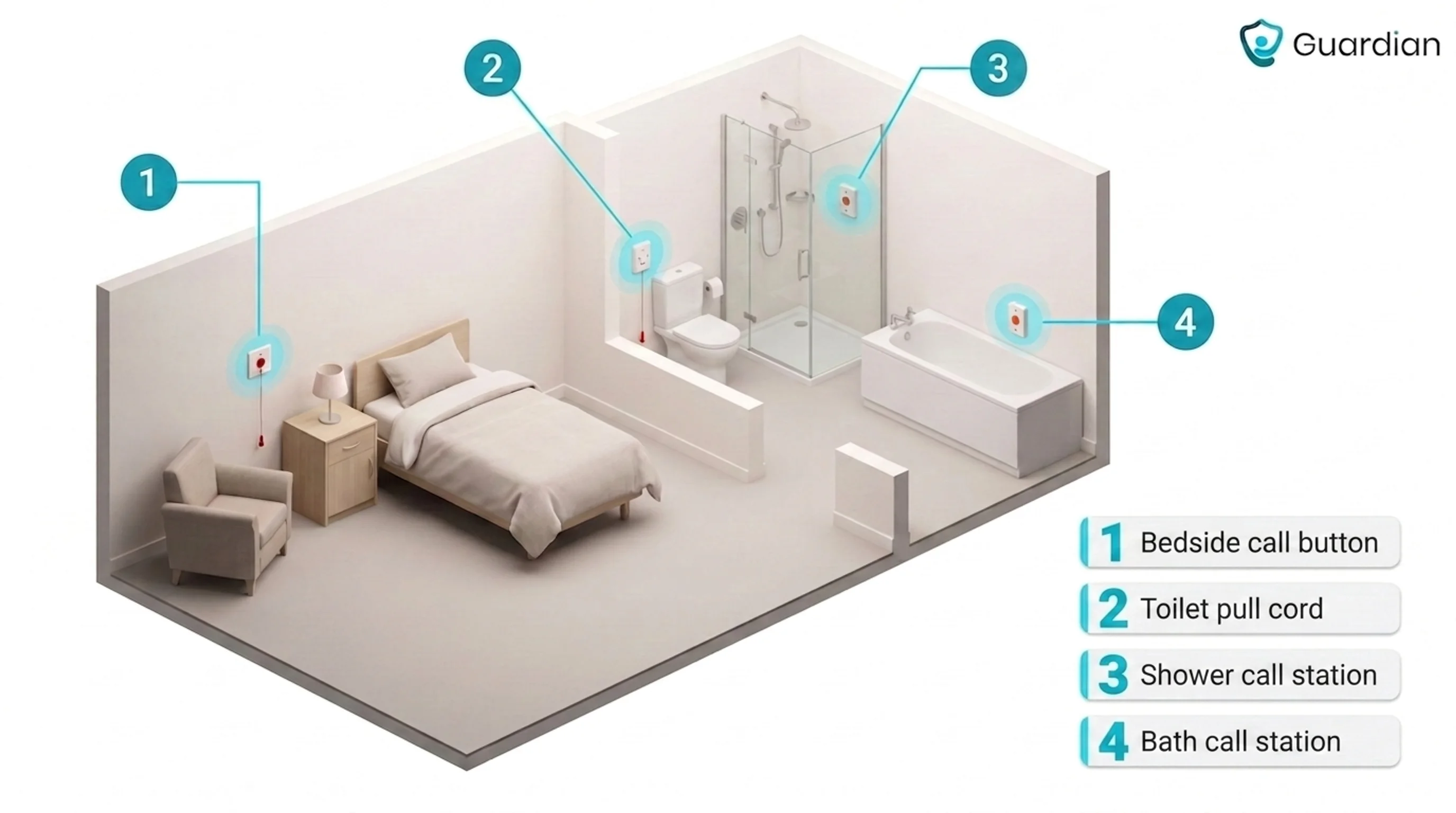
Calls must originate from each resident's bedside and toilet and bathing facilities, then relay directly to a staff member or centralized staff work area.
Placement and reach inside the room
The federal text requires a call from each bedside. In practice, the control also needs to be usable by the resident under the applicable assessment, care plan, state rules, and system specification.
A control can remain installed yet become unusable after a bed move or change in mobility, grip, or cognition. Reassess access when the resident's needs or room layout changes.
Use these resident-specific accessibility checks during F919 preparation:
Reach: Confirm the resident can reach the control from their normal position in bed.
Operation: Match the control to the resident's strength, grip, precision, and cognition.
Communication: Confirm the bedside equipment lets the resident request staff assistance.
Individual fit: Reassess the control type and placement after a change in needs or room layout.
Fixed SOS points and Guardian's SOS wristband can supplement the resident call route. Any replacement arrangement must still satisfy 42 CFR §483.90(g), applicable state rules, and the facility's approved system specification.
How the signal reaches staff
Federal rules require the system to relay each call directly to a staff member or centralized staff work area. The installed system must complete that route reliably.
Test the complete route from the resident control to the staff destination during commissioning and routine checks:
Connection: Test the control and its connection to the receiving destination under the installed system specification.
Staff detection: Confirm staff can detect the alert under normal working conditions, using any audible or visual signals required by state rules, adopted codes, or the system specification.
Destination: Verify the call reaches a staff member or centralized staff work area, as the federal rule requires.
Escalation: Test the facility's assignment and escalation process when the first recipient cannot respond.
In a Guardian deployment, alerts on staff devices can include the resident's name and room-level location, with routing configured by staff role.
Bathrooms, resetting, and backup power
Bathroom and toilet access
Federal rules require calls from each bedside and toilet and bathing facility. Check shared toilet and bathing areas against the federal standard, applicable state rules, and the approved facility layout.
In-room or manual reset
42 CFR §483.90(g) does not prescribe a universal reset method.
Confirm whether state rules or adopted codes require staff to cancel a call at its point of origin.
Emergency power
NFPA 99 applies when adopted by the governing authority, using the edition that authority specifies. Washington requires automatic transfer within ten seconds and emergency power for communication and alarm systems in certain facilities. Illinois requires emergency service for communication and alarm systems, including the nurses' call system.
The federal resident call-system provision does not expressly name emergency power. Review the installed system against applicable state rules, adopted codes, its specification, and the facility emergency plan:
Circuit: Identify whether the call system receives emergency power.
Transfer: Confirm how the system moves to backup power if normal power fails.
Testing: Include the call system in the facility's documented test process.
Is there a required response time for call lights?
No. 42 CFR §483.90(g) and F919 do not set a universal numeric federal deadline for answering a call light. State rules, facility policy, the care plan, and the resident's immediate needs may still require prompt action.
Source of expectation | What to verify |
|---|---|
Federal CMS requirements | System duties under § 483.90 and F919 |
State rules or survey guidance | Applicable deadline and response definition |
Facility policy | Target time, start point, and escalation steps |
Resident care plan | Individual monitoring and response instructions |
Incident urgency | Emergency protocol for the reported need |
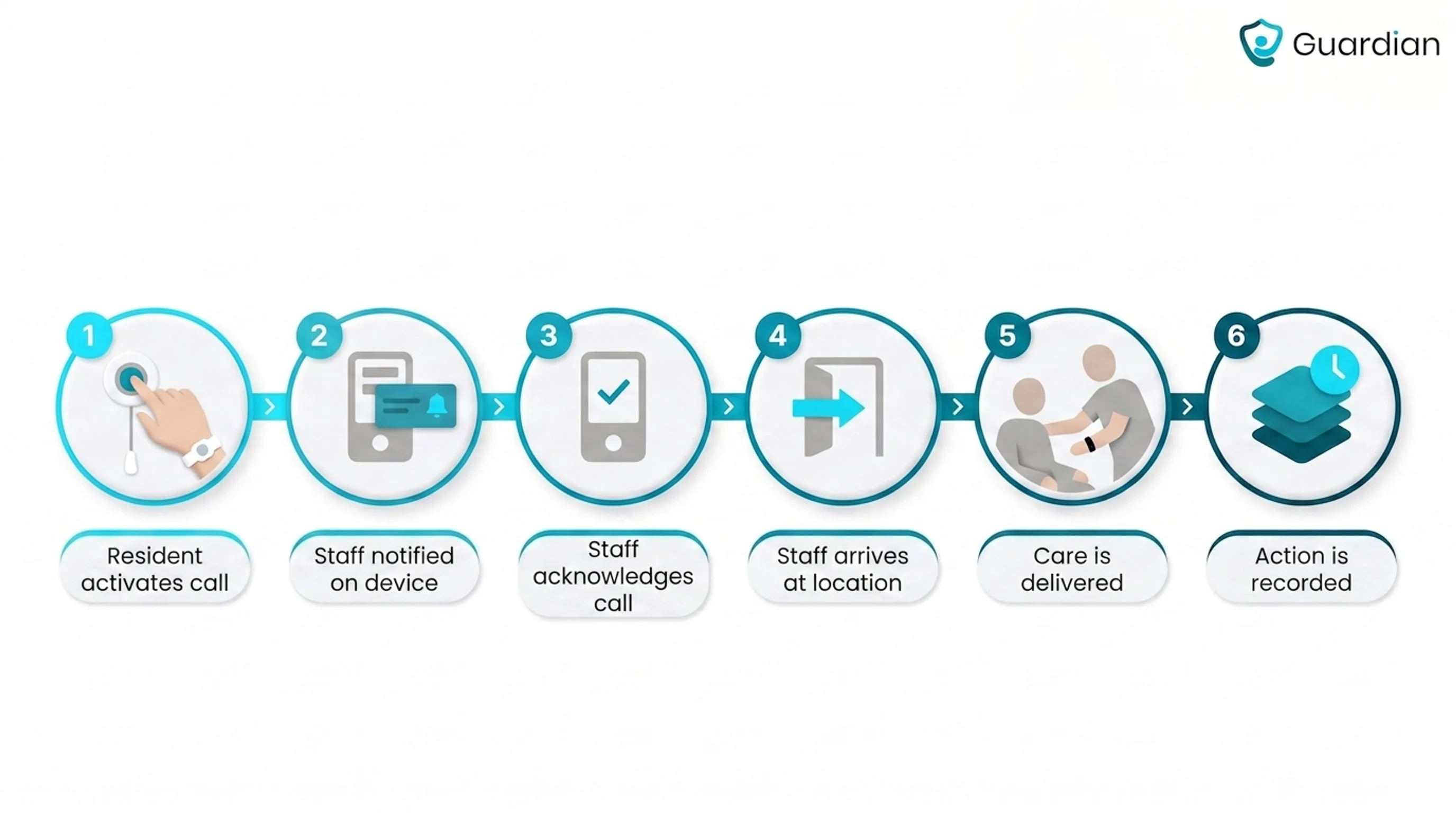
Measure from activation unless the governing rule or policy defines another start point. Keep activation, acknowledgement, arrival, and care-delivery records distinct because accepting an alert is not the same as reaching or assisting the resident.
Why call lights go unanswered
Delays arise from capacity, routing, prioritization, or escalation failures. Incomplete records then make repeated gaps harder for managers to identify and correct.
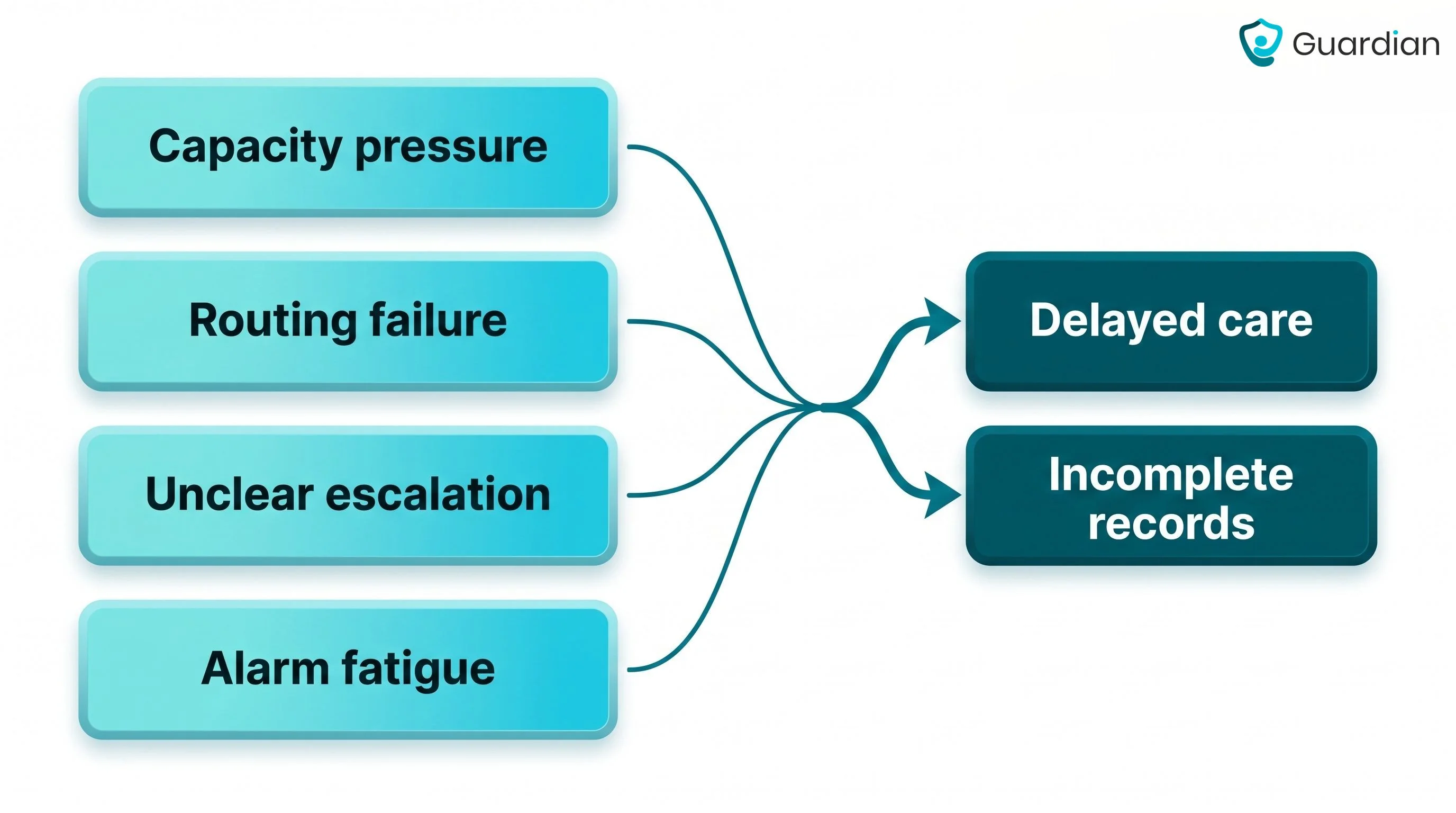
Capacity pressure: Simultaneous care demands exceed available response capacity; measure calls waiting by shift and area.
Routing failure: A general signal reaches no accountable staff member; measure unassigned and rerouted alerts.
Unclear escalation: The first recipient cannot respond and no backup owner is assigned; measure escalation time and unresolved alerts.
Alarm fatigue: Routine and urgent signals compete for attention; measure alert volume, priority, and repeated dismissals.
Weak management records: Paper logs and handovers hide the activation-to-response interval; review timestamp completeness and recurring delays.
What happens when a call light is ignored
An unanswered call can leave pain, toileting needs, a change in condition, or a transfer request unaddressed. The outcome depends on the resident's needs, the delay, staff actions, and any resulting harm.
Resident consequences | Facility consequences |
|---|---|
Prolonged pain, anxiety, or an unmet toileting need | A complaint, grievance, or internal incident review |
An attempt to stand or transfer without help, followed by a fall or injury | Scrutiny of the resident's care plan, supervision, staffing response, and incident records |
A change in condition or medical emergency that remains unassessed | A survey finding or citation may be possible if the facts show required care was not provided |
Injury or deterioration linked to the delay | Enforcement action or civil liability may be possible, depending on the evidence and jurisdiction |
Investigators consider urgency, delay duration, resident needs, staffing actions, records, repeated patterns, and outcome. A slow response alone does not establish neglect or liability.
Records should distinguish activation, acknowledgement, arrival, and care delivered. They should also document the resident's condition, escalation, and actions taken.
Closing the gap between policy and what actually happens
Written policy cannot show live workload, overlapping calls, or response gaps. Managers need event and response data to see where daily practice departs from the rule.
A resident may also be unable to press a button after a fall. Passive sensors can flag defined events, but they supplement rather than erase the required resident call route.
Use four steps to turn each activation into operational evidence:
Capture each available event. Record the source, resident or room, and time for every activation the system generates or receives.
Route it with context. Send the location, event type, and priority to an accountable staff member, with escalation when that person cannot respond.
Record acknowledgement, arrival, and action. Separate unseen, accepted, attended, and completed events so a click is not mistaken for care.
Review patterns across operations. Compare delays and alert noise by shift, ward, event type, and urgency.
That review lets managers adjust routing and escalation rules when the evidence calls for it.
Policy sets expectations; the operating loop shows where daily care departs from them.
See response gaps in real time with Guardian
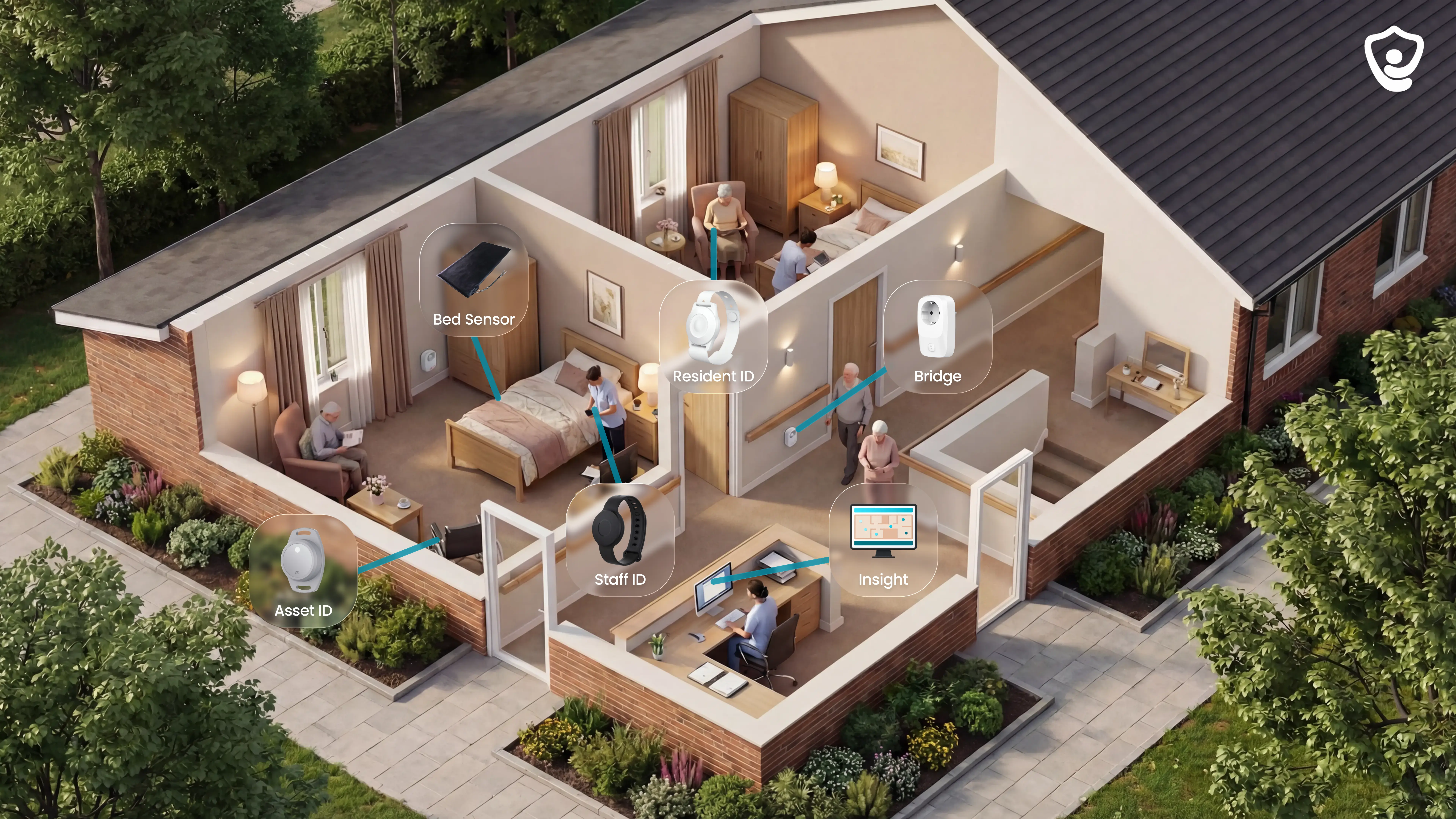
Guardian Insight gives nursing home managers a live, location-mapped view of Guardian alerts and automatic response records. The wireless, camera-free platform runs alongside the facility's compliance processes rather than certifying compliance.
The live floor plan shows the resident's name and room-level location. Guardian bed, motion, and door sensors can also flag configured events when a resident cannot press a button, while supplementing the required resident call route.
Guardian Insight displays active alerts on a digitized nursing home floor plan.
See when and where: Guardian records the alert activation time and shows the resident’s name and room, so staff know where to go.
Reach staff directly: Alerts route to the smartphones, tablets, and nurse station computers your team already uses.
Prioritize alerts: Configurable resident rules and duplicate filtering keep routine movement alerts separate from events that need staff attention.
Review each response: Managers receive automatic Guardian response records by ward for operational review and incident documentation.
A 6–8 week pilot measures response times, alert patterns, and workflow fit in one ward. Nursing home managers receive an impact report and ROI calculation based on their own data.
There is no universal federal three-minute limit. Check state nursing home rules, facility policy, the resident's care plan, and the urgency of the need. An emergency can require immediate action even without a fixed numeric deadline. Use activation, acknowledgement, arrival, care, and incident records to assess what happened.
Resident call-system deficiencies can include missing required call points, equipment that does not relay calls to staff, or a nonworking system under 42 CFR §483.90(g) and F919. State rules may add installation, signal, reset, or emergency-power duties. A separate care finding may arise when staff fail to provide required assistance after a call. Investigators also review whether available records support the facility's account. No federal rule makes a response longer than three minutes an automatic violation.
A slow response may support a neglect finding when staff fail to provide required care and the delay creates risk or causes harm. Duration alone does not decide the issue. Reviewers consider urgency, the care plan, staff actions, timestamps, repeated patterns known to management, and the resident's outcome.
Yes. Call 911 for immediate danger or an emergency medical need. Report a current safety concern to the on-duty nurse and facility administrator. Put recurring unresolved problems in writing to facility leadership, then contact the state survey agency or Long-Term Care Ombudsman if needed. Record the date and location, activation and response times, the request, staff notified, effects on care, witnesses, and written replies. Protect the resident's identifying information when sharing records outside the facility.

Author
Aleks Timm
Aleks Timm leads Guardian and builds privacy-first operations technology for care homes and home care providers. Teams get location-aware alerts they can act on, clearer situational awareness, and measured insight into how care work actually runs.
Read MoreRecommended reads
Keep reading
Remote patient monitoring: a complete guide
Remote patient monitoring: the complete guide to sensors, benefits, and buying tips for safer care homes and better resident...
Read more
Smart Nurse Call Systems for Care Homes and Home Care Providers
Smart nurse call systems for care homes and home care providers: compare features, improve response times, and choose the right...
Read more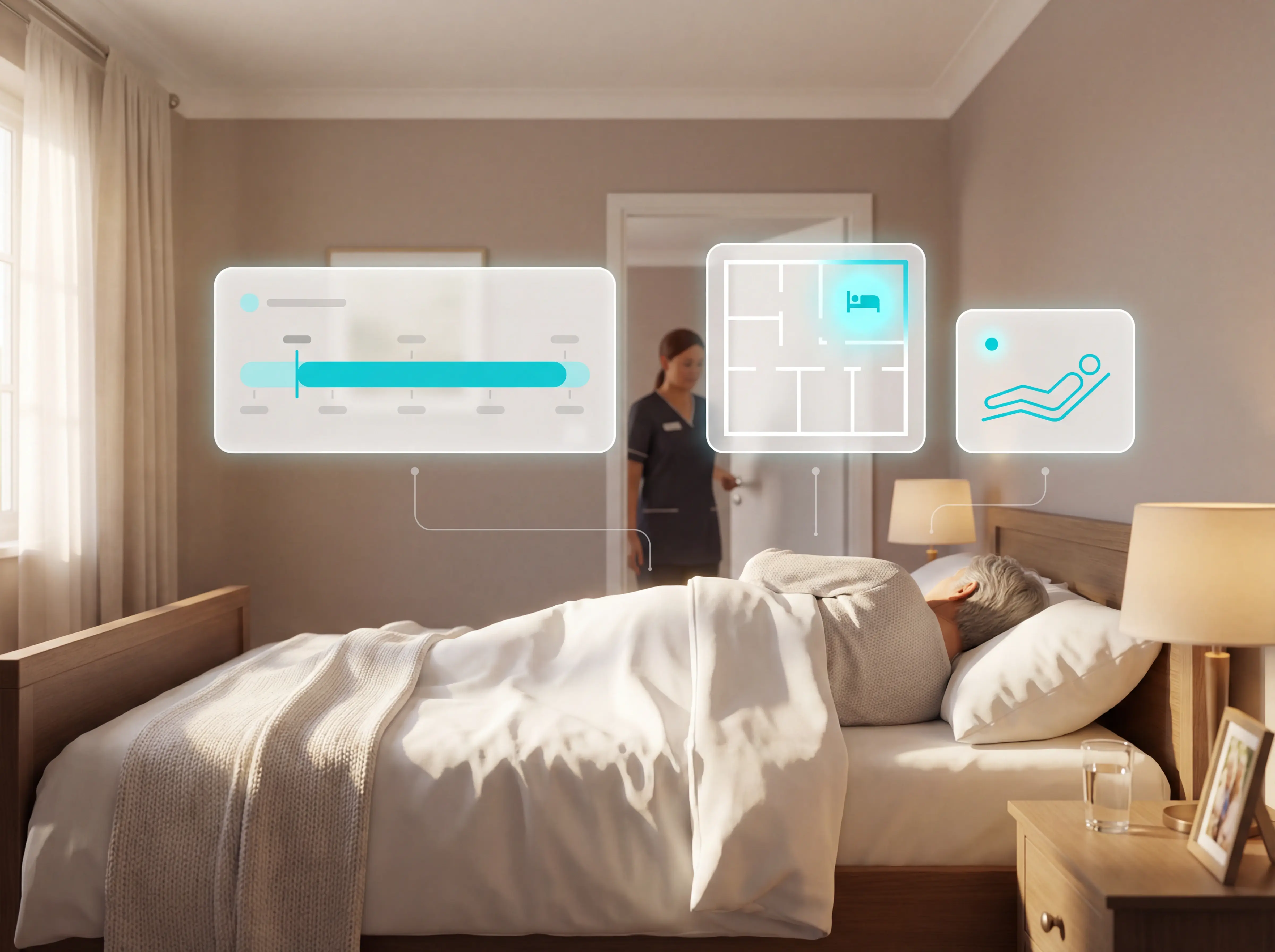
Patient bed alarms for elderly & hospital care
Patient bed alarms help prevent falls in elderly and hospital care. Compare alarm types, choose the right sensor, and protect...
Read more