

7 Ascom Competitors and Alternatives for Care Settings
In this article
Caregiver alerts need location, priority, ownership and a response record. Replacing a handset alone does not fix gaps in routing, acknowledgement or reporting.
This guide compares seven third-party Ascom competitors and alternatives: Baxter Hillrom, Rauland, Johnson Controls, Tunstall Healthcare, Smart Caregiver, Lifeline and Apple Watch.
They are not like-for-like options. The shortlist covers direct clinical communication platforms, long-term-care systems, an integration route, local alarms, monitored personal services and a consumer wearable, plus Guardian as a separate care-operations option.
Product | Type and best-fit setting | Alert route and location | Records | Infrastructure and pricing |
|---|---|---|---|---|
Baxter Hillrom | Direct institutional competitor; acute hospitals | Nurse station and mobile workflows; context depends on configuration | Enterprise workflow records | IP-based project; custom quote |
Rauland | Direct institutional competitor; hospitals and larger care sites | Role-based routing to configured staff interfaces | Workflow and event records depend on deployment | Enterprise IP deployment; custom quote |
Johnson Controls | Integration route; complex healthcare estates | Defined by the Zettler and building-systems design | Depends on the contracted systems | Custom design and maintenance project |
Tunstall Healthcare | Long-term-care and telecare alternative | Monitoring centre or configured care-service workflow | Depends on the regional service and platform | Regional technology or managed service; quote required |
Smart Caregiver | Adjacent local alarm kit; rooms and small areas | Sensor sends a local alert to a paired pager | Confirm whether the selected kit stores events | Local hardware purchase; test radio coverage |
Lifeline | Adjacent personal emergency service; individual use | Help button or fall event reaches a response centre | Individual service records, not a shared ward log | US subscription service with possible equipment fees |
Apple Watch | Adjacent consumer wearable; one wearer | Emergency services and personal contacts receive SOS or fall alerts | Personal fall history, not facility response records | Hardware purchase; connectivity costs vary |
Guardian | Direct care-home operations option; care homes and home care | Assigned staff receive room-level alerts on existing devices | Automatic visit, incident and response records | Wireless deployment followed by a 6–8 week pilot |
Which Ascom does this cover?
Ascom here means Ascom Holding AG, the Swiss healthcare technology company, not another business with a similar name.
Its competitive field covers hospitals and long-term care. That includes clinical communication, resident response, nurse call, activity monitoring, wander management, staff safety and technical alarms.
What does Ascom compete on?
Ascom competes across two connected buying areas: facility-wide clinical communication and long-term-care resident monitoring.
Direct competitors overlap with nurse call, alarm routing, staff communication and institutional workflows.
Long-term-care alternatives cover resident response, activity monitoring, wandering and staff safety.
Adjacent alternatives solve one narrower job, such as local paging, monitored personal alarms or emergency SOS.
How we evaluated the alternatives
Care-setting fit came first. Each option was then checked against the same operational questions:
Setting: hospital, residential care, home care or individual use.
Alert ownership: who receives, acknowledges, escalates and closes the event.
Context: whether staff see a room, bed, zone or personal location.
Records: whether acknowledgement, response and visit histories are available.
Infrastructure: cabling, wireless coverage, integrations and staff devices.
Rollout: design, installation, training, maintenance and local support.
Cost structure: hardware, licences, monitoring, support and carrier charges.
Practical limit: the main gap a buyer must test before rollout.
Caregiver alert systems compared
The list moves from institutional platforms to narrower resident-monitoring tools. Compare products within the same care setting before comparing features or headline prices.
A system that sends an alert to one person is not automatically a replacement for facility-wide routing, escalation and response records.
Clinical communication and nurse-call alternatives
The first two options are direct institutional competitors. The third is an integration route for sites combining care communications with wider building systems.
1. Baxter Hillrom
Baxter Hillrom is a direct Ascom competitor for acute-hospital nurse call and connected clinical workflows. Current branding and support sit under Baxter Hillrom.
Setting: Acute hospitals and enterprise clinical environments.
Alert route: Nurse-station and mobile workflows configured for the site.
Context and records: Bed, call and workflow context depends on the selected products and integrations.
Infrastructure: Expect design, IP networking, integration, installation and staff training.
Pricing: Custom project quote covering equipment, services and support.
Practical limit: Care homes should confirm that the hospital-oriented scope matches their workflows and local support needs.
2. Rauland
Rauland is a direct institutional competitor built around nurse call, role-based routing and clinical workflow. Buyers should confirm local availability through Rauland.
Setting: Hospitals, assisted living and larger multi-site care organisations.
Alert route: Calls and workflow events go to configured staff interfaces by role.
Context and records: Available detail depends on the installed modules and validated integrations.
Infrastructure: Enterprise IP deployment with local installation, service and training.
Pricing: Custom quote based on site size, integrations and support.
Practical limit: Put validated interfaces, distributor responsibilities and fault ownership in the contract before installation.
3. Johnson Controls, an integration route

Johnson Controls is not a like-for-like Ascom replacement. It is an integration route for healthcare estates combining care communications with building automation, life safety and managed maintenance.
Setting: Hospitals and specialist care estates with several building systems.
Alert route: Defined by the Zettler and third-party systems included in the project.
Context and records: Depend on the contracted call, middleware and logging components.
Infrastructure: Custom design, installation and maintenance through Johnson Controls healthcare.
Pricing: Project quote tied to facility scope and service responsibilities.
Practical limit: List every included system, integration, fault owner and maintenance duty before rollout.
Long-term-care and resident-monitoring alternatives
These options solve narrower response jobs than an enterprise clinical platform. Their operating models range from managed telecare to local paging and personal emergency SOS.
The key difference is who handles the alert and whether the care organisation receives a shared response record.
4. Tunstall Healthcare
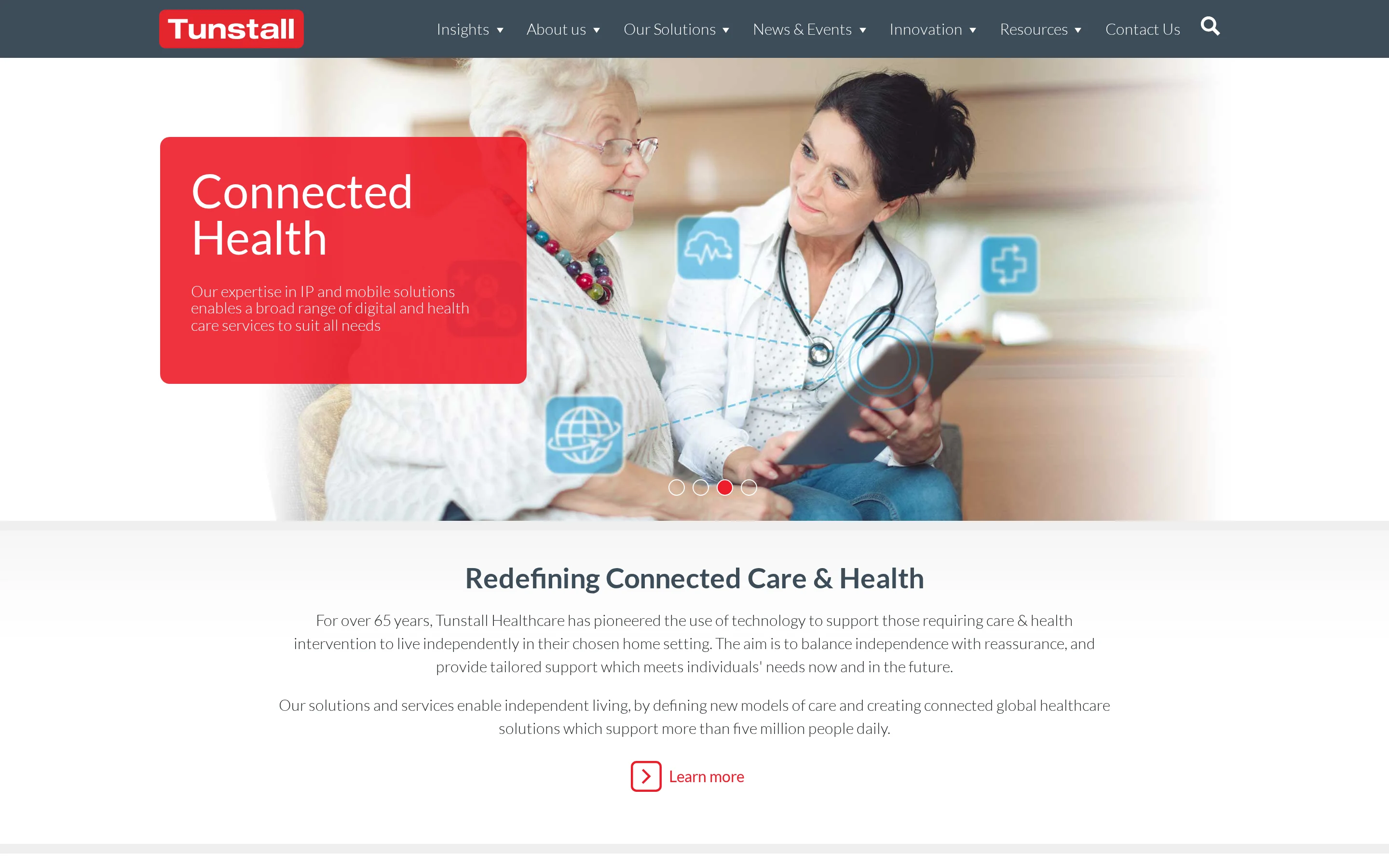
Tunstall is a long-term-care and telecare alternative with connected-care technology and monitoring services. The exact device, response and support model varies by country.
Setting: Independent living, residential care and managed telecare programmes.
Alert route: A monitoring centre or configured care-service workflow handles the event.
Context and records: Device, location and reporting detail depend on the regional service.
Infrastructure: Confirm local connectivity, installation, data processing and support through Tunstall.
Pricing: Request an EU-market quote covering devices, monitoring, installation and support.
Practical limit: Compare the local service specification, not a catalogue or price from another country.
5. Smart Caregiver
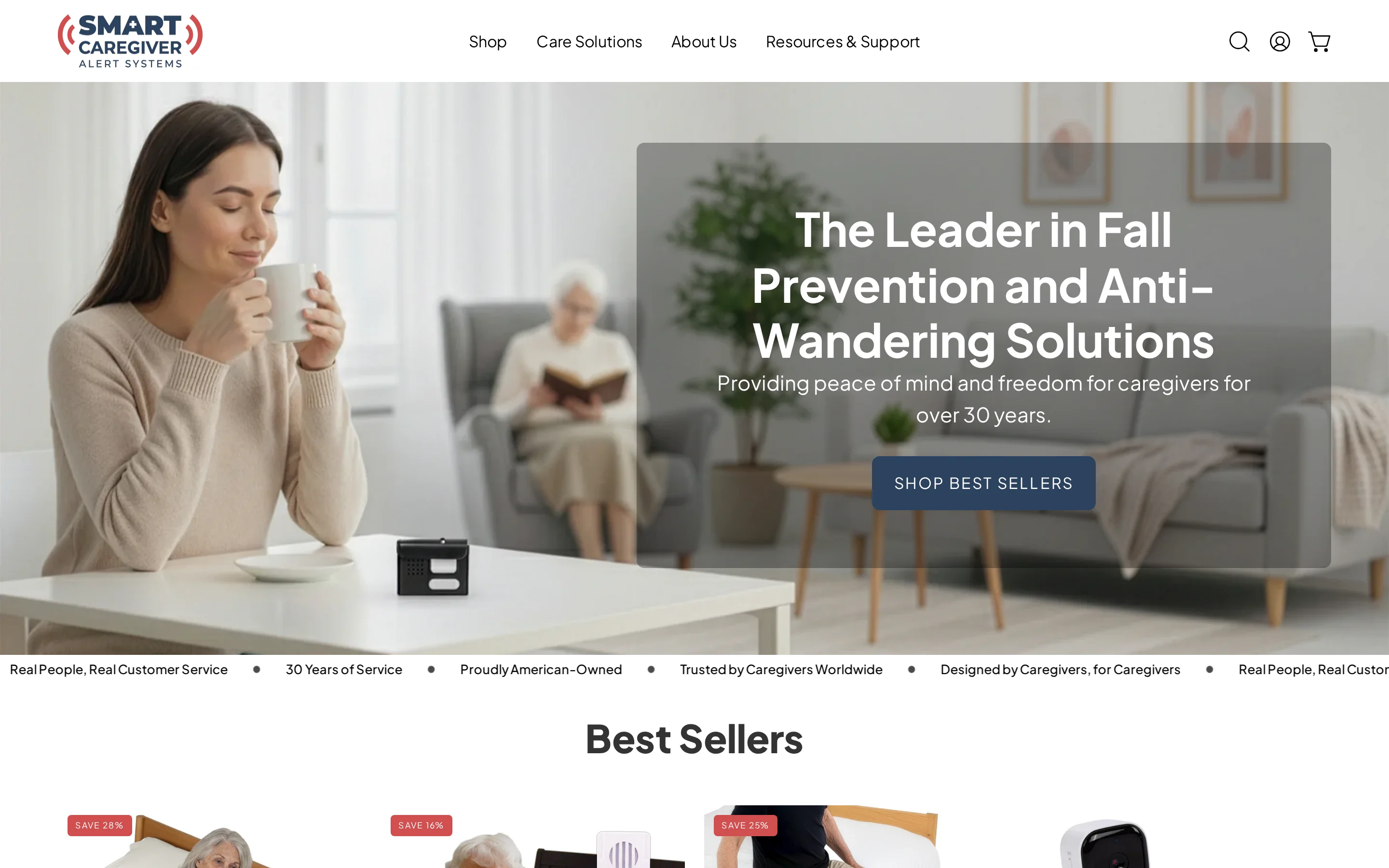
Smart Caregiver is an adjacent local-alert option. Its range includes bed, chair, floor-mat and door-exit alarms that notify a nearby caregiver.
Setting: Individual rooms, small areas and simple on-site monitoring.
Alert route: A sensor sends a local radio alert to a paired pager.
Context and records: The alert identifies the paired device or sensor; confirm whether the selected kit stores events.
Infrastructure: Local hardware can work without a server or internet connection.
Pricing: Hardware purchase; check shipping, certification and support for the intended EU market.
Practical limit: Test the pager from the farthest room and through closed doors before relying on it.
6. Lifeline
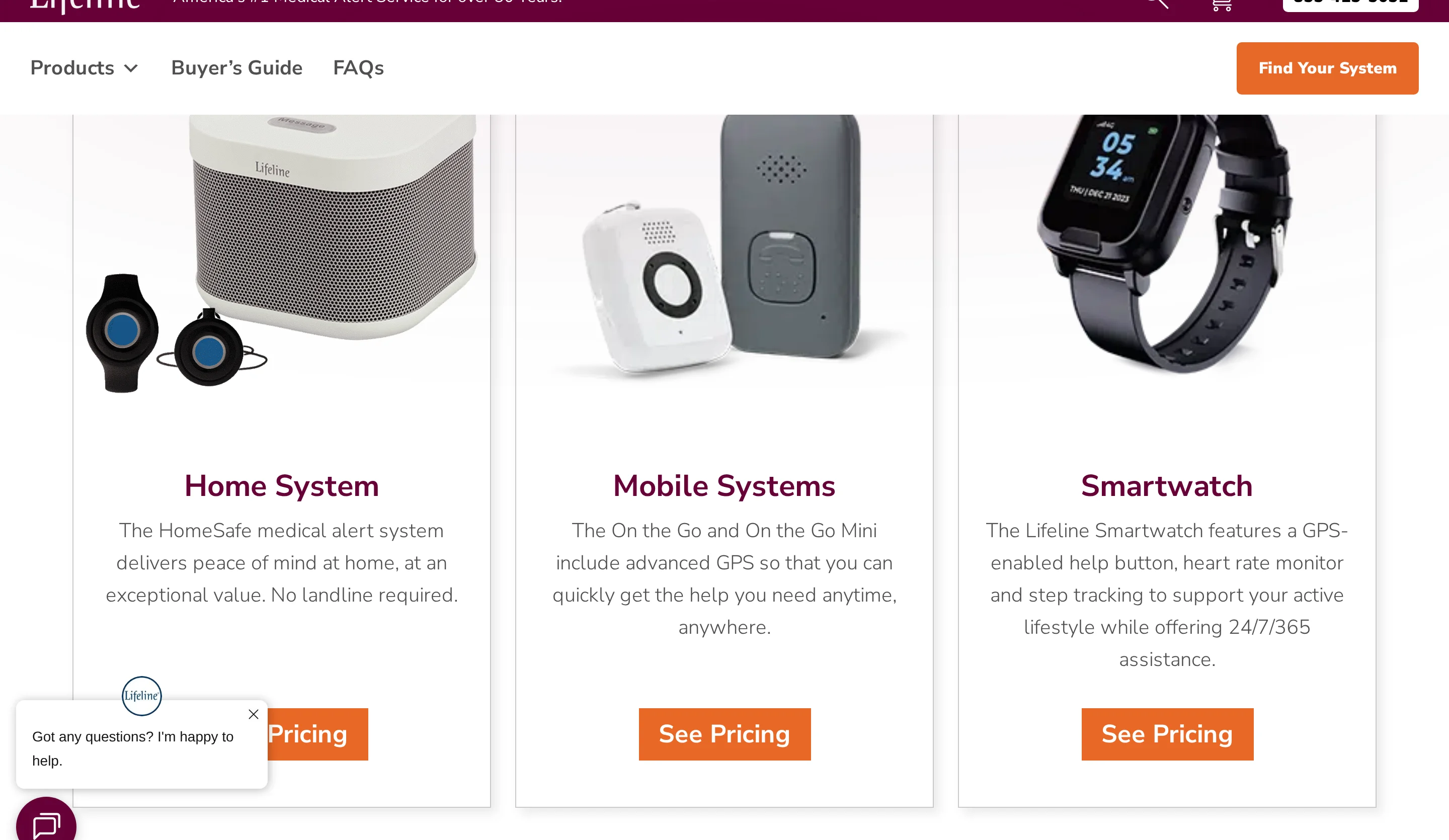
Lifeline is an adjacent personal emergency response service for one user, not a shared care-home workflow. A help button or fall event connects the user to its response centre.
Setting: Individual use at home or on the move in the United States.
Alert route: A response-centre specialist contacts the user and follows the agreed escalation route.
Context and records: Mobile products can use location data; records centre on one subscriber.
Infrastructure: Home base units or mobile cellular devices, depending on the plan.
Pricing: Lifeline uses subscriptions and may add equipment, setup or service fees.
Practical limit: It does not provide a shared ward view, staff assignment or facility response log.
7. Apple Watch
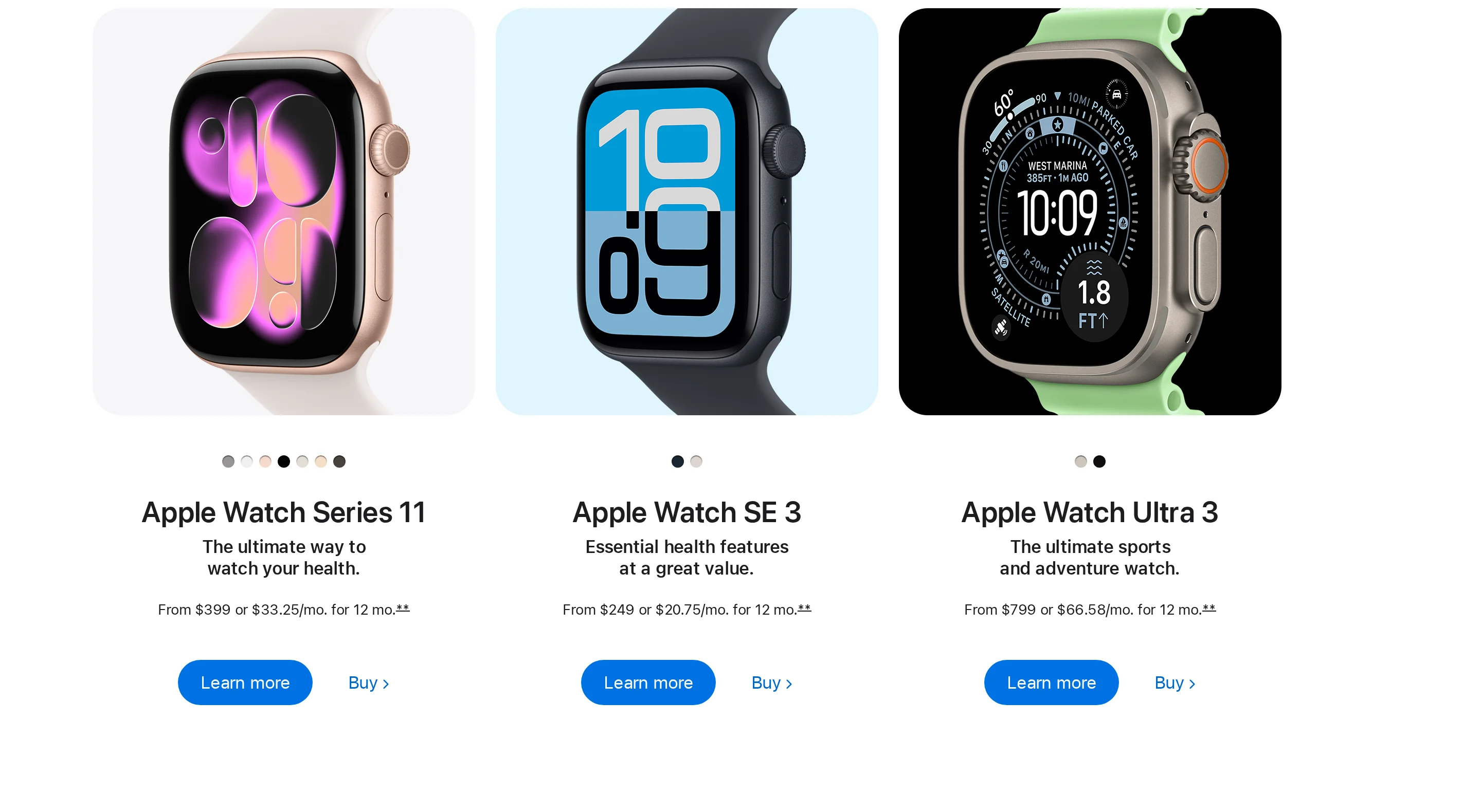
Apple Watch is an adjacent consumer option for one wearer. It is not a facility nurse-call or resident-monitoring platform.
Setting: Individual personal-safety use.
Alert route: Fall Detection can prompt an emergency call and notify personal emergency contacts.
Context and records: The watch can share the wearer's location and store personal fall history.
Infrastructure: Connectivity can use a nearby iPhone, Wi-Fi calling or an active cellular model, depending on setup and region.
Pricing: Upfront hardware, with carrier charges where cellular service is active.
Practical limit: The wearer must use and charge the device; Apple states that it cannot detect every fall.
How to choose the right alternative
Start with the care setting, then test one realistic incident from trigger to closed record.
Define the setting. Record resident count, ward layout, staffing model and home-care routes.
Assign alert ownership. Identify who receives, acknowledges, escalates and closes each event.
Check location precision. Ask whether staff see a bed, room, zone or personal GPS position.
Test false-alarm controls. Use routine activity to see which events create unnecessary alerts.
Test wearable dependency. Confirm what happens when a resident removes or cannot use a device.
Inspect the records. Export acknowledgement, response, visit and incident histories.
Review privacy. Confirm storage location, access rights, retention and deletion rules.
Test resilience. Check power, network, battery and device-failure procedures.
Assign maintenance. Name who tests devices, replaces batteries and owns faults.
Validate integrations. List each nurse-call, EMR, building or identity interface that is supported.
Calculate full cost. Include design, hardware, licences, monitoring, training, support and replacements.
Demand proof before rollout. Run a defined pilot with baseline data and agreed success measures.
Why Ascom competitor lists disagree
Products that can send an alert are not automatically equivalent operational systems. Lists change when they mix care settings, response models and buying criteria.
Setting: Hospitals, care homes, home care and individual use need different workflows.
Scope: Nurse call, telecare, local paging and consumer SOS solve different parts of the response chain.
Evidence: Infrastructure, records, support and full cost matter more than notification capability alone.
Guardian: one camera-free care operations view
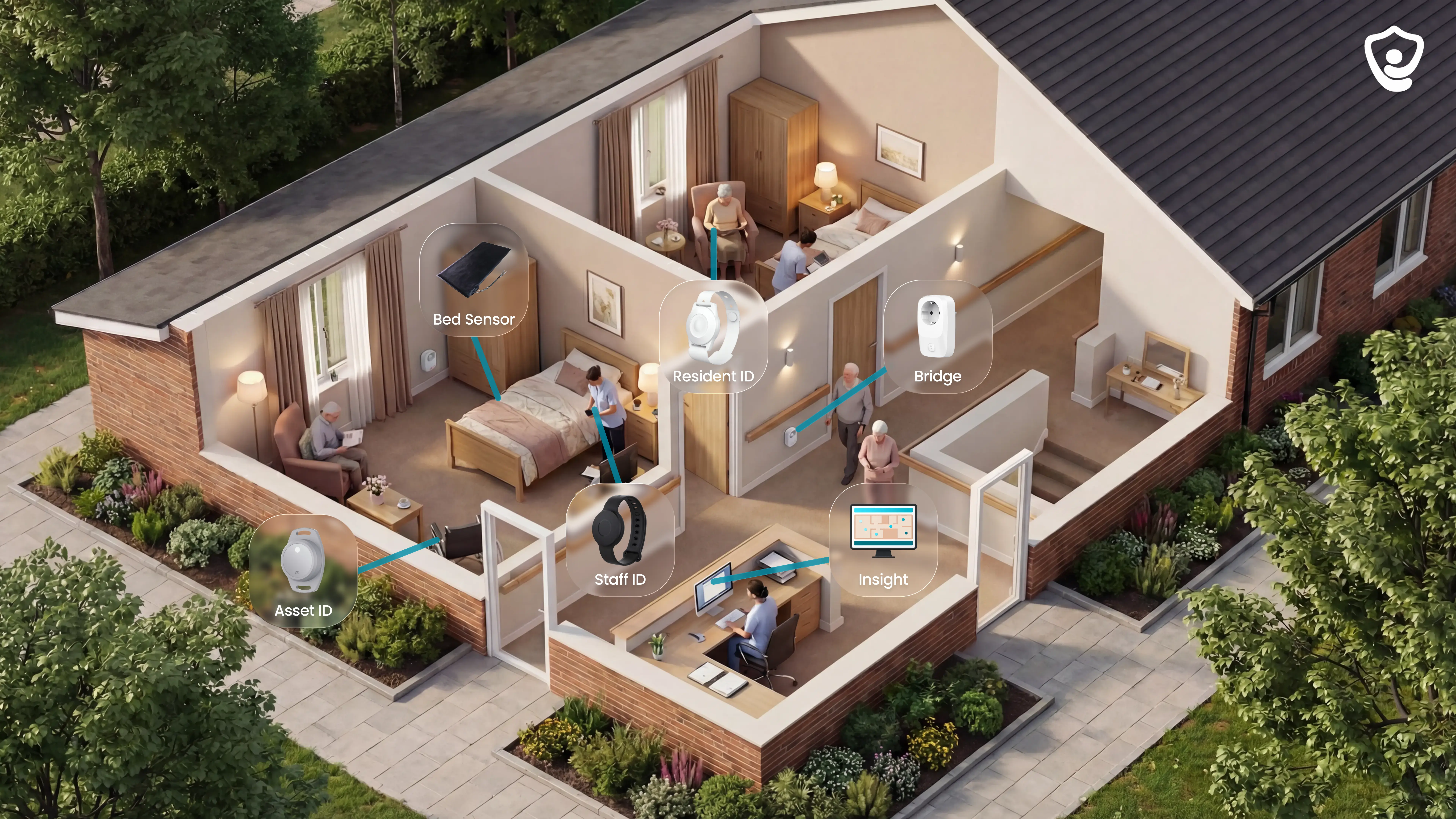
Guardian is a direct option for care homes and home care teams needing wireless alerts, room-level context, passive monitoring and automatic records.
It does not claim to replace every acute-hospital clinical-device integration. Enterprise hospital buyers should evaluate those requirements separately.
Guardian connects each event to the people and records needed for action:
Alert route: Assigned staff receive alerts on phones, tablets or nurse-station computers.
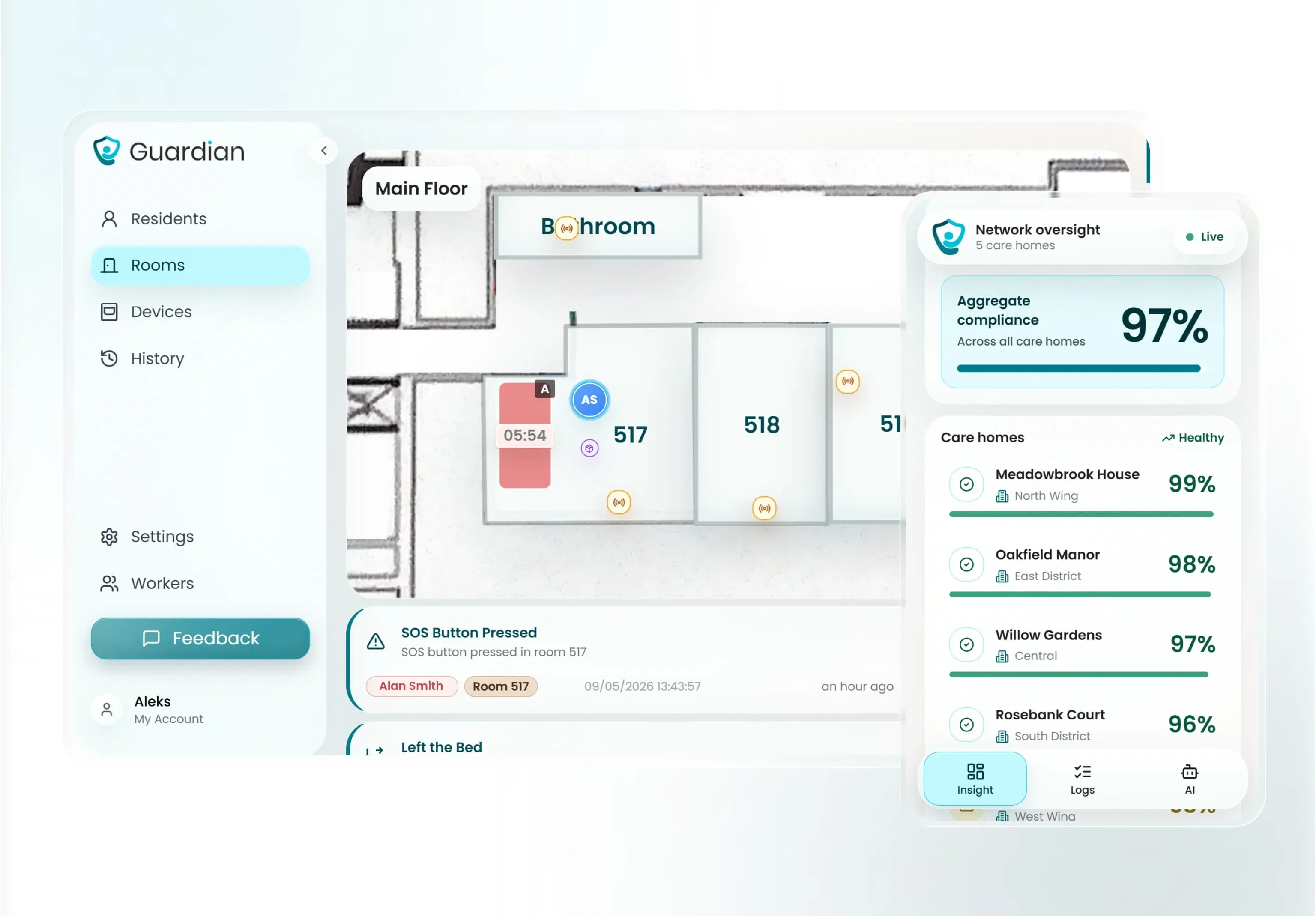
Location context: Each alert shows the resident, event and room-level position on a digitised floor plan.
Wearable-optional monitoring: Bed, motion, door, fridge and stove sensors cover residents who cannot or will not wear a device.
Alert control: Configurable rules filter routine activity, such as a brief bed exit, from events that need attention.
Clean records: Visits, shift timing, incidents and response times are recorded automatically.
One live view: Staff, residents, vehicles and assets appear in Guardian Insight.
Wireless rollout: A ward can go live in about a week without drilling, cabling or extra pagers.
Run Guardian on one ward or team for 6–8 weeks. Use your own response times, verified visits and incident data to calculate ROI and decide what to roll out next.
The closest competitors depend on the setting. Baxter Hillrom and Rauland overlap with institutional nurse call, while long-term-care buyers may also compare Tunstall, Guardian and narrower monitoring tools.
Ascom itself serves long-term care. Tunstall and Guardian also address care settings, while Smart Caregiver, Lifeline and Apple Watch cover narrower local or individual workflows.
Nurse call starts with a request for help and routes it to staff. Resident monitoring can also detect activity, inactivity, bed exits, wandering or environmental events without a button press.
Guardian is a direct option where the requirement is wireless alerts, room-level location, passive sensors and automatic care records. Check acute-hospital integrations separately if they are part of the scope.
Enterprise systems usually use custom quotes. Compare design, hardware, licences, installation, monitoring, support, training, carrier fees and replacement devices, not the initial hardware price alone.
Test alert delivery, acknowledgement, escalation, room-level context, false alarms, network failure and exported records. Agree baseline measures before the pilot starts.
Some local alarms and wireless care platforms can. Confirm radio coverage, power, Wi-Fi, fallback procedures and any required gateways before rollout.
Not always. Guardian can combine wearables with bed, motion, door, fridge and stove sensors for residents who cannot or will not wear a device.

Author
Aleks Timm
Aleks Timm leads Guardian and builds privacy-first operations technology for care homes and home care providers. Teams get location-aware alerts they can act on, clearer situational awareness, and measured insight into how care work actually runs.
Read MoreRecommended reads
Keep reading
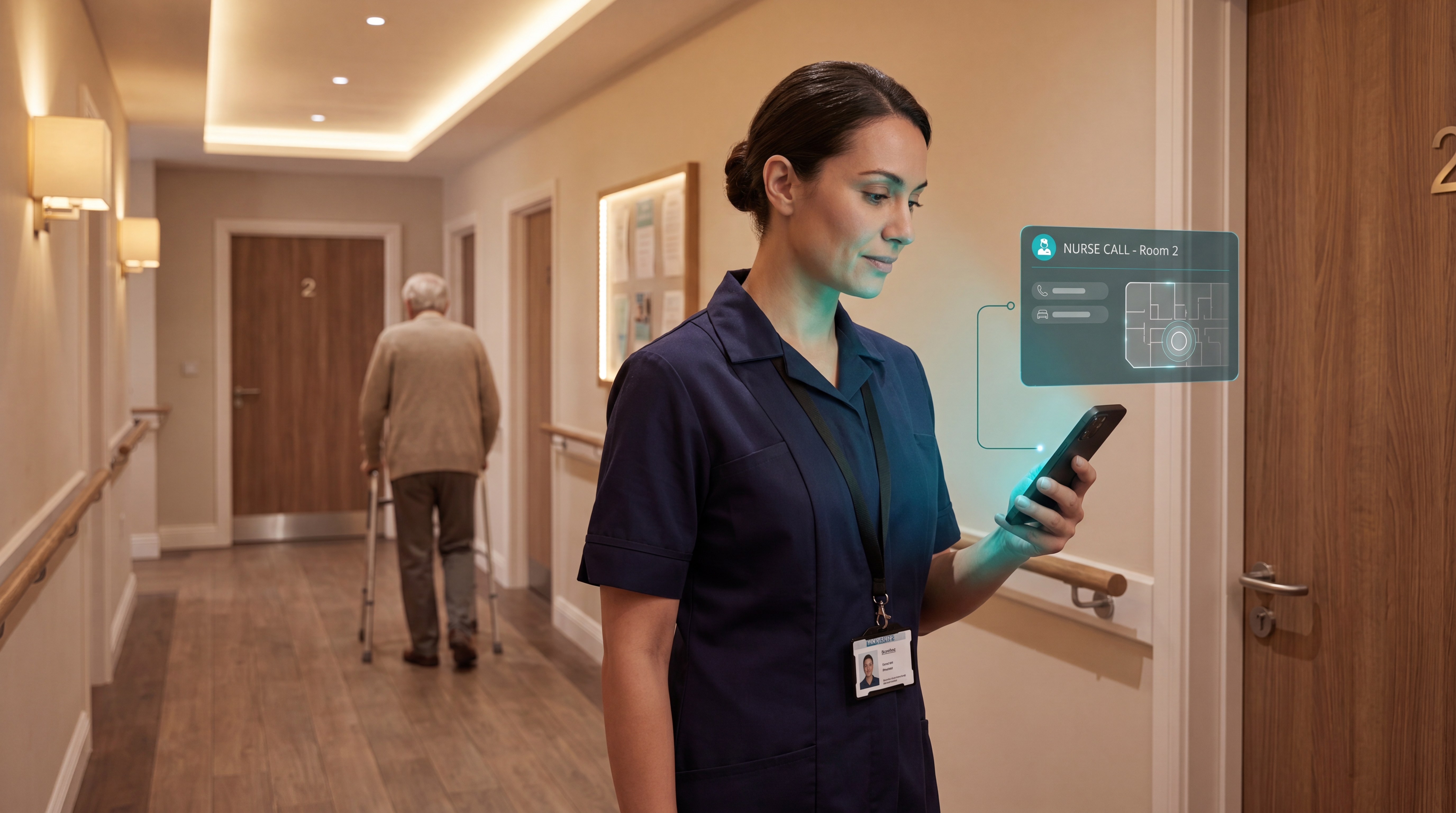
Smart Nurse Call Systems for Care Homes and Home Care Providers
Smart nurse call systems for care homes and home care providers: compare features, improve response times, and choose the right...
Read more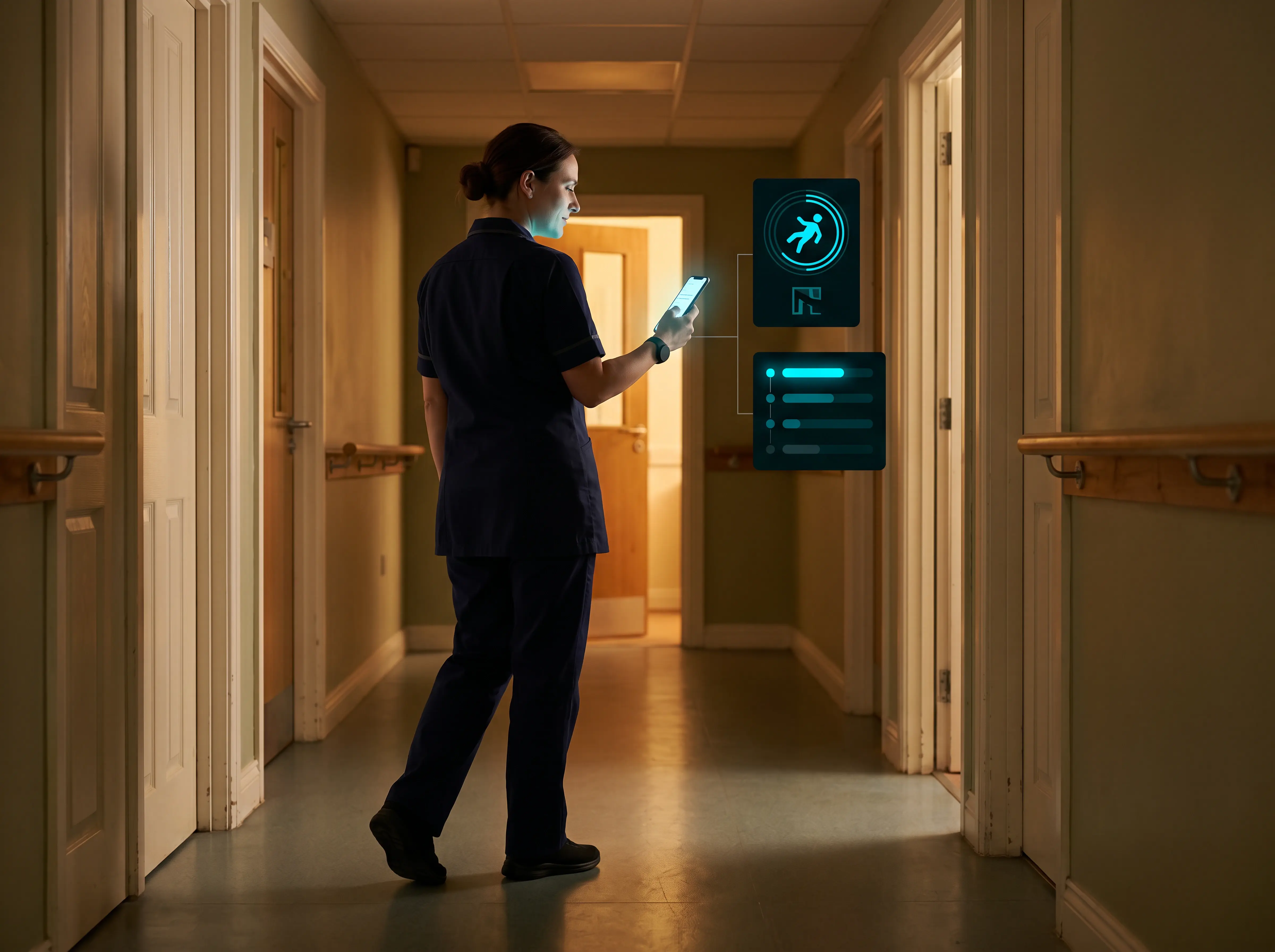
Wireless Patient Monitoring Systems for Care Homes
A complete guide to wireless patient monitoring systems, connected sensors, alert logic, care-home deployment, privacy, and...
Read more
How to install a nurse call system: a step-by-step guide
How to install a nurse call system with less disruption: plan devices, wiring, testing, and handover step by step for a smoother...
Read more